
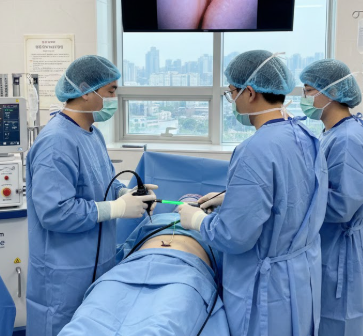
Treatment Overview
Thulium Laser Ureteral Stricture Surgery is an advanced endoscopic procedure that uses a high-precision thulium fiber laser (TFL) to treat narrowings of the ureter caused by inflammation, stone disease, surgical trauma, congenital defects, or recurrent infections. Ureteral strictures obstruct urine flow from the kidney to the bladder, causing pain, hydronephrosis, and potential kidney damage.
In Korea, thulium fiber laser systems have rapidly become a preferred surgical modality for stricture incision due to their superior cutting control, low thermal spread, and excellent safety profile. Korean hospitals utilize next-generation TFL platforms with high-frequency pulsed energy that allows smoother tissue vaporization and reduced bleeding during surgery. For medical tourists seeking high accuracy, minimal invasiveness, and fast recovery, Thulium Laser Ureteral Stricture Surgery in Korea offers an exceptional treatment experience.
Purpose & Benefits
The primary purpose of this procedure is to open and restore patency of the narrowed ureteral segment using the thulium laser’s micro-incision technology. Key benefits include:
- Ultra-precise tissue cutting with minimal heat damage
- Reduced bleeding compared to holmium laser
- Smooth vaporization of fibrotic tissue
- Improved visibility during surgery
- Higher success rates for short and medium-length strictures
- Outpatient or short-stay surgical workflow
- Less postoperative pain and faster healing
- Greater safety in complex anatomical locations
Because the thulium fiber laser offers a more continuous and finely controlled emission compared to traditional systems, it helps achieve cleaner incisions, which reduces the likelihood of recurrence.
Ideal Candidates
This procedure is suitable for patients with:
- Short to moderate ureteral strictures
- Strictures resulting from stones, previous endoscopic interventions, or infections
- Congenital ureteral narrowing
- Pain, hydronephrosis, or recurrent urinary infections due to poor drainage
- Partial or complete obstruction confirmed through imaging
- Failed prior balloon dilation or holmium laser treatment
- A desire for a minimally invasive, fast-recovery option
International patients who require expert urological care with predictable results often choose Korea for its advanced technology and high treatment standards.
Possible Risks & Complications
Although complications are uncommon, potential risks include:
- Mild bleeding during or after surgery
- Temporary painful urination
- Infection of the urinary tract
- Ureteral perforation (rare due to laser precision)
- Need for temporary ureteral stenting
- Recurrence of stricture
- Postoperative discomfort due to stent placement
Korean urologists are recognized for maintaining extremely low complication rates through careful pre-operative evaluation, high-definition ureteroscopic imaging, and controlled laser modulation.
Techniques & Technology Used
Thulium laser systems used in Korea are considered among the most sophisticated globally. Common techniques and technologies include:
- Thulium Fiber Laser (TFL) endoscopic ureterotomy
- Ultra-fine fiber-optic laser delivery
- Flexible or semi-rigid digital ureteroscopy
- High-definition real-time visualization
- Minimal thermal diffusion cutting
- Endoscopic vaporization of scar tissue
- Image-guided incision along the stricture
- Postoperative ureteral stent placement
The thulium laser emits at a wavelength that offers more consistent tissue absorption, resulting in smoother incision lines and superior hemostasis. Many Korean hospitals use the latest TFL systems that support both low-energy precise cutting and high-energy vaporization modes.
Treatment Process in Korea
Korea’s medical system provides an efficient and medically advanced treatment journey, especially for international patients.
- Consultation and Imaging Workup
Urologists evaluate medical history, symptoms, and the degree of obstruction using ultrasound, CT scan, MRI urography, or nuclear renal scans. - Pre-Procedure Diagnostic Ureteroscopy
The surgeon visually examines the ureter to confirm the stricture’s location and characteristics. - Endoscopic Laser Incision
The thulium fiber laser is used to accurately cut or vaporize the fibrotic segment while protecting surrounding tissue. - Ureteral Stent Placement
A temporary stent ensures that the ureter remains open during healing and minimizes the risk of re-narrowing. - Short Observation Period
Most patients are discharged the same day or within 24 hours. - Follow-Up and Stent Removal
Stent removal is typically scheduled 2–4 weeks later, depending on healing.
Korean hospitals also offer dedicated international patient centers to assist with travel arrangements, translation services, scheduling, and postoperative coordination.
Recovery & After-Care
Recovery is usually quick and comfortable. Most patients resume normal daily routines within a few days. Typical after-care guidelines include:
- Drinking plenty of water to encourage healing
- Expecting mild discomfort, urgency, or small amounts of blood in urine for a few days
- Avoiding heavy exercise until the stent is removed
- Taking prescribed antibiotics or analgesics
- Attending scheduled imaging studies to confirm improved flow
- Having remote follow-up consultations if traveling back home
Korea’s urology centers emphasize structured follow-up to minimize recurrence and ensure optimal kidney function.
Results & Longevity
Thulium Laser Ureteral Stricture Surgery provides excellent long-term outcomes when performed by experienced Korean surgeons. Patients can expect:
- Significant improvement in urine flow
- Resolution of flank pain or hydronephrosis
- Reduced risk of kidney infections
- High stricture-free rates for many years
- Less scar tissue formation due to smooth laser incision margins
The thulium fiber laser’s precision often results in better tissue healing compared to older laser systems. For recurrent or complex strictures, Korea offers comprehensive alternatives such as balloon dilation, repeat laser ureterotomy, or robotic ureteral reconstruction.
Why Korea Is a Top Destination
Korea is globally recognized for its excellence in endourology and laser-based urological surgery. Key differentiators include:
- World-leading thulium fiber laser technology
- Highly specialized urologists with extensive experience
- Advanced digital ureteroscopy and HD imaging
- Short waiting times and fast surgical scheduling
- Internationally accredited hospitals with VIP services
- Transparent pricing compared to Western countries
- Comprehensive care for medical tourists
Korea’s ability to combine technological leadership with precise surgical expertise makes it an ideal destination for complex ureteral surgery.
Cost Range
The approximate cost of Thulium Laser Ureteral Stricture Surgery in Korea is:
USD 3,500 – 10,000
The final cost varies depending on the hospital tier, pre-operative diagnostics, surgeon expertise, inpatient stay (if required), and postoperative follow-up consultations. Despite the high technology involved, Korea remains cost-competitive relative to the United States, Europe, and the Middle East.
Popular Clinics in Korea
- Samsung Medical Center (SMC)
- Asan Medical Center
- Seoul National University Hospital
- Severance Hospital – International Medicine Center
- Wooridul Urology Clinic
- CHA University Medical Center
- Gangnam Severance Hospital
- Korea University Hospital Urology Department
These hospitals and clinics are renowned for their advanced laser systems, high treatment success rates, and world-class care for international patients.


