
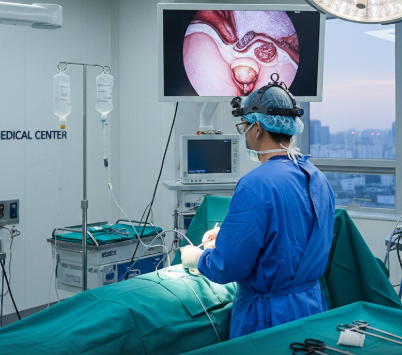
Treatment Overview
Cystectomy with urinary diversion is an advanced surgical procedure performed to treat muscle-invasive or high-risk bladder cancer. It involves removing the bladder and creating a new pathway for urine to exit the body. Korea is recognized globally as a leader in this field, offering highly precise robotic and minimally invasive techniques that significantly improve patient outcomes. Korean hospitals combine cutting-edge technology with the expertise of urologic oncology teams, making the country a top destination for international patients seeking safe, effective bladder cancer treatment.
This surgery is typically performed as a radical cystectomy, where the bladder and surrounding lymph nodes are removed. Afterward, surgeons create a urinary diversion such as an ileal conduit, continent reservoir, or orthotopic neobladder to restore urinary function. With high surgical volume, advanced imaging, and multidisciplinary cancer management, Korea delivers world-class survival rates, reduced complications, and improved quality of life after surgery.
Purpose & Benefits
Purpose
The primary purpose of cystectomy with urinary diversion is to completely remove bladder cancer and restore urinary function. It is recommended for patients with muscle-invasive disease, failed intravesical therapy, or recurrent high-grade tumors.
Key Benefits
- Complete tumor removal to prevent progression or metastasis
- Advanced reconstructive options to maintain urinary control
- Precision robotic surgery for optimal nerve and organ preservation
- Faster recovery and reduced pain due to minimally invasive technology
- Improved long-term survival and reduced recurrence risk
- Access to comprehensive postoperative rehabilitation programs
- Strong integration of oncology therapy (chemotherapy, immunotherapy) when needed
Ideal Candidates
Suitable Candidates
Patients are generally considered for cystectomy with urinary diversion if they have:
- Muscle-invasive bladder cancer (MIBC)
- High-grade non-muscle invasive cancer unresponsive to BCG
- Recurrent, multifocal, or large tumors
- Bladder dysfunction due to cancer or persistent CIS
- Locally advanced tumors requiring full organ removal
Not Ideal Candidates
Certain patients may not be suitable due to:
- Severe cardiovascular or respiratory conditions
- Spread of cancer to distant organs
- Inability to tolerate major surgery
- Poor renal or liver function impacting anesthesia clearance
Korean centers run comprehensive preoperative evaluations to determine the safest surgical plan.
Possible Risks & Complications
Although Korea’s outcomes are among the best worldwide, cystectomy with urinary diversion remains a major procedure with potential complications.
General Surgical Risks
- Infection
- Bleeding
- Blood clots
- Reaction to anesthesia
- Wound issues
Procedure-Specific Risks
- Urinary leakage from the diversion site
- Bowel complications due to intestinal use
- Stoma complications (for ileal conduit patients)
- Neobladder dysfunction or incontinence
- Absorption issues with bowel segments used for reconstruction
- Narrowing or blockage of the urinary diversion path
Long-Term Risks
- Vitamin B12 deficiency (when part of the intestine is removed)
- Kidney dysfunction in some patients
- Metabolic imbalances
- Recurrence requiring ongoing surveillance
Korean hospitals have dedicated postoperative and long-term programs to minimize these risks.
Techniques & Technology Used
Korea is internationally recognized for its leadership in urologic minimally invasive surgery. Surgeons choose the appropriate technique based on tumor stage, anatomy, and quality-of-life goals.
Robotic Cystectomy with Urinary Diversion
- Performed using Da Vinci robotic systems
- Provides superior visualization, precision, and nerve preservation
- Reduces blood loss, infections, and complications
- Faster patient discharge and recovery
Laparoscopic Cystectomy
- Fully minimally invasive
- Small incisions for faster healing
- Suitable for selected patients with less aggressive disease
Open Cystectomy
- Used for extensive tumors or when reconstruction requires open access
- Korean surgeons maintain low complication rates despite procedure complexity
Types of Urinary Diversion in Korea
Ileal Conduit (Urostomy)
- Most common and reliable method
- A small piece of intestine forms a stoma for urine drainage
- Low complication rates, simple postoperative management
Orthotopic Neobladder
- Surgeons create a “new bladder” from intestinal tissue
- Allows patients to urinate naturally through the urethra
- Offers the highest quality of life after cystectomy
- Korea is a global leader in neobladder construction
Continent Cutaneous Reservoir
- Internal pouch that stores urine
- Patient empties the pouch periodically with a catheter
- No external bag required
Each type is customized to lifestyle goals, age, cancer status, and surgeon recommendation.
Advanced Diagnostics & Surgical Support
- Blue-light cystoscopy
- Narrow Band Imaging (NBI)
- Multiparametric MRI and CT urography
- Intraoperative frozen pathology
- 3D imaging for surgical planning
- ERAS protocols for fast-track recovery
Treatment Process in Korea
Korean medical tourism programs are uniquely structured, offering efficient diagnosis, surgery, and postoperative care.
Step 1: Pre-Arrival Planning
- Review of patient medical history and diagnostic reports
- Video consultation with Korean specialists
- Personalized treatment plan and cost estimation
Step 2: In-Hospital Evaluation
On arrival, patients undergo:
- Cystoscopy
- CT/MRI for staging
- Urine cytology
- Blood tests and anesthetic assessment
- Consultation for urinary diversion options
Step 3: Multidisciplinary Cancer Conference
Experts from oncology, urology, radiology, and pathology collaborate to finalize a tailored surgical plan.
Step 4: Surgery
- Radical cystectomy performed using robotic, laparoscopic, or open technique
- Creation of the urinary diversion according to patient preference and medical suitability
- Full lymph node dissection ensures accurate staging
Step 5: Postoperative Hospital Stay
- Initial observation in the ICU or high-dependency unit
- Early mobilization and diet progression
- Pain management and bowel recovery
- Stoma or neobladder training sessions
Step 6: Discharge & Continued Care
- Typical hospital stay is 7–10 days for minimally invasive surgery
- Follow-up evaluation within 1–2 weeks
- Lifestyle training and long-term rehabilitation programs
Recovery & After-Care
Recovery from cystectomy with urinary diversion requires comprehensive support.
Short-Term Recovery
- Walking within 24 hours
- Controlled pain management
- Gradual return of bowel function
- Stoma education for ileal conduit patients
- Neobladder training for those with reconstruction
Long-Term Recovery
- Full recovery usually within 8–12 weeks
- Ongoing kidney function monitoring
- Regular imaging and urine studies
- Nutritional support to compensate for intestinal use
- Emotional and psychological support programs
Quality-of-Life Improvements
Korean hospitals offer specialized rehabilitation focusing on:
- Continence training
- Neobladder strengthening
- Adaptation to urinary diversion
- Physical activity and lifestyle counseling
Results & Longevity
Expected Outcomes
- High cancer control rates due to complete organ and lymphatic removal
- Precise lymph node dissection improves survival
- Neobladder and continent diversion options enhance quality of life
- Low complication rates with robotic techniques
Long-Term Success
- Many patients remain cancer-free long term
- Excellent functional outcomes with neobladder reconstruction
- Regular follow-up ensures early detection of recurrence
Korea’s strong multidisciplinary management contributes to high patient satisfaction and superior longevity outcomes.
Why Korea Is a Top Destination
Key Advantages
- World-class urologic oncology surgeons
- Advanced robotic and minimally invasive techniques
- High surgical volume and proven outcomes
- Faster recovery with ERAS protocols
- Transparent and affordable pricing
- English-speaking coordinators and medical interpreters
- Exceptional hospital environments designed for international patients
Korea’s combination of technology, expertise, and patient-centered care makes it one of the best countries for cystectomy and urinary diversion.
Cost Range
Estimated Costs
- Robotic cystectomy with urinary diversion: USD 22,000 – 38,000
- Laparoscopic cystectomy: USD 18,000 – 28,000
- Open cystectomy: USD 15,000 – 25,000
- Preoperative diagnostics: USD 1,000 – 2,500
- Neobladder reconstruction: + USD 3,000 – 6,000 additional
- Postoperative rehabilitation: USD 300 – 900
Korean prices remain significantly lower than the United States, Japan, or Western Europe, while providing superior care.
Popular Clinics in Korea
- Asan Medical Center (AMC)
- Severance Hospital (Yonsei University)
- Seoul National University Hospital (SNUH)
- Samsung Medical Center
- Catholic University Seoul St. Mary’s Hospital
- Korea University Anam Hospital
- CHA Bundang Medical Center


