
Treatment Overview
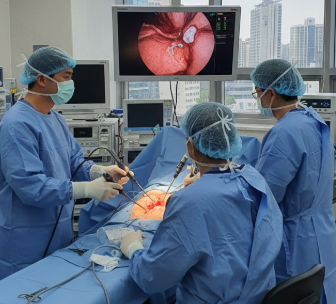
Laser-Assisted Transurethral Resection of Bladder Tumor (TURBT) is an advanced minimally invasive procedure that uses laser energy to precisely remove bladder tumors via the urethra. This technique offers superior hemostasis, reduced bleeding, and enhanced tumor visualization compared to traditional electrocautery TURBT. In Korea, top urology centers utilize high-power holmium, thulium, or green-light lasers along with high-definition cystoscopy systems to ensure complete tumor removal with minimal trauma to healthy bladder tissue. Laser-assisted TURBT is particularly effective for patients with recurrent or difficult-to-reach tumors and is often combined with diagnostic biopsy and intravesical therapy.
Purpose & Benefits
The main purpose of laser-assisted TURBT is to safely and effectively remove bladder tumors while minimizing complications. Key benefits include:
– Precise tumor excision with minimal damage to healthy tissue
– Superior bleeding control, reducing the need for transfusions
– Shorter hospital stay and faster recovery
– Reduced risk of bladder perforation compared to conventional TURBT
– Enhanced visualization with narrow-band or blue-light cystoscopy
– Repeated use possible for recurrent tumors
– Improved patient comfort and quality of life
Laser-assisted TURBT is an ideal option for patients seeking modern, safe, and effective bladder tumor management.
Ideal Candidates
Patients suitable for laser-assisted TURBT include:
– Individuals with non-muscle-invasive bladder cancer (Ta, T1)
– Patients with recurrent superficial bladder tumors
– Tumors located in challenging or sensitive bladder areas
– Patients seeking a minimally invasive, bladder-preserving procedure
– Individuals requiring reduced bleeding risk due to comorbidities
Eligibility is determined through cystoscopy, imaging, urine cytology, and biopsy results.
Possible Risks & Complications
Although laser-assisted TURBT is safer than conventional TURBT, potential risks include:
– Temporary bleeding or hematuria
– Bladder perforation (rare)
– Urinary tract infection
– Incomplete tumor removal requiring repeat procedures
– Mild urinary frequency or urgency postoperatively
– Anesthesia-related complications
Korean hospitals maintain very low complication rates due to expert surgical teams and advanced laser technology.
Techniques & Technology Used
Laser-assisted TURBT in Korea leverages cutting-edge technologies for precise tumor removal:
– Holmium Laser: Offers deep tissue penetration with excellent hemostasis
– Thulium Laser: Provides smooth cutting and vaporization of tumors
– Green-Light Laser: Minimizes bleeding for highly vascular tumors
– High-Definition Cystoscopy: Enhances visualization of tumor margins
– Narrow-Band Imaging (NBI): Detects subtle or flat lesions
– Blue-Light Cystoscopy: Improves identification of carcinoma in situ
– Intraoperative Pathology: Confirms tumor-free margins during resection
These technologies maximize safety, effectiveness, and functional outcomes for patients.
Treatment Process in Korea
The treatment pathway for laser-assisted TURBT includes:
- Pre-Arrival Consultation: Hospitals review medical records, imaging, and biopsy reports; provide cost estimates and travel guidance.
- Diagnostic Workup: Includes cystoscopy, CT/MRI, urine cytology, and lab tests.
- Multidisciplinary Review: Urologists and oncologists evaluate tumor size, location, and type to plan laser-assisted surgery.
- Surgery: Performed under general or spinal anesthesia; the laser is used to precisely excise the tumor.
- Postoperative Monitoring: Observation for bleeding, urinary function, and infection; catheter use if needed.
- Discharge: Most patients are discharged on the same day or within 24 hours.
- Follow-Up: Regular cystoscopy and intravesical therapy to prevent recurrence.
Recovery & After-Care
Recovery from laser-assisted TURBT is typically quick:
– Most patients resume normal activities within 1–2 days
– Mild urinary discomfort may persist for several days
– Catheter removal usually occurs within 24–48 hours
– Adequate hydration is recommended to flush the bladder
– Regular follow-up cystoscopy is critical to detect recurrence early
Korean hospitals provide detailed post-procedure guidance to ensure optimal recovery and long-term monitoring.
Results & Longevity
Laser-assisted TURBT in Korea delivers excellent outcomes for non-muscle-invasive bladder cancer:
– High rates of complete tumor removal
– Reduced intraoperative bleeding and complications
– Effective for recurrent tumors with low recurrence rates
– Preservation of bladder function and quality of life
Patients benefit from precise tumor excision and modern postoperative care, ensuring long-term disease management.
Why Korea Is a Top Destination
Korea is a global leader for laser-assisted TURBT because of:
– Highly skilled urologists with extensive experience in laser techniques
– Advanced laser and endoscopic technology
– Rapid scheduling and efficient treatment pathways
– Multilingual support and medical tourism coordination
– Low complication rates and high patient satisfaction
– Affordable costs compared to the US, Europe, and Japan
– Comprehensive follow-up and rehabilitation programs
These advantages make Korea a preferred choice for international patients seeking minimally invasive bladder cancer surgery.
Cost Range
The cost of laser-assisted TURBT in Korea generally includes surgery, diagnostics, hospitalization, and follow-up:
– Standard Laser TURBT: USD 4,000 – 8,000
– Advanced Laser Techniques (Holmium or Thulium): USD 5,000 – 9,000
– Diagnostic imaging and pathology: USD 800 – 1,500
– Follow-up cystoscopy and intravesical therapy: USD 400 – 1,000
Costs vary by hospital, laser type, and patient condition but remain highly competitive internationally.
Popular Clinics in Korea
Top hospitals performing laser-assisted TURBT include:
– Asan Medical Center
– Samsung Medical Center
– Seoul National University Hospital
– Severance Hospital (Yonsei University Health System)
– St. Mary’s Hospital
– Korea University Anam Hospital
– Specialized urology centers with laser-assisted surgery expertise
These institutions are known for their advanced technology, expert surgeons, and comprehensive support for international patients.


