
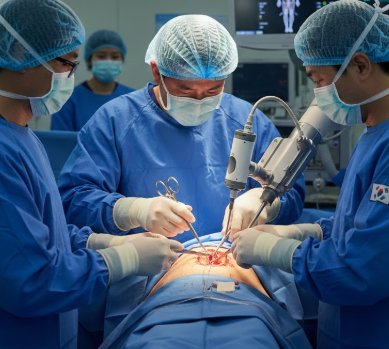
Treatment Overview
Partial cystectomy is a surgical procedure that removes only the cancerous or damaged portion of the bladder while preserving the remaining healthy bladder tissue. In Korea, this surgery is performed using advanced minimally invasive methods—most commonly robotic and laparoscopic techniques—which allow for enhanced precision, reduced trauma, and faster recovery. Korean urologic surgeons are globally recognized for their high case volume and extensive experience in bladder-preserving treatment strategies.
Purpose & Benefits
The primary purpose of partial cystectomy is to eliminate localized bladder cancer while maintaining bladder function. Unlike radical cystectomy, which removes the entire bladder, this procedure protects natural urination ability and quality of life. Key benefits include bladder preservation, shorter hospitalization time, reduced postoperative complications, lower impact on sexual and urinary function, and faster return to normal activities. It is also an ideal option for patients seeking function-sparing surgery without compromising oncologic outcomes.
Ideal Candidates
Candidates for partial cystectomy include patients with tumors that are:
– Small and isolated in one area of the bladder
– Located away from the bladder neck and trigone
– Non-muscle invasive or early muscle-invasive cancers
– Without widespread carcinoma in situ
– Suitable for bladder-preserving therapy following medical evaluation
Additionally, individuals who cannot tolerate extensive surgery due to age, comorbidities, or preference for organ-preserving treatment may benefit from this option.
Possible Risks & Complications
Although Korea maintains a low complication rate due to high surgical precision, partial cystectomy—like all major operations—may involve risks. Potential complications include bleeding, infection, urinary leakage from the bladder wall, temporary difficulty in urination, recurrence of bladder cancer, blood clots, and anesthetic risks. Surgeons in Korea use advanced imaging, enhanced recovery protocols, and meticulous surgical planning to minimize these risks.
Techniques & Technology Used
Korean hospitals employ state-of-the-art surgical systems to optimize safety and accuracy.
Commonly used techniques include:
– Robotic partial cystectomy: Provides 3D visualization, micro-precision movements, and minimal invasiveness.
– Laparoscopic partial cystectomy: Uses small incisions and advanced instruments to reduce pain and accelerate healing.
– Open surgery: Used in complex or large tumors requiring greater access.
Supporting technologies include intraoperative imaging, fluorescence-guided tumor mapping, nerve-sparing tools, and enhanced bladder reconstruction techniques.
Treatment Process in Korea
The treatment journey typically follows a structured, patient-centered pathway:
- Initial Consultation & Diagnostics: Includes cystoscopy, CT scan, MRI, urine cytology, and biopsy to assess tumor characteristics.
- Treatment Planning: A multidisciplinary team evaluates eligibility for bladder-preserving surgery.
- Preoperative Optimization: Patients receive guidance on medication, diet, and preparation for anesthesia.
- Surgery Day: The procedure, usually robotic or laparoscopic, removes the affected bladder section and reconstructs the bladder.
- Postoperative Monitoring: Patients are closely observed for urinary function, healing, and bladder capacity.
- Discharge: Most patients leave the hospital within 4–6 days, depending on recovery speed.
- Follow-Up: Regular cystoscopy and imaging ensure early detection of recurrence.
Recovery & After-Care
Recovery after partial cystectomy is generally faster than after total bladder removal. Patients can expect:
– Mild-to-moderate discomfort for a few days
– Catheter use for 1–2 weeks
– Gradual return to normal diet within 48–72 hours
– Return to light activity within 2–3 weeks
– Full recovery within 4–6 weeks
Doctors also advise bladder-training exercises, hydration management, and periodic follow-ups. Korean hospitals provide structured after-care programs to support urinary function restoration and long-term health monitoring.
Results & Longevity
Partial cystectomy offers strong long-term outcomes when patients are properly selected. Survival rates are high, and most individuals preserve natural bladder capacity with minimal long-term restrictions. The recurrence rate is lower when the surgery is combined with modern imaging, complete tumor margin excision, and consistent follow-up. Patients often report improved quality of life compared to those who undergo radical cystectomy.
Why Korea Is a Top Destination
Korea is globally recognized for urologic oncology excellence. The country’s medical system emphasizes precision surgery, patient safety, and integrated care. Patients travel to Korea due to:
– Highly experienced urologists with international training
– World-class robotic surgery centers
– Short waiting times and efficient treatment pathways
– Value-driven medical costs compared to Western countries
– Multilingual coordinators and full medical tourism support
– Strong cancer treatment outcomes and low complication rates
Korean hospitals prioritize comfort, privacy, and seamless care for international patients.
Cost Range
The cost of partial cystectomy in Korea varies based on hospital, surgical approach, and patient condition. On average:
– USD 9,000 – 18,000 for laparoscopic surgery
– USD 12,000 – 25,000 for robotic partial cystectomy
Costs typically include diagnostics, surgery, hospitalization, postoperative care, and follow-up consultations. Korea remains significantly more affordable than the United States, Japan, or many European countries for equivalent or higher medical standards.
Popular Clinics in Korea
Some of the leading medical centers providing bladder cancer surgeries, including partial cystectomy, include:
– Seoul National University Hospital
– Asan Medical Center
– Samsung Medical Center
– Severance Hospital (Yonsei University Health System)
– Korea University Anam Hospital
– St. Mary’s Hospital (Catholic University of Korea)
– Urologic specialty centers with robotic surgery expertise
These institutions are known for advanced facilities, experienced surgical teams, and specialized support for medical tourists.


