
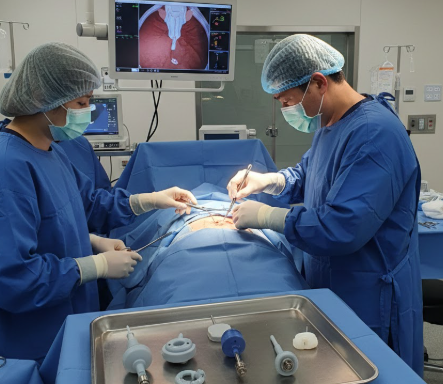
Treatment Overview
Scar-minimizing AUS (Artificial Urinary Sphincter) implant surgery is a modern, patient-centered approach to treating severe stress urinary incontinence (SUI) with an emphasis on aesthetic outcomes and reduced tissue trauma. This advanced technique uses small, strategically placed incisions combined with high-precision surgical tools to achieve minimal scarring while ensuring optimal implant placement. Korea, known for its global leadership in minimally invasive medical technologies and cosmetic-oriented surgical methodologies, offers superior scar-minimizing AUS procedures with excellent continence results.
The surgery involves implanting a mechanical urinary sphincter system designed to replicate the natural function of the urethral sphincter. With Korea’s advanced imaging, micro-incision techniques, and refined surgical craftsmanship, the procedure produces both functional and cosmetic benefits for patients.
Purpose & Benefits
The purpose of scar-minimizing AUS implantation is twofold: to restore urinary control and to achieve a visually subtle, cosmetically pleasing surgical outcome. Patients suffering from sphincter deficiency or severe SUI can regain continence without large or noticeable scars.
Key benefits include:
• Very small incisions for minimal visible scarring
• Faster healing due to reduced tissue disruption
• Improved cosmetic outcomes for patients concerned about appearance
• High success rates equivalent to conventional AUS implantation
• Lower postoperative discomfort
• Personalized placement with advanced imaging and planning
• Enhanced confidence and quality of life
Korean hospitals specialize in blending functional surgery with aesthetic refinement, making this approach particularly attractive to international patients seeking both medical and cosmetic excellence.
Ideal Candidates
Scar-minimizing AUS implant surgery is ideal for patients who require treatment for severe stress urinary incontinence but prefer discreet surgical results.
Candidates may include:
• Patients with persistent SUI after prostate surgery
• Individuals with intrinsic sphincter deficiency
• Patients who previously avoided surgery due to aesthetic concerns
• Individuals with sensitive skin or higher risk of hypertrophic scarring
• Medical tourists seeking minimally invasive and cosmetically focused surgery
• Patients wanting fast recovery and low postoperative tissue irritation
Korean surgeons perform comprehensive evaluations, including urodynamic testing and urethral imaging, to determine whether a patient is suited for this technique.
Possible Risks & Complications
Though the scar-minimizing method reduces incision size and improves aesthetics, the surgery still carries general implant-related risks.
Possible complications include:
• Minor infection at incision sites
• Device malfunction or mechanical wear over time
• Urethral erosion from pressure
• Persistent incontinence if device calibration is suboptimal
• Temporary swelling, discomfort, or bruising
• Rare cases of scar thickening or discoloration
Korea’s precision-focused approach helps mitigate these risks through advanced imaging, strict surgical protocols, and proactive postoperative care.
Techniques & Technology Used
Scar-minimizing AUS surgery in Korea leverages a combination of micro-incision methods, cutting-edge imaging tools, and high-performance medical devices.
Technologies and techniques typically include:
• Micro-incision surgery using 1–2 cm access points
• Endoscopic and ultrasound guidance for precise implant placement
• Robotic-assisted tools for enhanced accuracy
• Aesthetic incision design to hide scars in natural skin folds
• Biocompatible implant materials that reduce inflammation
• 3D CT, MRI, or digital urethral mapping for preoperative planning
• Pressure-adjustable modern AUS systems for optimized continence control
This combination ensures both minimal scarring and high procedural success rates.
Treatment Process in Korea
Korea provides a seamless treatment journey designed to support both local and international patients seeking scar-minimizing AUS surgery.
- Initial Teleconsultation
Patients submit medical records and receive an early assessment by a specialist. - In-Person Diagnostic Workup
Examinations may include ultrasound, cystoscopy, pelvic MRI, urine tests, and urodynamic studies. - Customized Surgical Planning
Surgeons determine incision placement, device size, and cuff pressure based on anatomical mapping. - Surgical Procedure
The surgery typically lasts 60–90 minutes under general or regional anesthesia. Micro-incisions reduce tissue exposure and scarring. - Hospital Observation
A short hospital stay of 1–2 days is common to monitor healing, pain control, and early mobility. - Healing Phase
Patients are advised to rest for several weeks while tissues heal around the implant. - Device Activation
The AUS is activated after 4–6 weeks once healing is complete. - Postoperative Monitoring
Ongoing follow-ups ensure proper device functioning and scar appearance.
Korean hospitals provide multilingual staff, concierge-level patient support, and integrated medical tourism care.
Recovery & After-Care
Recovery from scar-minimizing AUS surgery is typically swift and comfortable thanks to the reduced incision size and minimally invasive approach.
Patients can expect:
• Mild postoperative discomfort that resolves within days
• Quick return to basic activities within 1–2 weeks
• Limited physical strain for 4–6 weeks
• Minimal visible scarring due to micro-incision technique
• Device activation after full tissue recovery
• Follow-up visits for performance checks and adjustment if needed
Korean medical centers provide specialized wound care, scar-management protocols, and counseling to ensure the best cosmetic results.
Results & Longevity
Scar-minimizing AUS implant surgery offers outcomes equivalent to or better than traditional AUS implantation while ensuring superior cosmetic results.
Patients typically observe:
• Significant or complete reduction in urinary leakage
• Natural-looking results with barely visible scars
• Enhanced comfort with daily activities
• Long-lasting device performance (usually 7–10+ years)
• Improved confidence and lifestyle freedom
Korean hospitals maintain high success rates due to precise planning, modern devices, and expert surgical execution.
Why Korea Is a Top Destination
Korea is widely recognized as a global hub for medical tourism, particularly for procedures combining functionality and aesthetic refinement.
Top reasons patients choose Korea include:
• Expertise in cosmetic-focused minimally invasive surgery
• World-renowned urologists with extensive AUS experience
• Access to advanced robotics and high-tech diagnostic imaging
• Internationally accredited hospitals with modern facilities
• Transparent pricing and excellent patient support
• Efficient scheduling for medical tourists
• High satisfaction and low complication rates
• Significant emphasis on scar reduction and aesthetic outcomes
This combination makes Korea the ideal location for patients seeking advanced incontinence treatment without compromising appearance.
Cost Range
Scar-minimizing AUS implant surgery in Korea typically ranges from USD 12,500 to USD 21,000, depending on:
• Hospital tier (general vs. premium)
• Device model and material
• Whether robotic tools are used
• Required diagnostic imaging
• Length of hospital stay and after-care service package
Despite its advanced nature, the cost remains competitive compared to most Western countries.
Popular Clinics in Korea
Leading centers offering scar-minimizing AUS implant surgery include:
• Samsung Medical Center
• Asan Medical Center
• Severance Hospital (Yonsei University)
• Seoul National University Hospital
• W Urology Hospital
• BnU Urology Clinic
• Chung-Ang University Hospital
• Korea University Anam Hospital
These institutions are recognized for advanced urological care, high-precision technology, and superior cosmetic outcomes.


