
Treatment Overview
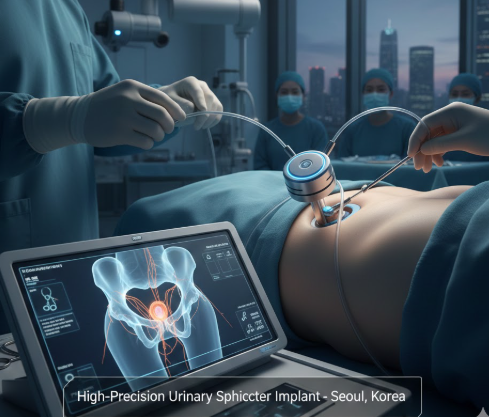
High-precision urinary sphincter implant surgery is an advanced, accuracy-driven procedure used to treat severe stress urinary incontinence (SUI). This surgery involves the placement of a modern Artificial Urinary Sphincter (AUS) that replicates the function of the natural sphincter. Korea is globally recognized for its high-end robotic systems, precision imaging, and highly skilled urologists, enabling an optimized and customized approach for each patient.
Through digital mapping, real-time imaging, and minimally invasive surgical techniques, Korean surgeons ensure a highly accurate implant position, reduced tissue trauma, and improved long-term continence outcomes. The procedure is ideal for patients seeking a durable and technologically advanced solution to urinary leakage.
Purpose & Benefits
The purpose of high-precision urinary sphincter implant surgery is to restore urinary control for individuals suffering from severe incontinence due to sphincter muscle failure. This advanced approach offers a substantial upgrade from traditional AUS systems by providing accuracy, stability, and long-term reliability.
Key benefits include:
• Near-natural urinary control for most patients
• Reduced leakage through exact pressure regulation
• Minimally invasive access that shortens recovery time
• Personalized implant fitting based on detailed pelvic imaging
• Lower risk of implant complications compared to older techniques
• High patient satisfaction rates and long-term durability
Patients who undergo this procedure in Korea benefit from cutting-edge device technology and world-class surgical expertise.
Ideal Candidates
This procedure is suitable for patients with moderate to severe stress urinary incontinence who have not responded to conservative treatments such as pelvic floor therapy, medication, or bulking agents.
Ideal candidates typically include:
• Men and women with intrinsic sphincter deficiency
• Patients with persistent leakage after prostatectomy
• Individuals requiring precise implant placement due to previous surgeries
• Patients with incontinence caused by trauma or nerve-related disorders
• Individuals seeking a long-lasting continence solution with high success rates
Korean hospitals perform extensive urodynamic assessments to ensure each candidate is properly evaluated before treatment.
Possible Risks & Complications
Although high-precision urinary sphincter implant surgery is generally safe, patients should be aware of potential risks and postoperative concerns.
Possible complications include:
• Infection at the surgical site
• Device malfunction or mechanical wear
• Urethral erosion due to long-term cuff pressure
• Persistent incontinence if device activation is suboptimal
• Pain or temporary discomfort after surgery
• Hematoma or mild swelling
To reduce these risks, Korean hospitals use advanced imaging, strict surgical protocols, and real-time intraoperative monitoring to achieve a favorable outcome.
Techniques & Technology Used
Korea is a global leader in medical technology, and its hospitals deploy highly advanced surgical tools and diagnostic systems for this procedure.
Typical technologies include:
• Robotic-assisted instruments for micro-level precision
• 3D pelvic CT or MRI mapping for customized device placement
• High-resolution ultrasound for real-time surgical guidance
• Pressure-regulated, smart AUS devices for optimal continence
• Biocompatible implant materials that minimize complications
• Minimally invasive entry points for reduced scarring
These innovations ensure precise implant placement, better comfort, and maximized long-term durability.
Treatment Process in Korea
Korean hospitals follow a streamlined and patient-centered pathway tailored for international medical travelers:
- Pre-Arrival Consultation
Patients share medical history and receive an initial suitability assessment. - In-Person Diagnostic Evaluation
Hospitals conduct pelvic imaging, cystoscopy, bloodwork, and urodynamic testing. - Customized Surgical Planning
Surgeons create a personalized surgical plan using 3D anatomical mapping. - Surgery
The minimally invasive operation lasts 1–2 hours under general or regional anesthesia. - Hospital Stay
Most patients stay 1–2 days for monitoring and recovery. - Healing Phase (4–6 Weeks)
The device remains inactive until tissues fully heal. - Device Activation
Once activated, the patient learns to operate the sphincter control pump. - Follow-Up Checkups
Surgeons make adjustments if necessary to optimize performance.
Korean hospitals offer high-level support for international patients, including translators, coordinators, and travel assistance.
Recovery & After-Care
Recovery is relatively smooth due to minimally invasive techniques used in Korea.
Patients can expect:
• Minor swelling or discomfort for a few days
• Return to normal activities within 1–2 weeks
• Avoidance of heavy lifting for about 4–6 weeks
• Device activation after healing
• Regular postoperative checkups
Korean medical centers emphasize structured after-care programs, including infection prevention, pelvic rehabilitation if needed, and detailed education on device operation.
Results & Longevity
High-precision urinary sphincter implants are known for excellent durability and continence success rates exceeding 85–90%. Patients typically experience:
• Significant reduction or elimination of leakage
• Improved independence and confidence
• Enhanced quality of life
• Device performance lasting 7–10 years or longer
Because Korea uses advanced placement techniques and high-quality materials, results are often more predictable and longer lasting than traditional approaches.
Why Korea Is a Top Destination
Korea has become one of the world’s top destinations for urinary sphincter implant surgery due to several key advantages:
• Leading-edge surgical robotics and imaging systems
• Highly experienced urologic surgeons
• Internationally accredited hospitals
• Efficient medical tourism programs
• Affordable pricing compared to the US and Europe
• Excellent patient support services in English
• High success and satisfaction rates
These strengths make Korea a preferred choice for patients seeking reliable and precise urinary incontinence treatment.
Cost Range
The typical cost of a high-precision urinary sphincter implant in Korea ranges from USD 13,000 to USD 22,000.
Pricing varies based on:
• The model and type of AUS device
• Use of robotic surgical assistance
• Hospital category (general, premium, or international center)
• Diagnostic tests required
• Postoperative care package duration
Despite the technology involved, Korea remains considerably more affordable than many Western countries.
Popular Clinics in Korea
Top centers offering high-precision urinary sphincter implant surgery include:
• Samsung Medical Center
• Asan Medical Center
• Seoul National University Hospital
• Severance Hospital
• Korea University Anam Hospital
• BnU Urology Clinic
• W Urology Hospital
• Chung-Ang University Hospital
These facilities are equipped with modern robotics, advanced diagnostic systems, and specialized urology units.


