
Treatment Overview
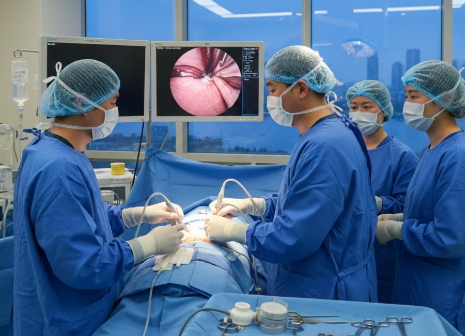
Laparoscopic Artificial Urinary Sphincter (AUS) Implant Surgery is a minimally invasive procedure used to treat severe stress urinary incontinence by implanting a device that restores sphincter control. Korea is recognized as one of the leading destinations for laparoscopic AUS surgery due to its advanced surgical technology, highly experienced urologists, and precise operative standards.
Unlike traditional open surgery, the laparoscopic method uses small incisions, specialized surgical instruments, and high-definition visualization systems to place the artificial sphincter components with exceptional accuracy. This leads to reduced postoperative pain, faster recovery, minimal scarring, and lower complication rates. Korea’s surgeons combine global best practices with the latest AUS technologies, making the procedure highly successful, especially for patients seeking faster healing and optimal device function.
Purpose & Benefits
The purpose of laparoscopic AUS implant surgery is to restore urinary continence in individuals with severe sphincter dysfunction. This includes men and women who experience urinary leakage due to prostate surgery, pelvic trauma, or intrinsic sphincter deficiency.
Major benefits include:
- Minimally invasive technique with small incisions
- Reduced postoperative discomfort compared to open surgery
- Faster recovery and shorter hospital stay
- Lower infection risk due to refined surgical access
- Precise device placement under magnified visualization
- Improved continence outcomes with long-term device durability
- High patient satisfaction, especially among medical tourists
Korea’s commitment to surgical innovation and patient-centered care enhances these advantages significantly.
Ideal Candidates
Laparoscopic AUS implant surgery in Korea is appropriate for:
- Men with severe stress urinary incontinence after prostate surgery
- Women with intrinsic sphincter deficiency or failed sling procedures
- Patients who prefer minimally invasive surgery
- Individuals who did not respond to pelvic floor therapy or medications
- Patients with good manual dexterity to operate the AUS pump
- Those free of active infections or untreated urethral strictures
Korean specialists perform detailed evaluations to confirm eligibility and plan the safest, most effective surgical route.
Possible Risks & Complications
Although the laparoscopic approach reduces many traditional surgical risks, certain complications may still occur:
- Infection at the surgical site or around the device
- Mechanical failure requiring future replacement
- Urethral atrophy or erosion
- Mild bruising, swelling, or discomfort
- Temporary urinary retention
- Anesthesia-related risks
- Rare device malfunction
Korea’s advanced infection prevention protocols, high-precision technique, and thorough diagnostic evaluations significantly reduce complication rates.
Techniques & Technology Used
Korean hospitals lead Asia in minimally invasive sphincter implantation, offering state-of-the-art laparoscopic systems combined with high surgical expertise.
Key technologies include:
- High-definition laparoscopic video systems
- 3D visualization for enhanced accuracy
- Miniaturized laparoscopic instruments for delicate urethral work
- Next-generation artificial sphincter devices such as AMS 800
- Improved cuff designs optimized for precise urethral fit
- Pressure-regulating balloons with advanced fluid control
- Enhanced sterilization standards to prevent infections
Korean surgeons are trained in reconstructive urology, ensuring the most effective positioning of each AUS component while minimizing trauma to surrounding tissues.
Treatment Process in Korea
Medical tourists undergoing laparoscopic AUS implant surgery in Korea experience a streamlined, supportive process:
- Pre-Consultation and Case Review
Patients submit medical histories, prior test results, and incontinence evaluations. Korean specialists review the case and recommend further tests if needed. - Comprehensive In-Person Evaluation
Upon arrival, patients undergo:- Urodynamic studies
- Cystoscopy
- Urinary flow analysis
- Infection screening
- Pelvic imaging (if required)
- Surgical Planning
The surgeon discusses surgical technique, device type, expected outcomes, risks, and recovery timeline. Patients receive clear preoperative instructions. - Laparoscopic AUS Implant Surgery
The procedure takes around 1–2 hours. Small incisions are made, and the device components are inserted and positioned precisely using a laparoscopic camera. The cuff is placed around the urethra, the balloon reservoir is implanted in the abdomen, and the control pump is positioned discreetly. - Immediate Postoperative Care
Patients usually remain in the hospital for 1–2 days for monitoring. Pain levels are generally mild and well-managed. - Healing and Device Activation
The AUS device remains inactive for 4–6 weeks to ensure proper healing. Activation is done during a follow-up visit, where patients learn to operate the pump. - Post-Return Support
Virtual consultations are available for international patients who return home after activation.
Recovery & After-Care
Recovery from laparoscopic AUS implantation is generally faster and more comfortable than traditional approaches.
Recommended postoperative care includes:
- Avoiding strenuous exercise or heavy lifting for several weeks
- Taking prescribed antibiotics to prevent infection
- Maintaining hygiene around the surgical site
- Wearing supportive but non-restrictive clothing
- Reporting symptoms such as fever, persistent pain, or unusual swelling
- Attending follow-up appointments as scheduled
Most patients resume daily activities within 7–10 days. Full recovery and device functionality occur after activation at the 4–6 week mark.
Results & Longevity
Laparoscopic AUS implant surgery offers excellent long-term outcomes:
- 75–90% improvement in continence
- Long device lifespan of 8–12 years
- Reduced pad usage or complete elimination
- High satisfaction among patients recovering from prostate surgery
- Precise device placement ensures stable function
Korean surgeons maintain strong success rates due to advanced techniques, updated device models, and comprehensive postoperative support.
Why Korea Is a Top Destination
Korea is globally recognized for excellence in minimally invasive continence surgery. Patients choose Korea for:
- Leading-edge laparoscopic and robotic technology
- Highly experienced continence and reconstructive urologists
- Efficient medical-tourism pathways with short waiting times
- Transparent cost structures and packaged treatment options
- Multilingual care teams and dedicated international coordinators
- High clinical standards and low complication rates
- Exceptional diagnostic and postoperative support systems
These features make Korea one of the safest and most reliable destinations for laparoscopic AUS implantation.
Cost Range
The cost of laparoscopic AUS implant surgery in Korea typically ranges from USD 18,000 – 32,000, depending on:
- Device type and manufacturer
- Surgeon’s expertise and surgical method
- Diagnostic evaluations required
- Hospital quality and location
- Postoperative care and follow-up services
Medical tourists often receive bundled packages that include consultations, tests, surgery, and interpretation services.
Popular Clinics in Korea
Korea offers several top-level centers specializing in laparoscopic AUS implantation:
- Seoul National University Hospital (SNUH)
- Asan Medical Center
- Samsung Medical Center
- Severance Hospital (Yonsei University Health System)
- W Hospital Urology Center
- Soonchunhyang University Hospital
- Private urology clinics specializing in minimally invasive continence surgery
These institutions are equipped with advanced laparoscopic equipment and internationally recognized surgical teams.


