
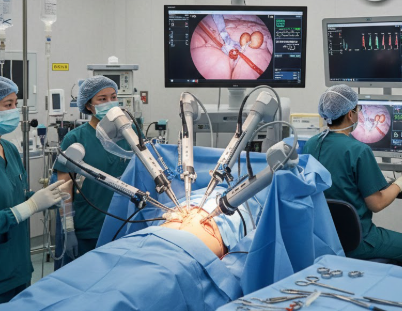
Treatment Overview
Laparoscopic Radical Prostatectomy is a minimally invasive surgical procedure designed to remove the prostate gland and surrounding tissues in patients diagnosed with prostate cancer. By using small incisions and specialized laparoscopic instruments, this surgery significantly reduces trauma compared to traditional open surgery. Korea is recognized globally for its advanced technology, highly skilled urologists, and comprehensive patient care in performing this procedure.
Purpose & Benefits
The main goal of a Laparoscopic Radical Prostatectomy is to completely remove cancerous tissue from the prostate while preserving nearby structures critical for urinary and sexual function. Benefits include:
- Reduced blood loss during surgery
- Minimal scarring due to small incisions
- Shorter hospital stay compared to open surgery
- Faster recovery and quicker return to daily activities
- High precision in tumor removal, reducing the risk of residual cancer
Ideal Candidates
This procedure is suitable for men diagnosed with localized or early-stage prostate cancer. Ideal candidates include:
- Patients with cancer confined to the prostate
- Individuals in good overall health who can tolerate anesthesia
- Men looking for a minimally invasive surgical option
- Those who prefer surgery over radiation or other treatment methods
Possible Risks & Complications
Though considered safe, Laparoscopic Radical Prostatectomy has potential risks:
- Urinary incontinence, usually temporary but occasionally long-term
- Erectile dysfunction depending on nerve-sparing feasibility
- Infection or bleeding at the surgical site
- Rare injury to surrounding organs such as the bladder or rectum
- Blood clots or anesthesia-related complications
Korean hospitals emphasize thorough pre-operative assessment to reduce these risks.
Techniques & Technology Used
Korea employs state-of-the-art equipment and techniques for this surgery:
- High-definition 3D laparoscopes for precise visualization
- Robotic-assisted systems for enhanced dexterity and accuracy
- Advanced energy devices to minimize bleeding
- Nerve-sparing approaches to preserve sexual function
- Intraoperative imaging for precise tumor localization
Treatment Process in Korea
The procedure typically involves:
- Initial Consultation: Evaluation with PSA testing, MRI scans, and biopsy review.
- Pre-operative Preparation: Guidelines for fasting, medications, and lifestyle adjustments.
- Surgery: Laparoscopic removal of the prostate and affected tissues under general anesthesia.
- Hospital Stay: Usually 2-4 days with monitoring of urinary function.
- Follow-Up Care: Regular PSA testing and imaging to monitor for recurrence.
Korean hospitals also provide multilingual coordinators to assist international patients throughout the process.
Recovery & After-Care
Recovery is optimized with:
- Early mobilization to reduce clot risks
- Catheter management and urinary care guidance
- Pelvic floor exercises to strengthen muscles
- Nutritional advice for healing
Most patients return to normal activities within 4-6 weeks, while full recovery of urinary and sexual function may take longer.
Results & Longevity
Laparoscopic Radical Prostatectomy offers excellent long-term outcomes:
- High rates of cancer control for localized prostate cancer
- Low recurrence risk with proper follow-up
- Minimal scarring and faster recovery
Routine PSA monitoring ensures early detection of recurrence, supporting lasting treatment success.
Why Korea Is a Top Destination
Korea is a leading choice for prostate surgery due to:
- World-class urologists trained in minimally invasive and robotic techniques
- Advanced surgical technology and high-definition equipment
- Comprehensive patient care, including support for international medical tourists
- Competitive pricing without compromising quality
- High success rates and excellent patient satisfaction
Cost Range
The cost generally ranges between $12,000 and $18,000 USD, depending on the hospital, surgical complexity, and post-operative care. Some hospitals offer international patient packages that can include airport pickup, translation services, and follow-up care.
Popular Clinics in Korea
Top clinics for this procedure include:
- Samsung Medical Center, Seoul
- Asan Medical Center, Seoul
- Seoul National University Hospital, Seoul
- Severance Hospital, Yonsei University, Seoul
- CHA Bundang Medical Center, Seongnam
These hospitals are renowned for their advanced surgical expertise, patient-centered services, and international patient support.


