
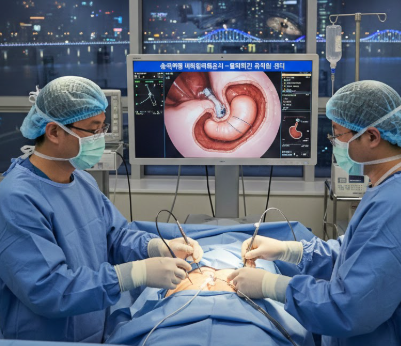
Treatment Overview
Laparoscopic Roux‑en‑Y Gastric Bypass is a minimally invasive bariatric procedure designed to help patients achieve long-term weight loss and improve metabolic health. Unlike traditional open surgery, the laparoscopic approach uses small incisions, resulting in less pain, reduced scarring, and faster recovery. The procedure reduces stomach size and reroutes a portion of the small intestine, limiting calorie absorption. Korea has become a top medical tourism destination for this surgery due to its advanced technology, skilled surgeons, and comprehensive care for international patients.
Purpose & Benefits
The surgery primarily aims to treat obesity and related health conditions. Key benefits include:
- Significant and sustained weight loss.
- Improvement or resolution of type 2 diabetes, high blood pressure, and sleep apnea.
- Reduced risk of cardiovascular disease and obesity-related complications.
- Enhanced mobility, energy levels, and overall quality of life.
- Minimally invasive procedure leads to faster recovery and shorter hospital stays.
Ideal Candidates
Laparoscopic Roux‑en‑Y Gastric Bypass is recommended for:
- Individuals with a BMI of 40 or higher.
- Patients with a BMI of 35–39.9 who have obesity-related health conditions.
- Adults aged 18–65 who have failed to achieve lasting weight loss through diet, exercise, or medication.
- Individuals willing to commit to long-term lifestyle changes, including diet, exercise, and follow-up care.
Possible Risks & Complications
While generally safe, potential risks include:
- Bleeding, infection, or adverse reactions to anesthesia.
- Nutritional deficiencies, including vitamins B12, D, calcium, and iron.
- Dumping syndrome, causing nausea, diarrhea, or dizziness after eating certain foods.
- Rare complications like bowel obstruction, hernias, or leaks at the surgical site.
Korean hospitals minimize risks with precise laparoscopic techniques, detailed pre-operative evaluation, and rigorous post-operative monitoring.
Techniques & Technology Used
Korea is at the forefront of laparoscopic bariatric surgery using:
- Laparoscopic Instruments: Small incisions reduce trauma and accelerate recovery.
- Robotic Assistance (Optional): Enhances precision in complex cases.
- High-Definition Imaging: Provides clear visualization for accurate surgery.
- Post-Operative Monitoring Systems: Ensure safe recovery and early detection of complications.
Treatment Process in Korea
- Consultation: Evaluation of medical history, BMI, and obesity-related conditions.
- Pre-Operative Assessment: Blood tests, imaging, and nutritional analysis.
- Surgery: Conducted under general anesthesia, usually lasting 2–4 hours.
- Hospital Stay: 2–4 days with monitoring by a multidisciplinary medical team.
- Post-Operative Care: Includes dietary guidance, exercise plan, and regular follow-ups for optimal recovery.
Recovery & After-Care
- Immediate Post-Surgery: Light walking and hydration; liquid diet.
- Weeks 2–4: Gradual transition from liquid to soft foods, then solid foods.
- Nutritional Supplements: Essential vitamins and minerals to prevent deficiencies.
- Follow-Ups: Regular check-ups to monitor weight loss, nutrition, and overall health.
- Lifestyle Changes: Emphasis on portion control, balanced diet, and regular physical activity.
Results & Longevity
- Patients typically lose 60–80% of excess body weight within 12–18 months.
- Long-term improvement or remission of type 2 diabetes and other obesity-related conditions.
- Sustained weight management is achievable with proper diet, exercise, and follow-up care.
- Korean patients report high satisfaction due to skilled surgeons, advanced techniques, and comprehensive support.
Why Korea Is a Top Destination
- Highly experienced bariatric surgeons specializing in laparoscopic procedures.
- Advanced hospitals with state-of-the-art equipment and technology.
- Full pre- and post-operative care programs tailored to international patients.
- Competitive costs without compromising quality of care.
- English-speaking staff and concierge services for medical tourists.
Cost Range
- Surgery alone: $8,500 – $15,500 USD
- Comprehensive packages (pre-op testing, hospital stay, post-op care, and medical tourism support): $12,500 – $20,500 USD
Popular Clinics in Korea
- Seoul National University Hospital – Bariatric Surgery Center
- Asan Medical Center – Weight Loss Surgery Department
- Samsung Medical Center – Obesity & Metabolic Surgery
- JK Plastic Surgery & Bariatric Center
- Korea University Anam Hospital – Bariatric Surgery Unit


