
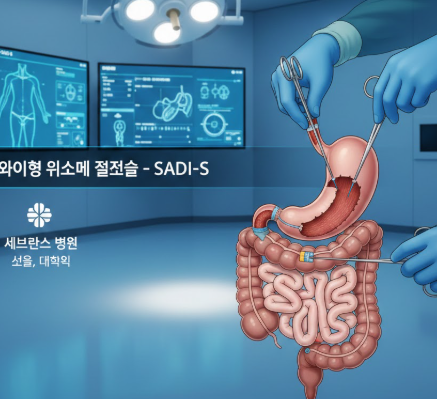
Treatment Overview
Roux‑en‑Y SADI‑S (Single Anastomosis Duodeno‑Ileal Bypass with Sleeve) Surgery is an advanced bariatric and metabolic procedure designed for patients with severe obesity and type 2 diabetes. This procedure combines a sleeve gastrectomy with a single-anastomosis duodeno-ileal bypass to limit food intake and reduce calorie absorption while optimizing hormonal regulation for improved metabolic function. Korea is recognized for performing SADI‑S with state-of-the-art laparoscopic and robotic-assisted techniques, ensuring precise surgery and comprehensive pre- and post-operative care for international patients.
Purpose & Benefits
SADI‑S Surgery offers numerous benefits:
- Significant and sustained weight loss, even for morbidly obese patients.
- Improvement or remission of type 2 diabetes and insulin resistance.
- Reduction of obesity-related comorbidities, including hypertension, dyslipidemia, and sleep apnea.
- Enhanced metabolic function and hormonal regulation for better appetite control.
- Shorter operative time and fewer anastomoses compared to traditional duodenal switch procedures, reducing potential complications.
Ideal Candidates
SADI‑S Surgery is suitable for:
- Adults with BMI ≥ 45, or BMI ≥ 40 with comorbidities.
- Patients with BMI 35–44 who have severe obesity-related metabolic disorders.
- Individuals with type 2 diabetes seeking surgical management for better glycemic control.
- Adults aged 18–65 committed to lifelong dietary adherence, supplementation, and lifestyle changes.
Possible Risks & Complications
Potential risks include:
- Surgical complications such as bleeding, infection, or anesthesia reactions.
- Nutritional deficiencies (protein, vitamins A, D, E, K, B12, calcium, iron, zinc) if post-operative dietary guidance is not followed.
- Dumping syndrome or gastrointestinal disturbances.
- Rare complications including leaks, strictures, bowel obstruction, or ulcers.
Korean hospitals minimize risks with careful pre-operative assessment, advanced minimally invasive techniques, and structured post-operative nutritional and metabolic monitoring.
Techniques & Technology Used
Korean hospitals employ advanced techniques for optimal outcomes:
- Laparoscopic SADI‑S: Minimally invasive surgery with faster recovery and smaller scars.
- Robotic-Assisted Surgery (optional): Provides enhanced precision for complex cases.
- Single-Anastomosis Technique: Simplifies the surgery while maintaining effective weight loss and metabolic benefits.
- Post-Operative Metabolic Monitoring: Tracks weight, nutrient intake, blood sugar, and hormonal changes.
- Multidisciplinary Care: Surgeons, dietitians, endocrinologists, and psychologists collaborate for comprehensive patient support.
Treatment Process in Korea
- Consultation: Assessment of BMI, metabolic health, and comorbidities.
- Pre-Operative Testing: Blood tests, imaging, nutritional and hormonal evaluation.
- Surgery: Performed under general anesthesia, typically lasting 2–4 hours.
- Hospital Stay: 2–4 days with multidisciplinary monitoring.
- Post-Operative Care: Includes dietary counseling, exercise planning, metabolic monitoring, and regular follow-up visits to ensure optimal outcomes.
Recovery & After-Care
- Immediate Post-Surgery: Early ambulation, hydration, and liquid diet.
- Weeks 2–4: Gradual progression from liquid to soft foods, then solid foods under dietitian supervision.
- Nutritional Supplements: Lifelong vitamins and minerals to prevent deficiencies.
- Lifestyle Support: Balanced diet, exercise, portion control, and behavioral guidance.
- Regular Follow-Ups: Monitor weight, metabolic improvements, and nutritional balance.
Results & Longevity
- Patients typically achieve 65–85% excess weight loss within 12–18 months.
- Significant improvement or remission of type 2 diabetes and other obesity-related conditions.
- Lifelong adherence to diet, supplements, and follow-ups ensures sustained results.
- High patient satisfaction due to simplified surgery, fast recovery, and comprehensive care.
Why Korea Is a Top Destination
- Experienced bariatric surgeons specializing in SADI‑S and metabolic surgery.
- Advanced hospitals equipped with laparoscopic and robotic-assisted surgery technology.
- Structured pre- and post-operative programs designed for international patients.
- Competitive pricing with world-class quality and patient safety.
- English-speaking staff, concierge services, and full medical tourism support.
Cost Range
- Surgery alone: $9,500 – $18,500 USD
- Full packages (including pre-op testing, hospital stay, dietary counseling, post-op care, and medical tourism support): $14,000 – $25,000 USD
Popular Clinics in Korea
- Seoul National University Hospital – Bariatric & SADI‑S Surgery Center
- Asan Medical Center – Advanced Obesity & Metabolic Surgery Department
- Samsung Medical Center – Bariatric & Metabolic Surgery Unit
- JK Plastic Surgery & Bariatric Center – SADI‑S & Obesity Care
- Korea University Anam Hospital – SADI‑S & Metabolic Surgery Unit


