
Treatment Overview
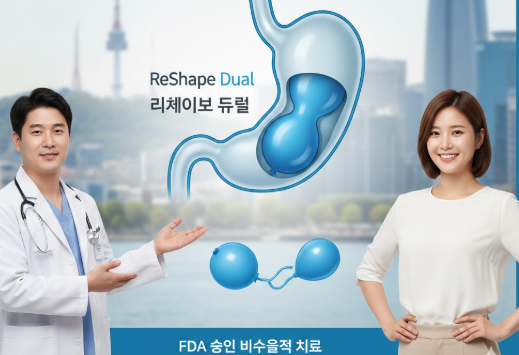
The ReShape Dual Balloon is a non-surgical, endoscopic weight loss procedure designed to help patients with obesity lose weight by reducing stomach volume and promoting early satiety. This system involves two interconnected balloons placed in the stomach, creating a feeling of fullness that supports reduced calorie intake. It is temporary and minimally invasive, remaining in place for up to six months before removal.
→ Endoscopic placement under mild sedation.
→ Two interconnected balloons to reduce migration risk.
→ Remains in place for about six months before endoscopic removal.
Korea is a preferred destination due to advanced endoscopic technology, experienced specialists, and tailored weight loss support programs for international patients.
Purpose & Benefits
The ReShape Dual Balloon provides several important benefits:
→ Non-surgical, reversible weight loss option.
→ Occupies stomach space to decrease hunger and control portions.
→ Supports weight loss in patients who have not succeeded with diet and exercise alone.
→ Improves metabolic conditions such as diabetes, hypertension, and dyslipidemia when combined with lifestyle changes.
→ Enhances quality of life through improved physical and metabolic health.
This method is suitable for individuals seeking effective weight management without invasive surgery.
Ideal Candidates
Ideal candidates for the ReShape Dual Balloon include adults who:
→ Have a BMI of approximately 30–40 kg/m² with one or more obesity-related conditions.
→ Failed to lose weight with diet and exercise alone.
→ Are motivated to follow lifestyle modification programs including diet and exercise.
→ Are willing to participate in ongoing monitoring and follow-up care.
Patients with certain conditions, such as prior gastrointestinal surgery, large hiatal hernias, or active GI inflammatory disease, may not be suitable and should be evaluated by specialists.
Possible Risks & Complications
Although generally safe, the ReShape Dual Balloon can involve risks:
→ Nausea, vomiting, and abdominal discomfort after placement.
→ Gastric ulcers or irritation due to balloon presence.
→ Balloon deflation or migration, which may require early removal.
→ Rare but serious risks such as intestinal obstruction or perforation if left longer than recommended.
→ Adverse reactions to sedation during placement or removal.
Patients receive detailed risk education and monitoring protocols to reduce the likelihood of complications.
Techniques & Technology Used
ReShape Dual Balloon procedures in Korea utilize advanced endoscopic methods and integrated care support:
→ State-of-the-art endoscopic equipment for precise placement and removal.
→ Dual balloon design to reduce migration and enhance stability.
→ Methylene blue tracking — dye in the balloon can indicate deflation if urine turns blue-green.
→ Multidisciplinary support team including dietitians, nutritionists, and lifestyle coaches.
→ Continuous monitoring programs for metabolic health, diet adherence, and weight loss progress.
Korean clinics combine high-end technology with structured patient programs to improve safety and outcomes.
Treatment Process in Korea
The typical ReShape Dual Balloon process includes:
→ Initial Consultation → Assessment of BMI, health history, and weight loss goals.
→ Pre-Procedure Evaluation → Lab tests, imaging, and endoscopic evaluation.
→ Balloon Placement → Endoscopic insertion under mild sedation (typically 20–30 minutes).
→ Post-Placement Monitoring → Observation and guidance before discharge the same day.
→ Follow-Up Care → Regular check-ins, dietary coaching, and lifestyle counseling.
→ Balloon Removal → Endoscopic removal after approximately six months.
Korean clinics provide structured care pathways that integrate weight management support before, during, and after the balloon treatment.
Recovery & After-Care
Recovery after ReShape Dual Balloon placement is straightforward:
→ Mild discomfort or nausea in the first few days.
→ Gradual diet progression starting with liquids, then soft foods, and finally solid foods.
→ Hydration and daily follow-up to minimize side effects.
→ Regular follow-ups for weight monitoring and nutritional guidance.
→ Lifestyle and exercise coaching to support long-term success.
Patients routinely resume daily activities within a few days, with weight loss progress observed over the six-month period.
Results & Longevity
Expected outcomes include:
→ Moderate weight loss over the treatment period, often greater than diet and exercise alone.
→ Reduction in excess body weight within six months.
→ Improved metabolic health indicators when combined with lifestyle changes.
→ Sustained behaviors for long-term weight management after balloon removal.
Success is highest when patients follow diet and exercise recommendations throughout the treatment period and beyond.
Why Korea Is a Top Destination
Korea is a preferred destination for ReShape Dual Balloon treatment due to:
→ Experienced gastroenterologists trained in advanced endoscopic therapies.
→ Modern healthcare facilities with endoscopic and minimally invasive procedures.
→ Structured weight loss support programs that integrate nutrition and lifestyle guidance.
→ Affordable options compared to many Western countries.
→ Comprehensive care coordination for international patients, including language support.
Patients benefit from cutting-edge procedures combined with personalized care and ongoing follow-up.
Cost Range
Costs vary based on clinic, program length, and support services, but typical ranges include:
→ Standard ReShape Dual Balloon Procedure: $4,000 – $7,000 USD
→ Comprehensive Weight Management Program with Follow-Up: $6,000 – $9,000 USD
Costs generally include consultations, endoscopic placement and removal, follow-up, and support services. Packages for international patients may include pre-travel coordination and post-procedure guidance.
Popular Clinics in Korea
Top clinics offering ReShape Dual Balloon and supported weight loss programs include:
→ Seoul National University Hospital, Endoscopy & Bariatric Unit – Comprehensive intragastric balloon therapy and follow-up.
→ Asan Medical Center, Obesity & Metabolic Surgery Unit – Integrated weight loss care including balloons.
→ Samsung Medical Center, Endoscopy Department – Advanced balloon placement technology and monitoring.
→ JK Plastic & Obesity Clinic, Seoul – Personalized weight loss solutions including intragastric balloons.
→ Medi-Weight Clinic, Seoul – International patient support with diet and lifestyle programs.
These centers provide high-quality care and structured patient support for ReShape and other gastric balloon therapies.


