
Treatment Overview
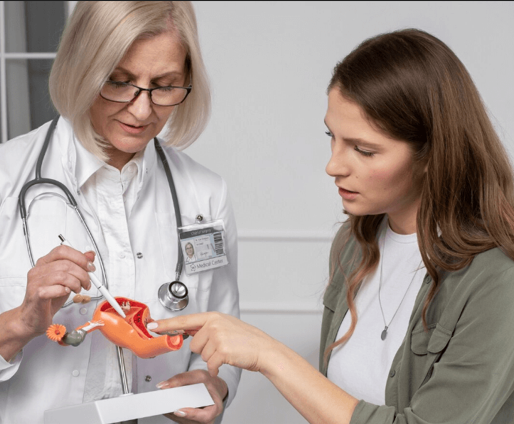
Advanced Hysteroscopic Polypectomy in Korea is a minimally invasive surgical procedure used to remove endometrial (uterine) polyps. A thin, lighted instrument called a hysteroscope is inserted through the vagina and cervix into the uterus, allowing the surgeon to visualize and remove polyps with precision. This approach avoids external incisions, preserves the uterus, and promotes faster recovery with minimal discomfort.
Purpose & Benefits
- Removes uterine polyps causing abnormal bleeding or spotting
- Alleviates menstrual irregularities and pelvic discomfort
- Improves fertility by clearing obstructions that may hinder implantation
- Enables tissue analysis to rule out precancerous or cancerous changes
- Minimally invasive, with faster recovery and minimal scarring
Ideal Candidates
- Women experiencing abnormal uterine bleeding or infertility due to polyps
- Patients diagnosed with endometrial polyps via ultrasound or hysterosonography
- Women preparing for fertility treatments or IVF
- Individuals with recurrent polyps or hormonal imbalances
- Postmenopausal women with endometrial growths requiring removal and biopsy
Possible Risks & Complications
- Mild bleeding or spotting after the procedure
- Uterine perforation (rare)
- Infection or inflammation (endometritis)
- Fluid overload or electrolyte imbalance (from distension medium)
- Adhesion formation (intrauterine scarring)
- Recurrence of polyps if incompletely removed
- Anesthesia-related side effects
Surgical Techniques Used
- Standard Hysteroscopic Resection: Using an electrical loop or mechanical instruments under hysteroscopic view.
- Cold-Loop Technique: Removal using scissors or graspers without electrical current.
- Bipolar/Monopolar Electrocautery: Uses energy to precisely excise the polyp base and control bleeding.
- Tissue Morcellation System: Mechanically fragments and removes tissue for efficiency and safety.
- Combined with D&C (Dilation & Curettage): In select cases to ensure complete clearance.
Recovery & Aftercare
- Usually performed as an outpatient or day surgery.
- Mild cramping or light bleeding for a few days is normal.
- Patients should avoid intercourse, tampons, and strenuous activity for about 1–2 weeks.
- Pain relievers and antibiotics may be prescribed as needed.
- Follow-up visit within 1–2 weeks for healing assessment and pathology results.
- Regular checkups to monitor recurrence, especially for high-risk patients.
Results & Longevity
- Most patients experience immediate relief from symptoms after recovery.
- Fertility outcomes often improve once the uterine cavity is normalized.
- Recurrence rates are low when removal is complete and hormonal balance is maintained.
- Long-term success is typically achieved with proper follow-up and preventive care.
Treatment Process in Korea
South Korea is a global leader in minimally invasive gynecologic surgery, including hysteroscopic polypectomy. Korean clinics and hospitals use the latest imaging-guided systems, precision electrosurgical tools, and tissue retrieval devices to ensure accuracy and safety.
Why Korea is a top destination:
- Advanced surgical technology and modern equipment
- Highly skilled gynecologic endoscopy specialists
- Strong focus on fertility preservation and patient comfort
- Multilingual services for international patients
- Efficient, coordinated care and shorter hospital stays
Typical treatment involves an online consultation, preoperative evaluation, procedure under anesthesia (usually same day), and a brief recovery period before returning home. Korea’s medical centers are renowned for combining cutting-edge technology with personalized care.
Cost Range
The cost of advanced hysteroscopic polypectomy in Korea typically ranges from USD 3,000 to USD 6,000, depending on hospital type, surgeon experience, and procedure complexity.
Some clinics may charge less for minor cases or diagnostic hysteroscopy (around ₩300,000–₩1,500,000).
The total cost usually includes consultation, surgery, anesthesia, pathology, and follow-up care.
Popular Clinics with Advanced Hysteroscopic Polypectomy in Korea
- Seoul Miz Hospital – Specializes in women’s health and minimally invasive gynecologic surgery.
- Gangnam OB-GYN Clinics – Private clinics in Seoul known for advanced hysteroscopic procedures and fertility care.
- Yoonho OB/GYN Hospital, Gangnam – Offers comprehensive surgical gynecology and hysteroscopic services.
- MizMedi Hospital, Seoul – Recognized for women’s reproductive and surgical health excellence.
- Kyung Hee University Hospital at Gangdong – Provides university-level medical care with advanced endoscopic equipment.
- Asan Medical Center & Samsung Medical Center – Major tertiary hospitals offering high-standard gynecologic surgery and research-backed treatment.


