
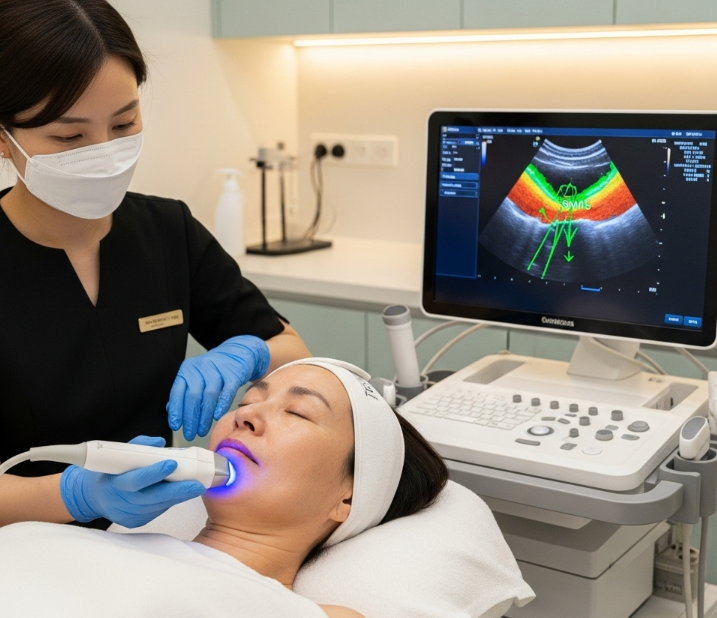
Treatment Overview
The Advanced SMAS Lift is one of Korea’s most refined surgical anti-aging procedures, targeting the Superficial Musculoaponeurotic System (SMAS) layer—the same deep tissue structure addressed in facelifts performed by top plastic surgeons worldwide. Unlike traditional skin-only facelifts, the SMAS technique lifts and tightens the deeper muscular layer, resulting in long-lasting, natural-looking rejuvenation.
Korean plastic surgery clinics are globally renowned for their precision in SMAS lifting techniques, often combining them with fat grafting, thread lifting, or skin resurfacing to enhance outcomes. The Advanced SMAS Lift not only smooths wrinkles and sagging but also restores youthful facial structure with results that can last 10 years or more.
Purpose & Benefits
- Deep Layer Lifting: Targets SMAS for more durable results.
- Facial Contouring: Restores jawline definition and midface volume.
- Wrinkle Reduction: Smooths deep folds and fine lines.
- Sagging Correction: Lifts cheeks, jowls, and neck.
- Long-Lasting Effect: Results often last 8–12 years.
- Natural Look: Avoids the “over-pulled” or artificial appearance.
- Combinable with Other Procedures: Can be enhanced with fat grafting, eyelid lift, or skin tightening.
Ideal Candidates
The Advanced SMAS Lift is recommended for:
- Adults in their 40s–70s with significant sagging and facial aging.
- Patients with deep nasolabial folds, jowls, or neck laxity.
- Individuals who want a permanent alternative to non-surgical lifts.
- Men and women looking for structural rejuvenation, not just skin tightening.
- Patients seeking natural, balanced anti-aging outcomes.
Possible Risks & Complications
As a surgical procedure, SMAS lifting carries more risks than non-surgical options, though Korean surgeons minimize these through advanced methods:
- Swelling or Bruising: Common, lasts 1–3 weeks.
- Temporary Numbness or Tightness: May occur in treated areas.
- Scarring: Hidden along natural hairlines and ear creases.
- Rare Complications: Infection, nerve injury, or hematoma (rare in experienced clinics).
Surgical Techniques Used
Korean surgeons are internationally respected for their mastery of SMAS facelift techniques:
- Deep Plane or High-SMAS Technique: Provides natural lifting by repositioning deep tissues.
- Customized Incision Mapping: Hidden along hairline and ear for minimal visibility.
- Vertical Lifting Approach: Elevates tissues upward (not backward) for natural results.
- Fat Grafting or Removal: Restores youthful contours while tightening sagging areas.
- Combination Care: May be paired with endoscopic brow lift, eyelid surgery, or laser resurfacing for full-face rejuvenation.
Recovery & Aftercare
- Immediately After: Swelling, tightness, and bruising are expected.
- 1–2 Weeks: Stitches removed; most swelling subsides.
- 3–4 Weeks: Patients can return to normal daily activities.
- 2–3 Months: Full healing and natural results become visible.
- Downtime: Moderate—most patients take 2 weeks off work.
Aftercare Tips:
- Sleep with head elevated to reduce swelling.
- Avoid heavy exercise for at least 4 weeks.
- Follow wound care instructions to minimize scarring.
- Use hydrating creams and sun protection daily.
Results & Longevity
- Immediate: Noticeable lift in cheeks, jawline, and neck.
- Short-Term (2–3 Months): Wrinkles smooth, contours refine.
- Medium-Term (1–2 Years): Skin remains tight as collagen remodeling continues.
- Long-Term: Results last 8–12 years, with some patients enjoying even longer benefits.
Treatment Process in Korea
Consultation & Surgical Planning – Surgeon evaluates facial sagging, skin elasticity, and bone structure to create a tailored SMAS plan.
Preparation – Pre-surgery blood tests, anesthesia consultation, and incision planning.
Surgery – Incisions placed along the hairline and ears, with deep SMAS tightening and repositioning. Excess skin trimmed for natural contour.
Post-Surgery Care – Compression bandages applied; swelling managed with cold packs and medications.
Follow-Up – Regular clinic visits during the first 2–3 weeks to monitor healing.
Why Korea is a Top Destination –
- World leaders in advanced SMAS and deep plane facelifts.
- Minimally visible scars due to unique Korean incision techniques.
- Integration with fat grafting, threads, and laser care for full rejuvenation.
- High safety standards with board-certified plastic surgeons.
- Seoul’s global reputation as the center of aesthetic surgery innovation.
Cost Range
The cost of an Advanced SMAS Lift in Korea varies depending on the clinic’s reputation, surgeon’s expertise, and additional procedures:
- Mini-SMAS Lift (Lower Face Only): USD 6,500 – 10,000
- Full-Face SMAS Lift: USD 12,000 – 18,000
- Full-Face + Neck Lift: USD 15,000 – 22,000
- Comprehensive Anti-Aging Package (SMAS + Fat Grafting + Eyelid Lift): USD 18,000 – 28,000
Additional Costs in Korea:
- Pre-surgery consultation: USD 50 – 200
- Anesthesia fee: USD 1,000 – 2,500
- Post-surgery care & medications: USD 300 – 800
💡 Results typically last a decade or longer, making SMAS one of the most cost-effective long-term anti-aging procedures.
Popular Clinics
- Banobagi Plastic Surgery (Seoul): Specialists in advanced SMAS and deep-plane lifts.
- JW Plastic Surgery (Seoul): Internationally recognized for facial anti-aging surgery.
- View Plastic Surgery (Seoul): Known for SMAS + fat grafting combination lifts.
- ID Hospital (Seoul): Experts in structural contour correction and lifting.
- Chaum Wellness Center (Seoul): Luxury holistic surgical and non-surgical anti-aging programs.


