
Treatment Overview
The Q-Switched Alexandrite Laser operates at a 755 nm wavelength, making it especially effective for targeting melanin-rich lesions such as birthmarks and pigmented spots. It delivers high-intensity, ultra-short pulses that selectively fragment melanin without significantly harming surrounding skin.
In Korea, the Q-Switched Alexandrite Laser is widely used for treating pigmented birthmarks like café-au-lait spots, congenital nevi, and Ota nevus, as well as for freckles and tattoos. It is valued for its precision, effectiveness, and safety in fair to medium skin tones, and is considered a gold-standard device in birthmark and pigment lesion correction.
It belongs to the Birthmark & Pigmentation Laser family (Q-Switched Alexandrite, Q-Switched Ruby, Nd:YAG, Pico Lasers):
- Q-Switched Alexandrite (755 nm): Best for pigmented birthmarks + superficial pigment.
- Q-Switched Ruby (694 nm): Best for stubborn pigment and resistant birthmarks.
- Q-Switched Nd:YAG (1064/532 nm): Best for deeper pigment + melasma.
- Pico Lasers (PicoSure, PicoPlus, PicoCare): Best for pigment + scars with faster recovery.
Purpose & Benefits
- Birthmark Clearance: Targets congenital pigmented birthmarks, Ota nevus, and café-au-lait spots.
- Pigment Removal: Also clears freckles, sunspots, and age spots.
- Tattoo Removal: Effective for darker inks, particularly black and blue.
- Precision: Selectively breaks down melanin while sparing surrounding skin.
- Safe & Non-Invasive: Minimal downtime compared to ablative procedures.
Ideal Candidates
Alexandrite Q-Switched Laser in Korea is recommended for:
- Children and adults with congenital pigmented birthmarks (Ota nevus, café-au-lait).
- Patients with sun-induced pigmentation or freckles.
- Individuals with tattoos they wish to remove.
- Men and women comparing treatments:
- Q-Switched Alexandrite: Best for birthmarks + surface pigment.
- Q-Switched Ruby: Best for resistant pigment + deeper lesions.
- Nd:YAG: Best for melasma + deep dermal pigment.
- Pico Lasers: Best for faster pigment clearance + scar improvement.
Possible Risks & Complications
The Q-Switched Alexandrite Laser is safe, but mild side effects may include:
- Redness & Swelling: Temporary, fades within 24–48 hours.
- Crusting or Scabbing: As pigmented cells rise to the surface and exfoliate.
- Temporary Darkening: Birthmarks or spots may darken before fading.
- Rare Risks: Hypopigmentation, hyperpigmentation, or scarring (rare in expert Korean clinics).
Surgical Techniques Used
The Q-Switched Alexandrite Laser uses 755 nm selective photothermolysis:
- 755 nm Wavelength: Strongly absorbed by melanin, effective for pigmented birthmarks.
- Q-Switched Mode: Ultra-short pulses shatter melanin into small particles.
- Protocol:
- Birthmarks: 3–8 sessions spaced 4–6 weeks apart.
- Pigmented lesions: 2–5 sessions for freckles/sunspots.
- Tattoos: 6–10 sessions depending on color/depth.
Recovery & Aftercare
- Immediately: Mild redness, swelling, or sensitivity.
- 2–3 Days: Crusting or scabbing may form over treated areas.
- 1–2 Weeks: Pigment begins to lighten and peel away.
Aftercare Tips:
- Use soothing ointments to aid healing.
- Apply SPF 50+ daily to prevent recurrence or darkening.
- Avoid picking at scabs or crusts.
- Avoid harsh skincare (scrubs, acids, retinoids) for 1–2 weeks.
Results & Longevity
- After First Session: Birthmarks or spots darken, then gradually fade.
- Short-Term (2–3 Sessions): Visible lightening of birthmarks or pigmentation.
- Medium-Term (4–6 Sessions): Significant clearance of pigmented lesions.
- Long-Term: Permanent reduction of treated pigment, though new spots may form over time.
Treatment Process in Korea
- Consultation & Skin Analysis – Doctor evaluates birthmark type, pigment depth, and skin tone.
- Preparation – Cleansing, protective eyewear, numbing cream if needed.
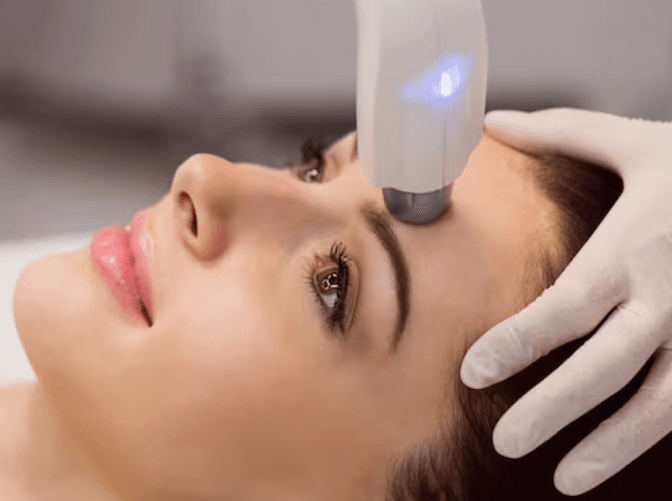
- Alexandrite Laser Session – 755 nm pulses applied precisely to birthmark or pigmented lesion.
- Post-Care: Cooling gel, soothing ointment, or antioxidant serum applied.
- Follow-Up: Multiple sessions scheduled for full clearance.
Why Korea is a Top Destination
- Korea is known for expertise in treating congenital and acquired pigmentation, especially in Asian skin.
- Dermatologists use FDA/KFDA-approved Alexandrite systems with advanced protocols.
- Affordable compared to Western birthmark removal programs.
- Clinics often combine Alexandrite with Nd:YAG or Pico lasers for complex pigment lesions.
- Seoul is internationally recognized for birthmark and pigment laser excellence.
Cost Range (Detailed Breakdown)
Pricing for Q-Switched Alexandrite Laser in Korea:
- Birthmark Removal (per session, small area): USD 200 – 400
- Medium to Large Birthmark (per session): USD 400 – 800
- 5–8 Session Package: USD 1,500 – 4,000 depending on size and depth
Additional Costs in Korea:
- Consultation: USD 20 – 50
- Add-ons (Whitening drips, regenerative serums): USD 80 – 300
💡 The Q-Switched Alexandrite Laser is often called “the birthmark eraser” in Korea, as it effectively clears café-au-lait spots, Ota nevus, and pigmented lesions with precision and safety.
Popular Clinics
- Banobagi Dermatology (Seoul): Alexandrite laser for congenital birthmark removal.
- Oracle Dermatology (Seoul): Alexandrite protocols for Ota nevus + pigment lesions.
- Renewme Skin Clinic (Seoul): Alexandrite + Pico combo for resistant birthmarks.
- View Plastic & Dermatology (Seoul): Alexandrite for café-au-lait and acquired lesions.
- Chaum Anti-Aging Center (Seoul): Premium Alexandrite with regenerative boosters.


