
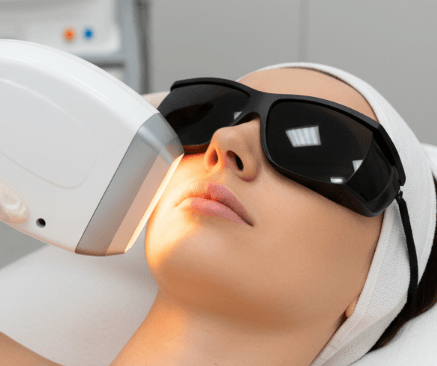
Treatment Overview
The Q-Switched Alexandrite Laser (755 nm) is a pigment-specific laser that delivers nanosecond pulses to shatter melanin into fine fragments, allowing the body to clear them naturally. With a strong affinity for melanin, it is effective for stubborn pigmentation, congenital pigmented lesions, freckles, and dermal pigment conditions.
In Korea, the Q-Switched Alexandrite Laser is applied for resistant or mixed-type melasma, particularly when other treatments like Nd:YAG toning or IPL show limited results. However, because it is strongly absorbed by melanin, it carries a higher risk of post-inflammatory hyperpigmentation (PIH) in Asian skin. For this reason, Korean dermatologists usually apply low-fluence, cautious protocols and often combine Alexandrite with Nd:YAG toning, Dual Toning, or Pico Lasers to enhance safety and long-term results.
It belongs to the Pigmentation Treatment family (Alexandrite, Ruby, Nd:YAG, Dual Toning, Gold Toning, Pico Lasers, Fraxel, Clear + Brilliant, CO₂):
- Alexandrite (755 nm): Best for resistant melasma + congenital pigment.
- Ruby (694 nm): Best for congenital pigment + resistant melasma (higher PIH risk).
- Nd:YAG (1064 nm): Best for dermal melasma.
- Dual Toning: Best for multi-layer melasma.
- Gold Toning (595 nm): Best for vascular-related melasma.
- Pico Lasers: Best for resistant melasma + PIH with lower risk.
- Fraxel Dual: Best for melasma + sun damage + texture.
- Clear + Brilliant: Best for mild melasma or maintenance.
- CO₂ Fractional: Best for melasma + scars/texture (careful use required).
Purpose & Benefits
- Resistant Melasma Clearance: Useful when conventional toning lasers fail.
- Deep Pigment Targeting: Reaches dermal pigment clusters.
- Versatility: Treats melasma, café-au-lait spots, and nevus of Ota.
- Long-Lasting Results: Effective for stubborn pigment when combined with other modalities.
- Combination-Friendly: Often layered with Pico or Nd:YAG lasers.
Ideal Candidates
Alexandrite Q-Switched Laser in Korea is recommended for:
- Adults with resistant or recurrent melasma.
- Patients with congenital pigmentation plus melasma.
- Individuals seeking deep pigment clearance not achieved with Nd:YAG or IPL.
Treatment Comparison:
- Alexandrite: Best for resistant melasma + congenital pigmentation.
- Nd:YAG: Best for dermal melasma.
- Dual Toning: Best for epidermal + dermal melasma.
- Gold Toning: Best for vascular melasma.
- Pico: Best for stubborn melasma + PIH with less risk.
- Fraxel Dual: Best for melasma with photoaging or texture issues.
- Clear + Brilliant: Best for mild melasma/maintenance.
Possible Risks & Complications
Since the Alexandrite laser has high melanin absorption, Korean clinics are careful to minimize risks:
- Redness & Warmth: Temporary, subsides within 24–48 hours.
- Temporary Pigment Darkening: May precede fading.
- PIH (Post-Inflammatory Hyperpigmentation): More likely than with Pico or Nd:YAG.
- Rare Risks: Hypopigmentation or mottling if aggressive settings are used.
Surgical Techniques Used
- 755 nm Wavelength: Strong melanin absorption for effective pigment targeting.
- Nanosecond Pulses: Fragment pigment clusters for clearance.
- Combination Protocols: Paired with Nd:YAG toning, Pico, or Gold Toning for safety.
- Protocol: Typically 3–6 sessions spaced 4–6 weeks apart, adjusted to melasma severity.
Recovery & Aftercare
- Immediately: Mild redness, swelling, or warmth.
- 2–5 Days: Pigmentation may darken, then crust and shed.
- 1–2 Weeks: Progressive pigment lightening and brighter skin tone.
Aftercare Tips:
- Apply SPF 50+ sunscreen daily.
- Use hydrating and barrier-repair creams.
- Avoid direct sun, scrubs, and acids for 5–7 days.
- Do not pick at crusts or flakes.
Results & Longevity
- After First Session: Subtle brightening with initial pigment darkening.
- Short-Term (2–3 Sessions): Visible reduction in melasma patches.
- Medium-Term (3–6 Sessions): Clearer, more even skin tone.
- Long-Term: Results last 6–12 months; maintenance sessions may be needed for recurrent melasma.
Treatment Process in Korea
- Consultation & Skin Analysis – Assess melasma type, depth, and risk factors.
- Preparation – Cleansing, protective eyewear, numbing cream if required.
- Alexandrite Session – Nanosecond pulses applied to pigment clusters.
- Post-Care: Cooling mask, hydrating serums, antioxidant boosters.
- Follow-Up: Multi-session plan, often combined with Nd:YAG or Pico for safety.
Why Korea is a Top Destination
- Korean dermatologists are skilled at using low-fluence Alexandrite protocols safely for Asian skin.
- Clinics combine Alexandrite with Nd:YAG or Pico Lasers to reduce PIH risk.
- Affordable compared to Western pigmentation treatments.
- Clinics often include Rejuran, exosomes, PN boosters for skin regeneration.
- Seoul is globally recognized for advanced pigmentation and melasma protocols.
Cost Range (Estimated)
- Single Session (full face): USD 200 – 400
- 3–6 Session Package: USD 800 – 2,000
- Premium Package (Alexandrite + Pico/Nd:YAG + Boosters): USD 1,500 – 3,500
Additional Costs:
- Consultation: USD 20 – 50
- Add-ons (Exosomes, PN boosters, whitening drips): USD 100 – 400
💡 The Q-Switched Alexandrite Laser is often seen as a “resistant pigment tool” in Korea — most effective for stubborn or congenital pigmentation, but usually part of combination melasma therapy due to PIH risks.
Popular Clinics
- Banobagi Dermatology (Seoul): Alexandrite + Nd:YAG for resistant melasma.
- Oracle Dermatology (Seoul): Alexandrite + Pico for deeper pigment clearance.
- Renewme Skin Clinic (Seoul): Alexandrite for stubborn pigmentation with boosters.
- View Plastic & Dermatology (Seoul): Alexandrite + Gold Toning for multi-layer melasma.
- Chaum Anti-Aging Center (Seoul): Premium melasma programs with Alexandrite + regenerative therapies.


