
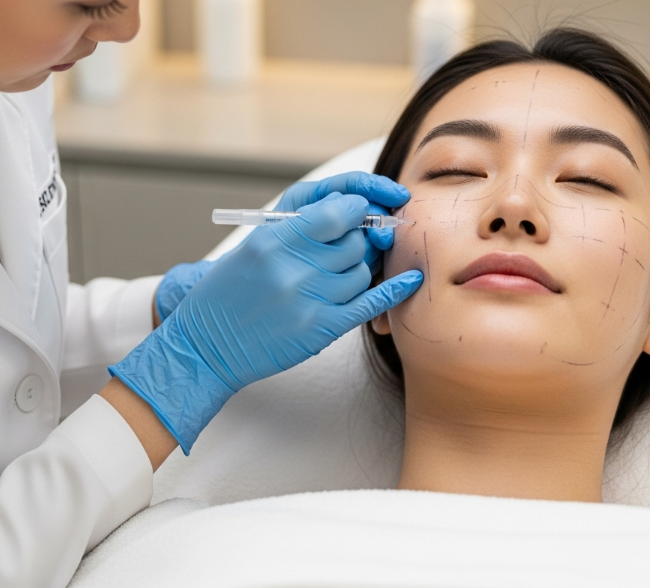
Treatment Overview
Aqua Peel (also known as HydraFacial or Korean water-based peeling) is a gentle, non-invasive skin resurfacing treatment that deeply cleanses, exfoliates, and nourishes the skin using a specialized vacuum suction system combined with hydrating solutions.
In Korea, Aqua Peel is widely used as a first-line treatment for hyperpigmentation, because it removes dead skin cells, clears clogged pores, and infuses the skin with brightening serums. This process improves pigmentation irregularities, dullness, and uneven tone while preparing the skin for more advanced treatments such as laser toning, chemical peels, or skin boosters.
Purpose & Benefits
- Exfoliation & Brightening: Removes pigmented dead skin cells and evens out tone.
- Deep Cleansing: Clears sebum and impurities that contribute to dullness.
- Improves Pigment Absorption: Prepares skin for stronger pigmentation treatments.
- Gentle & Non-Irritating: Safe for sensitive or acne-prone skin.
- Hydration Boost: Infuses the skin with nourishing serums for a natural glow.
- Synergy: Often combined with laser treatments or vitamin infusions for hyperpigmentation.
Ideal Candidates
Aqua Peel in Korea for hyperpigmentation is recommended for:
- Patients with mild to moderate pigmentation (sun spots, melasma, post-acne marks).
- Individuals with dull or uneven skin tone.
- Adults with sensitive skin who cannot tolerate strong peels.
- Those looking for a gentle brightening maintenance treatment.
Comparison with Other Treatments:
- Aqua Peel: Best for gentle brightening, cleansing, and preparation.
- Chemical Peels: Stronger resurfacing for pigmentation.
- Laser Toning / BB Laser: Directly targets melanin deposits.
- Vitamin C Infusion: Best for antioxidant brightening.
- Skin Boosters / Rejuran i: Improve overall skin quality and repair.
Possible Risks & Complications
Aqua Peel is very safe, but minor side effects may include:
- Temporary Redness: Fades within a few hours.
- Mild Sensitivity: Slight stinging if skin barrier is compromised.
- Rare Breakouts: From skin purging after deep cleansing.
Treatment Techniques Used
- Step 1 – Cleansing & Exfoliation: Dead skin cells and sebum removed via water suction.
- Step 2 – Acid Peel (Mild AHA/BHA): Gentle exfoliation to loosen pigmentation and clogged pores.
- Step 3 – Extraction: Suction removes impurities and blackheads.
- Step 4 – Serum Infusion: Hydrating and brightening solutions delivered to the skin.
- Session Protocol: 3–6 sessions, spaced 2–4 weeks apart.
- Combination Therapy: Often paired with laser toning, Vitamin C infusion, or PRP.
Recovery & Aftercare
- Immediately: Skin feels clean, fresh, and hydrated.
- 1–2 Days: Minor redness possible, but no downtime.
- 2–4 Weeks: Gradual improvement in brightness and pigmentation.
Aftercare Tips:
- Use hydrating creams or serums daily.
- Apply SPF 50+ to protect from new pigmentation.
- Avoid strong exfoliants (retinol, AHAs) for 2–3 days.
- Maintain a healthy skincare routine to prolong results.
Results & Longevity
- Short-Term (1 Session): Cleaner, brighter, more hydrated skin.
- Medium-Term (3–4 Sessions): Visible reduction in pigmentation and uneven tone.
- Long-Term (6+ Months): Maintenance every 1–2 months keeps skin clear and glowing.
Treatment Process in Korea
- Consultation & Skin Analysis – Doctor or aesthetician evaluates hyperpigmentation type (melasma, post-inflammatory, sun damage).
- Preparation – Gentle cleansing of skin.
- Aqua Peel Session – Multi-step exfoliation, suction, and infusion performed.
- Optional Add-Ons – Laser toning, Vitamin C infusion, or skin boosters for pigmentation.
- Post-Care – Cooling mask or soothing serum applied.
- Follow-Up – Sessions scheduled monthly for continued improvement.
Why Korea is a Top Destination
- Korean clinics use advanced Aqua Peel devices with customizable solutions.
- Dermatologists integrate Aqua Peel with pigmentation-specific treatments.
- Safe, low-irritation protocols suitable for Asian skin types prone to PIH.
- Affordable compared to Western clinics, with package-based pricing.
- Seoul is globally recognized for multi-step pigmentation and brightening care.
Cost Range (Detailed Breakdown)
Pricing for Aqua Peel in Korea for hyperpigmentation:
- Single Session: USD 80 – 150
- 3-Session Package: USD 200 – 400
- Aqua Peel + Vitamin C Infusion: USD 120 – 250 per session
- Premium Pigmentation Package (Aqua Peel + Laser Toning + Skin Boosters): USD 800 – 1,500 (3–5 sessions)
Additional Costs in Korea:
- Consultation: USD 15 – 30
- Add-ons (Vitamin C, PRP, Exosomes, PN): USD 100 – 400
💡 Many patients call Aqua Peel the “fresh start treatment” for hyperpigmentation, as it clears away impurities and preps the skin for deeper brightening therapies.
Popular Clinics in Seoul
- Banobagi Dermatology – Aqua Peel + pigmentation laser care.
- Oracle Dermatology – Aqua Peel + Vitamin C infusion for melasma.
- Renewme Skin Clinic – Aqua Peel with PRP or Rejuran for skin repair.
- View Plastic & Dermatology – Aqua Peel combined with laser toning for pigmentation.
- Chaum Anti-Aging Center – Luxury Aqua Peel + multi-step pigmentation programs.


