
Treatment Overview
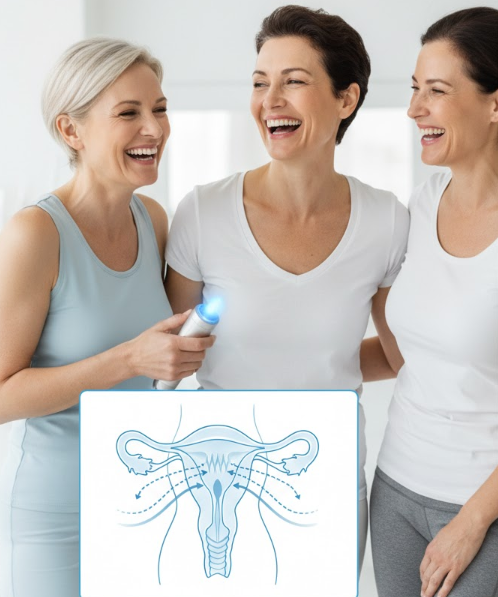
Aquaderm RF Vaginal Tightening Therapy in Korea uses radio-frequency (RF) energy delivered via a vaginal probe (and sometimes an external applicator) to heat the vaginal mucosa, sub-mucosa and pelvic floor supportive tissues. The goal is to stimulate collagen and elastin remodelling, improve tissue tone and elasticity, and thereby strengthen the vaginal wall and adjacent support structures including those around the urethra and bladder neck. In the setting of stress urinary incontinence (SUI) — defined as involuntary leakage with cough, sneeze, laughter or exertion — RF vaginal tightening in Korea is being offered as a minimally invasive adjunctive treatment for improving pelvic support and reducing leakage episodes.
Purpose & Benefits
Purpose:
- To restore vaginal and pelvic-floor tissue tone and elasticity.
- To enhance structural support for the urethra/bladder neck so as to reduce SUI episodes.
- To improve vaginal lubrication, comfort and sexual function (which can indirectly support pelvic floor function).
- To provide a less invasive alternative (or adjunct) to surgical SUI correction in appropriate patients.
Benefits:
- Minimally invasive: no large incisions, often outpatient and short procedure time.
- Rapid recovery compared with full surgery; less downtime.
- Stimulates the body’s own tissue-remodelling (collagen, elastin) rather than simply tightening mechanically.
- Can treat dual concerns: vaginal laxity + mild urinary leakage + sexual/esthetic improvement.
- Korean clinics offer high-technology systems, foreign-patient friendly services, and integrated pelvic floor & intimate wellness programmes.
Ideal Candidates
Ideal candidates for RF vaginal tightening in the context of SUI and pelvic support include:
- Women with mild to moderate stress urinary incontinence (i.e., some leakage with cough/sneeze) rather than severe SUI requiring major surgery.
- Women experiencing vaginal laxity or pelvic-floor tissue loosening (often after childbirth, multiple deliveries, aging, hormonal change).
- Women who prefer a non-surgical or minimally invasive approach (or wish to delay surgery) and are medically stable (no uncontrolled bleeding/infections).
- Women with realistic expectations: improvement (rather than guaranteed cure), and willingness to participate in aftercare (pelvic floor exercises etc.).
- Women for whom aesthetic/comfort improvement (vaginal tone, lubrication, sexual confidence) is also of interest—not just purely functional leakage reduction.
Possible Risks & Complications
While RF vaginal tightening is minimally invasive, possible risks and complications include:
- Temporary warmth, mild discomfort or swelling in the treated area.
- Spotting or minor vaginal bleeding/discharge as tissue remodels.
- Mild sensitivity, increased vaginal discharge, transient irritation.
- Rarely, overheating, tissue damage, scarring or sexual discomfort if device mis-used or patient selection poor.
- Effect may diminish over time, requiring maintenance sessions.
- If underlying severe pelvic floor or urethral sphincter disruption is present (and left untreated), the RF therapy alone may prove insufficient and delaying definitive surgery could worsen outcome.
- For international patients: travel-related issues, follow-up logistics, language/communication challenges.
Surgical Techniques Used
Although the core therapy here is non-surgical RF vaginal tightening, in the wider Korean pelvic floor/uro-gynecology setting the following techniques may also apply or be combined:
- RF vaginal tightening: internal vaginal probe delivering thermal energy, sometimes combined with external labial RF or bipolar/monopolar RF systems.
- Laser vaginal tightening / rejuvenation (CO₂ or Er:YAG lasers) that heat tissue to stimulate remodelling.
- High-Intensity Focused Ultrasound (HIFU) vaginal tightening for deeper tissue support.
- Surgical vaginal tightening (vaginoplasty/perineoplasty) for more advanced laxity: excising excess tissue, tightening vaginal muscles and supportive fascia.
- Traditional SUI surgeries (in Korean centres): e.g., mid-urethral sling, retropubic/trans-obturator sling, bladder neck suspension—these are often considered when leakage is moderate to severe and structural support is significantly compromised. (In Korea the blog on SUI treatment mentions sling procedures, bulking agents, laser rejuvenation).
In the RF therapy context, the technique is essentially a non-surgical energy-based tightening; nevertheless, patient evaluation should include assessment of pelvic floor support and urethral function to ensure RF is appropriate and to decide whether surgery may be needed instead.
Recovery & Aftercare
Recovery:
- Because RF vaginal tightening is outpatient, downtime is minimal. Many patients resume light daily activity the same day or next.
- Mild warmth, swelling or spotting may persist for 24–48 hours.
- Some restrictions: avoiding sexual intercourse, tampons, douching, hot baths/hot tubs, vigorous exercise for the period recommended by the clinic (often 48–72 hours).
- For surgical options (if done), recovery may require several days of rest, 1–2 weeks before moderate activity, and 4–6 weeks before full sexual activity or heavy lifting.
Aftercare:
- Attend follow-up visits as scheduled to assess tissue response and leakage improvement.
- Perform pelvic floor muscle (Kegel) exercises as advised by your OB-GYN/uro-gynecologist — strengthen the muscles supporting urethra/bladder.
- Maintain healthy lifestyle: avoid chronic cough, constipation/bladder straining, excess weight—these reduce pelvic-floor strain.
- Vaginal moisturisers/lubricants may be recommended to support tissue health and comfort.
- For maintenance: clinics often recommend yearly “top-up” RF sessions or other energy-based treatments to prolong results.
- Monitor urinary symptoms: if leakage persists or worsens, return to specialist for further evaluation (maybe surgery).
Results & Longevity
Results:
- Many patients report noticeable improvement in vaginal tone, increased sensation, improved lubrication and reduced leakage episodes (in mild SUI) over the weeks following treatment.
- The improvement is gradual, not instantaneous: tissue remodelling takes time (4-8 weeks typical).
- Optimal results often follow a series of treatments (commonly 2–4 sessions spaced several weeks apart) rather than a single treatment.
Longevity:
- The duration of effect varies: Korean sources suggest RF vaginal tightening results may last 12-18 months or more before a maintenance session is needed.
- Longevity depends on baseline tissue quality, pelvic-floor status, lifestyle, and whether maintenance is adhered to.
- In the context of SUI, if underlying structural damage exists (e.g., pelvic organ prolapse, major urethral sphincter deficiency), the RF therapy may improve but not fully “cure” leakage; thus, later surgery may still be required and the longevity of improvement may be less.
- Maintenance treatments help prolong results, and combining RF with pelvic-floor strengthening enhances durability.
Treatment Process in Korea
Why Korea is a top destination:
- South Korea is recognized for advanced aesthetic-gynecology and uro-gynecology, combining high-technology devices (RF, lasers, HIFU) with skilled specialists and modern hospital/clinic infrastructure.
- Clinics in Seoul (especially Gangnam, Apgujeong, Sinsa) offer foreign-patient friendly services: English-speaking coordination, discreet private care, integrated medical-tourism infrastructure.
- Competitive pricing compared to Western countries, with high standard of care.
- Strong culture of women’s health and intimate wellness — many clinics integrate functional pelvic-floor care with aesthetic intimate-wellness treatments rather than purely cosmetic.
- Good regulatory standards, many clinics experienced in treating international patients with translation support, travel/after-care coordination.
Typical treatment process in Korea:
- Initial consultation: Board-certified gynecologist or uro-gynecology specialist examines medical history (SUI symptoms, childbirth history, pelvic-floor status), performs pelvic exam and explains options.
- Pre-procedure preparation: Instructions may include avoiding certain medications (blood thinners), abstaining from intercourse for defined period, ensuring no active infection or menstruation.
- Procedure day: Outpatient. A vaginal RF probe is inserted; the device delivers controlled RF energy to the vaginal wall and supportive tissues. Depending on clinic/technology, external applicators may treat labia or perineal tissue as adjunct. Treatment time typically 20-40 minutes. Local or topical anaesthesia may be used for comfort.
- Post-procedure: Brief monitoring. Patient receives aftercare instructions. Mild warmth or discharge may occur.
- Follow-up sessions: Often the first session is followed by 1-2 additional sessions spaced 3-4 weeks apart to achieve optimal effect.
- Maintenance & monitoring: After initial treatment series, yearly or bi-annual maintenance may be offered. Urinary leakage is monitored; if leakage persists significantly, further evaluation (possibly surgical) is arranged.
- International patient support: Many Korean clinics offer concierge services: airport pickup, hotel coordination, translator or multi-language staff, hotel-clinic packages, follow-up coordination for returning patients.
Unique Korean methods/technology:
- Use of advanced RF devices designed specifically for vaginal/pelvic-floor use (not generic skin-RF devices).
- Some Korean-manufactured devices incorporate features like real-time impedance/temperature monitoring to deliver safe, uniform RF energy for vaginal/urethral support areas. (e.g., the “V360 RF” device for vaginal tightening and SUI improvement).
- Clinics in Korea often combine RF with laser or HIFU in “hybrid” protocols for deeper tissue support and improved results.
- Many clinics customize treatment settings (monopolar vs bipolar RF, internal vs external applicators) based on detailed pelvic-floor and anatomical assessment.
- For international medical travelers: streamlined bilingual support, follow-up remote consults.
Cost Range (details)
According to Korean sources for RF vaginal tightening (non-surgical) for vaginal laxity and mild SUI:
- Single RF session: approximately ₩ 400,000 to ₩ 1,200,000 KRW (≈ US $300-$900) depending on device, clinic, region.
- Package of 3 sessions (commonly recommended): around ₩ 1,200,000 to ₩ 2,500,000 KRW (≈ US $900-$1,900).
- Some clinics list higher premium pricing (₩ 900,000–₂,500,000 KRW ≈ US $690-$1,920) for single session in high-end clinics.
- If combined treatments are used (RF + laser + surgery) or for more advanced laxity/SUI needing surgical intervention, costs can rise significantly (several million KRW: US $3,000-6,000 or more).
- Additional costs: consultation fees, pre/post-care, international patient coordination, travel and accommodation (for overseas patients) may add extra.
Thus, if you are considering this therapy in Korea, budget roughly US $700-$2,000 for a course of RF sessions (for non-surgical mild SUI), and higher if more complex care is needed.
Popular Clinics
Here are some of the well-known clinics in Korea offering RF vaginal tightening / intimate wellness / women’s health treatments (foreign-patient friendly). When selecting your clinic ensure the gynecologist is board-certified in OB/GYN or uro-gynecology and has adequate experience in pelvic floor & intimate wellness therapies.
- A prominent women’s health & aesthetic-gynecology clinic in Gangnam/Seoul that offers RF vaginal tightening and SUI treatment among foreign patients.
- A private OB/GYN clinic in Apgujeong/Seoul focused on intimate wellness (vaginal rejuvenation, RF/laser tightening) and foreigner services.
- A specialized pelvic-floor & uro-gynecology centre in Seoul offering both non-surgical RF solutions and surgical SUI options, providing integrated care.
- A women-led clinic in Seoul that combines postpartum/laxity care and urinary incontinence therapy with RF/laser options, with international patient coordination.
- A modern medical-tourism friendly OB/GYN hospital in Gangnam offering English-speaking staff, RF vaginal tightening, pelvic floor assessment and aftercare for international visitors.


