
Treatment Overview
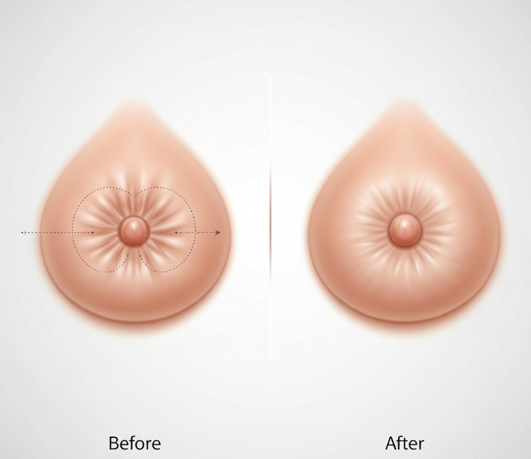
Areola and Inverted Nipple Correction in Korea is a specialized surgical procedure designed to address both enlarged or asymmetrical areolas and inverted nipples. This combined approach improves breast aesthetics, enhances symmetry, and restores natural nipple projection. Korean surgeons are highly experienced in minimally invasive techniques, ensuring precise correction while preserving sensation and functionality. The procedure is suitable for women seeking both cosmetic enhancement and functional improvement.
Purpose & Benefits
- Restore Nipple Projection: Corrects inverted nipples for a natural, outward appearance.
- Improve Areola Shape & Size: Reduces enlarged or uneven areolas for better breast symmetry.
- Preserve Sensation & Function: Designed to maintain nipple sensitivity and breastfeeding capability whenever possible.
- Enhanced Aesthetics: Creates balanced, proportionate breasts with natural contours.
- Minimally Invasive Options: Small incisions reduce scarring and promote faster recovery.
- Boost Confidence: Improves overall breast appearance and patient self-esteem.
Ideal Candidates
- Women with inverted nipples of any grade (mild, moderate, or severe).
- Patients with enlarged, asymmetrical, or irregular areolas.
- Individuals seeking cosmetic and functional breast correction.
- Patients wanting minimally invasive surgical solutions with natural-looking results.
- Women aiming to restore nipple projection for aesthetic or breastfeeding purposes.
Possible Risks & Complications
- Mild swelling or bruising around nipples and areolas.
- Temporary nipple numbness or tingling (usually resolves within weeks).
- Minor scarring at incision sites (typically fades over time).
- Infection or delayed healing (rare with proper care).
- Partial recurrence of nipple inversion in severe cases (rare).
Surgical Techniques Used
- Areola Reduction: Circular or wedge excision removes excess areolar tissue for size and shape correction.
- Inverted Nipple Release: Tissue release techniques free underlying fibrous tissue causing inversion.
- Internal Suturing: Supports the nipple in an outward position to maintain projection.
- Combination Shaping: Surgeons simultaneously contour the areola and correct nipple inversion for symmetry.
- Minimally Invasive Options: Small incisions reduce scarring while preserving nipple function.
Recovery & Aftercare
- Mild swelling and bruising for 1–2 weeks.
- Light activities can resume within 3–5 days.
- Avoid pressure on breasts or nipples for 2–3 weeks.
- Follow-up appointments to monitor healing and nipple projection stability.
- Full recovery typically within 4–6 weeks, with scars gradually fading over months.
Results & Longevity
- Restored nipple projection with balanced areola size and shape.
- Improved breast symmetry and aesthetic proportion.
- Long-lasting results with minimal risk of recurrence for mild to moderate cases.
- Scar visibility decreases over time, leaving natural-looking breasts.
Treatment Process in Korea
Korea is a leading destination for Areola and Inverted Nipple Correction due to advanced surgical techniques and precision:
- Initial Consultation & Assessment: Evaluation of nipple inversion severity, areola size, and breast symmetry.
- Pre-Surgical Planning: Customized surgical plan tailored to patient anatomy and desired outcome.
- Surgical Correction: Minimally invasive excision, tissue release, and suturing to correct both areolas and nipples.
- Post-Procedure Monitoring: Guidance on wound care, monitoring healing, and nipple projection stability.
Why Korea is a Top Destination:
- Expertise in delicate nipple and areola surgeries preserving function and aesthetics.
- Minimally invasive techniques for faster recovery and reduced scarring.
- High patient satisfaction with natural, long-lasting results.
- Focus on both cosmetic enhancement and functional outcomes.
Cost Range
The cost of Areola and Inverted Nipple Correction in Korea varies based on the complexity, clinic reputation, and surgeon experience:
- Areola Reduction Alone: USD $2,500 – $4,500
- Inverted Nipple Correction Alone: USD $2,000 – $4,000
- Combined Areola + Inverted Nipple Correction: USD $4,500 – $7,500
- Revision or Touch-Up Procedures: USD $1,500 – $3,000 per session
(Costs vary depending on severity, surgical technique, and clinic location.)
Popular Clinics
- Banobagi Plastic Surgery Clinic (Seoul): Expert in nipple and areola correction with minimal scarring.
- ID Hospital (Seoul): Specializes in combined areola reduction and inverted nipple correction.
- JK Plastic Surgery Center (Seoul): Precision-focused surgery for natural breast aesthetics.
- View Plastic Surgery Clinic (Seoul): Focused on subtle, functional, and aesthetic corrections.
- JW Plastic Surgery (Seoul): Experienced in restoring nipple projection while enhancing areola symmetry.


