
Treatment Overview
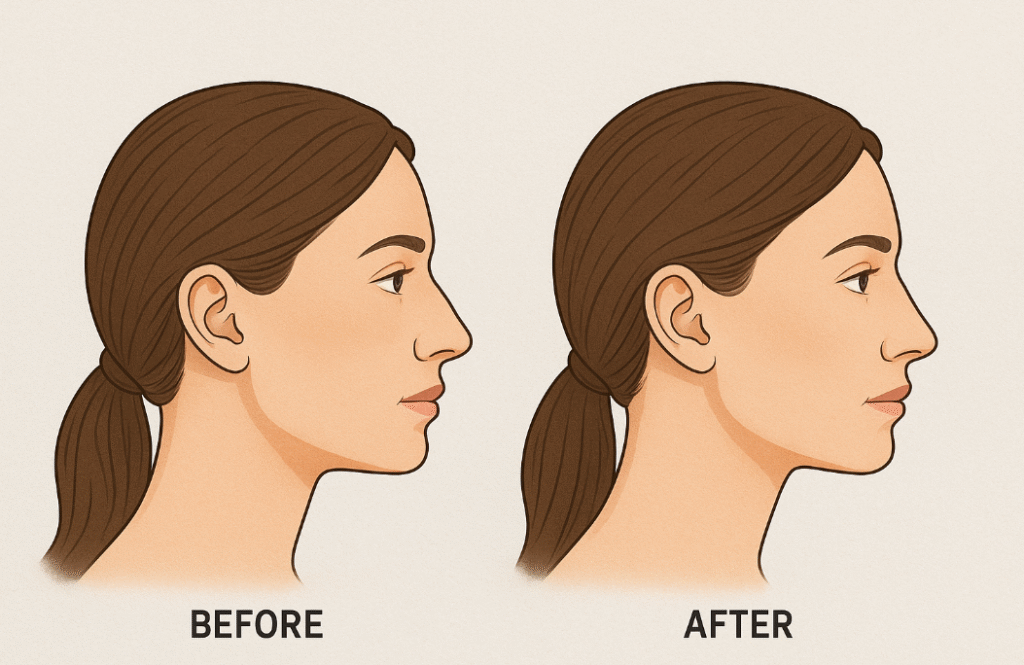
Augmentation revision rhinoplasty is a specialized secondary nose surgery performed to correct or improve the results of a previous augmentation rhinoplasty. This procedure is often required when an implant (such as silicone or Gore-Tex) or cartilage graft has shifted, become visible, caused asymmetry, or failed to achieve the desired aesthetic outcome. It can also address complications such as infection, contracture, or unnatural appearance.
In Korea, augmentation revision rhinoplasty is highly advanced, with surgeons recognized globally for their expertise in handling complex revision cases. Korean doctors use cutting-edge techniques, including autologous cartilage grafting (ear or rib cartilage), fascia reinforcement, and implant replacement, to restore both beauty and functionality while achieving natural-looking results.
Purpose & Benefits
The main purpose of augmentation revision rhinoplasty is to correct complications or dissatisfaction from a previous augmentation procedure while ensuring structural stability and natural aesthetics. Benefits include:
- Correcting implant-related issues such as shifting, extrusion, or contracture.
- Refining an unnatural or “over-augmented” nasal appearance.
- Replacing synthetic implants with safer alternatives (such as autologous cartilage).
- Restoring structural support and nasal symmetry.
- Reducing risks of long-term complications.
- Achieving a more natural and harmonious result.
Ideal Candidates
Augmentation Revision Rhinoplasty in Korea is suitable for individuals who:
- Previously underwent augmentation rhinoplasty but are unsatisfied with results.
- Experience implant-related issues (visibility, shifting, contracture, or extrusion).
- Have irregularities such as an overly high bridge, bulbous tip, or crooked appearance.
- Desire replacement of artificial implants with cartilage for safer, long-lasting outcomes.
- Are healthy, with realistic expectations about revision surgery complexity.
Possible Risks & Complications
Since revision procedures are more complex, risks include:
- Prolonged swelling compared to primary rhinoplasty.
- Breathing difficulties if structure is weakened.
- Scar tissue complications that may limit surgical adjustments.
- Asymmetry or irregular healing.
- Graft-related issues (absorption, warping, or shifting).
- Need for further revision in rare cases.
Surgical Techniques Used
Korean surgeons employ specialized techniques for augmentation revision rhinoplasty, including:
- Implant Removal/Replacement: Removing problematic silicone or Gore-Tex implants and replacing with safer alternatives.
- Autologous Cartilage Grafting: Using ear or rib cartilage to reinforce structure and create natural contours.
- Fascia or Dermis Grafting: Covering implants or grafts to soften the nasal contour and prevent visibility.
- Tip Reconstruction: Using cartilage grafts or sutures to refine and stabilize the nasal tip.
- Bridge Redesign: Adjusting height and width of the nasal bridge for balance.
- Scar Tissue Management: Removing or reshaping internal scar tissue for smoother results.
Recovery & Aftercare
- Swelling & Bruising: More pronounced than primary rhinoplasty but improves significantly within 2–4 weeks.
- Splint & Packing: External splint worn for 1–2 weeks; nasal packing may be required briefly.
- Downtime: Most patients resume light activities in 10–14 days.
- Final Results: Stable outcomes typically visible within 6–12 months due to healing and graft adaptation.
- Aftercare in Korea: Clinics provide LED light therapy, anti-swelling injections, scar prevention treatments, and close follow-up care.
Results & Longevity
Augmentation revision rhinoplasty in Korea provides long-lasting, natural results by replacing problematic implants and reinforcing nasal structure. With the use of cartilage grafts and advanced surgical artistry, outcomes are stable, natural, and significantly improve both appearance and confidence.
Treatment Process in Korea
1. Consultation
- Surgeons perform CT scans or 3D imaging to analyze implant position, scar tissue, and internal structures.
- Patients discuss concerns, and surgeons provide realistic outcome projections.
2. Pre-Surgery Care
- Full health check and nasal examination.
- Planning includes graft source preparation (ear or rib cartilage) if needed.
3. Surgery
- Performed under general anesthesia.
- Duration: 3–5 hours depending on complexity.
- Implant removal, cartilage grafting, and reconstruction performed in one session.
4. Immediate Post-Surgery Care
- Close monitoring in recovery rooms.
- Splints and protective dressings applied.
5. Follow-Up & Aftercare
- Korean clinics provide specialized swelling reduction therapies, scar management, and breathing assessments.
- Medical tourism packages for international patients often include interpreters, transport, and recovery support.
Why Korea?
- World-Leading Revision Specialists: Korean surgeons handle some of the most difficult augmentation revision cases globally.
- Cutting-Edge Techniques: Use of rib cartilage grafting, fascia coverage, and minimally invasive methods.
- Natural Results: Emphasis on soft, balanced outcomes that harmonize with the patient’s face.
- Medical Tourism Support: Comprehensive care services for international patients, including interpretation, accommodation, and transport.
Cost Range
Augmentation revision rhinoplasty in Korea is more expensive than primary augmentation due to complexity and grafting needs.
- General Price Range: ₩8,000,000 – ₩18,000,000 KRW (approx. $6,400 – $14,400 USD).
- Basic Packages Include: Surgeon’s fee, anesthesia, surgery, and follow-up care.
- Premium Packages May Include:
- Rib cartilage harvest (if needed)
- Fascia/dermis grafting for refinement
- 3D imaging and surgical simulations
- Scar-control and swelling-reduction therapies
- VIP recovery suites and medical tourism services
Compared to Western countries, Korea provides more advanced techniques with competitive pricing, making it a top destination for revision rhinoplasty.
Popular Clinics
- Banobagi Plastic Surgery (Seoul): Specializes in implant removal and cartilage grafting with natural outcomes.
- ID Hospital (Seoul): Known for complex augmentation revisions and structural reconstructions.
- JW Plastic Surgery Clinic: Experts in rib cartilage grafting and fascia techniques for revision.
- View Plastic Surgery Clinic: Offers extensive aftercare services tailored for international patients.
- MINE Plastic Surgery Clinic: Focuses on subtle augmentation revision with scar and swelling management.


