
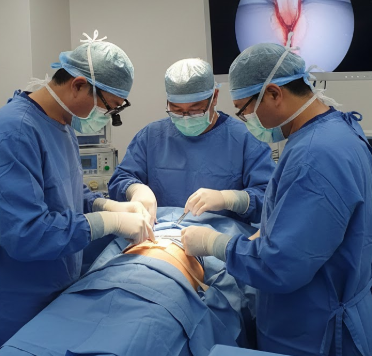
Treatment Overview
Autologous fascial sling surgery is a specialized procedure for treating stress urinary incontinence (SUI) in women. Unlike synthetic slings, this surgery uses the patient’s own tissue (usually from the fascia of the abdominal wall or thigh) to create a supportive sling under the urethra. This approach reduces the risk of foreign body reactions and sling erosion. Korea is recognized for its advanced urological and pelvic floor surgeries, offering skilled surgeons, modern facilities, and tailored care for both local and international patients.
Purpose & Benefits
The main purpose of autologous fascial sling surgery is to restore urinary continence with a natural, biocompatible sling. Key benefits include:
- Effectively reduces or eliminates stress urinary incontinence
- Uses the patient’s own tissue, minimizing foreign body complications
- Long-lasting results with high durability
- Can be performed when synthetic slings are not suitable
- Minimally invasive with precise placement for optimal outcomes
- Enhances confidence, daily comfort, and social participation
Korean hospitals provide individualized surgical plans to ensure proper sling placement and functional support.
Ideal Candidates
Ideal candidates for autologous fascial sling surgery include:
- Women with stress urinary incontinence who are unsuitable for synthetic slings
- Patients with history of sling erosion or allergic reactions to synthetic materials
- Adults in good overall health without active urinary tract infections
- Medically suitable for general or regional anesthesia
Preoperative evaluation includes pelvic examination, urinalysis, urodynamic studies, and imaging to assess bladder and urethral function.
Possible Risks & Complications
While autologous fascial sling surgery is generally safe, potential risks include:
- Temporary urinary retention
- Infection at the fascia harvest site or surgical site
- Pelvic pain or discomfort
- Minor bleeding or bruising
- Rare bladder, urethral, or bowel injury
- Sling failure or need for adjustment
Korean surgeons use meticulous techniques and close monitoring to minimize complications.
Techniques & Technology Used
Korean hospitals employ advanced techniques for autologous fascial sling surgery, including:
- Harvesting of patient’s own fascia from the abdominal wall or thigh
- Precise sling placement under the mid-urethra
- Minimally invasive approaches when feasible
- Integration with urodynamic studies for tailored surgical planning
- Postoperative monitoring to ensure optimal healing and continence
These methods ensure safe, long-lasting results with minimal risk of complications.
Treatment Process in Korea
The treatment process typically includes:
- Preoperative assessment including pelvic exam, urinalysis, and urodynamic studies
- Surgery performed under general or regional anesthesia, typically lasting 2–3 hours
- Hospital recovery for 2–3 days depending on patient condition
- Follow-up visits to monitor sling function, continence, and healing
- Pelvic floor therapy may be recommended to support recovery and enhance outcomes
International patient coordinators assist with scheduling, travel, and post-operative care instructions.
Recovery & After-Care
Recovery is generally smooth but requires attention due to the fascia harvest site. Postoperative care includes:
- Avoiding heavy lifting or strenuous activity for 4–6 weeks
- Monitoring both the surgical and fascia harvest sites for signs of infection or discomfort
- Maintaining hydration and a high-fiber diet to prevent constipation
- Attending follow-up visits to assess sling function and healing
- Performing pelvic floor exercises as recommended
Most patients resume normal activities within 3–4 weeks.
Results & Longevity
Autologous fascial sling surgery in Korea has high long-term success rates, with over 85–90% of patients achieving significant improvement in stress urinary incontinence. Results are durable and natural, with minimal risk of foreign body-related complications.
Why Korea Is a Top Destination
Korea is preferred for autologous fascial sling surgery due to:
- Expert urologists and gynecologists experienced in both synthetic and autologous sling procedures
- Advanced minimally invasive and high-precision surgical techniques
- State-of-the-art hospitals with short hospital stays and structured recovery programs
- Integration of urodynamic testing for personalized treatment
- Multilingual support for international patients
- Transparent and cost-effective treatment packages
Patients benefit from expert care, precise surgery, and long-term follow-up.
Cost Range
The cost of autologous fascial sling surgery in Korea typically ranges from USD 7,000 to USD 12,000, depending on:
- Hospital type and surgical approach
- Length of hospital stay and follow-up care
- Complexity of fascia harvest and sling placement
Comprehensive packages are available for international patients covering surgery, hospitalization, and recovery care.
Popular Clinics in Korea
- Asan Medical Center – Urology & Female Pelvic Medicine Clinic
- Seoul National University Hospital – Urology & Pelvic Floor Program
- Samsung Medical Center – Advanced Sling Surgery Unit
- Severance Hospital (Yonsei University) – Urology & Female Pelvic Health Clinic
- Korea University Anam Hospital – Outpatient Urology & Pelvic Surgery Center
- Seoul St. Mary’s Hospital – Female Pelvic Floor & Continence Surgery Unit


