
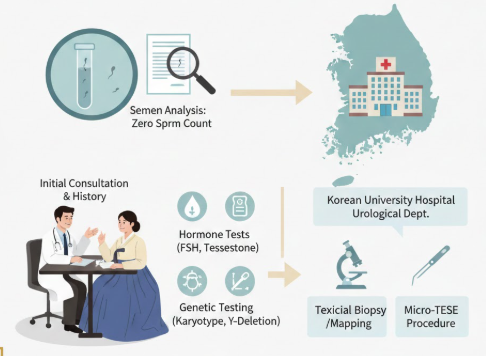
Treatment Overview
Azoospermia diagnosis and evaluation is a specialized medical assessment to determine the absence of sperm in a man’s ejaculate, a condition affecting male fertility. Korean clinics provide comprehensive diagnostic protocols to distinguish between obstructive and non-obstructive azoospermia, identify underlying causes, and recommend appropriate treatment or assisted reproductive options.
Purpose & Benefits
The main purposes of azoospermia evaluation are:
- Diagnosing the type and cause of azoospermia
- Assessing testicular function and sperm production
- Guiding treatment strategies, including surgical sperm retrieval or hormonal therapy
Benefits include:
- Accurate identification of infertility causes
- Tailored treatment plans to maximize fertility potential
- Early detection of reversible conditions affecting sperm production
- Supports informed decisions for natural conception or assisted reproductive techniques
Ideal Candidates
Azoospermia evaluation is recommended for:
- Men with no sperm detected in semen analysis
- Individuals with low testosterone or abnormal hormonal profiles
- Patients with testicular abnormalities, previous surgeries, or trauma
- Couples experiencing infertility despite normal female reproductive health
- Men considering IVF, ICSI, or surgical sperm retrieval procedures
Possible Risks & Complications
Azoospermia evaluation is generally safe. Potential considerations include:
- Mild discomfort during blood draws or testicular imaging
- Psychological stress related to fertility diagnosis
- Rare risks if invasive procedures such as testicular biopsy are performed
Proper clinical guidance minimizes risks and ensures patient safety.
Techniques & Technology Used
Korean clinics utilize advanced methods for azoospermia evaluation:
- Semen analysis – Confirms absence of sperm and assesses seminal fluid parameters
- Hormonal testing – Measures FSH, LH, testosterone, prolactin, and estradiol levels
- Genetic testing – Includes karyotyping and Y-chromosome microdeletion analysis
- Testicular imaging – High-resolution ultrasound and Doppler assessment
- Testicular biopsy – Performed if surgical sperm retrieval is indicated
These techniques enable precise diagnosis and treatment planning.
Treatment Process in Korea
The typical process includes:
- Initial Consultation: Review of medical and reproductive history
- Diagnostic Testing: Semen analysis, hormone panels, imaging, and genetic tests
- Specialized Procedures: Testicular biopsy or sperm retrieval if needed
- Results Interpretation: Detailed assessment with recommended treatment options
- Follow-Up: Guidance for hormonal therapy, surgical intervention, or assisted reproduction
Recovery & After-Care
- Non-invasive diagnostic tests require no recovery
- Post-biopsy or surgical procedures may involve minor discomfort and temporary swelling
- Follow-up visits are scheduled to monitor recovery and fertility outcomes
- Patients are advised to maintain reproductive health and follow clinical guidance
Results & Longevity
- Provides definitive diagnosis of azoospermia type and underlying cause
- Guides personalized treatment or assisted reproductive planning
- Enables long-term fertility monitoring and optimization
- Results help inform future fertility strategies and interventions
Why Korea Is a Top Destination
Korea is a leading destination for azoospermia diagnosis due to:
- Advanced diagnostic facilities with high-precision semen and hormonal testing
- Experienced urologists, andrologists, and reproductive specialists
- Integration of diagnostics with fertility treatments like IVF, ICSI, and sperm retrieval
- Confidential, patient-focused, and English-friendly services
- Competitive pricing and internationally accredited clinics
Cost Range
Azoospermia diagnosis and evaluation in Korea typically costs $500 to $1,500 USD, depending on the complexity of tests and inclusion of genetic or imaging studies. Surgical biopsy procedures are additional.
Popular Clinics in Korea
Top clinics for azoospermia evaluation include:
- Banobagi Medical Group – Comprehensive male fertility assessment and treatment
- Grand Seoul Hospital – Advanced diagnostics and surgical sperm retrieval
- JK Plastic Surgery & Medical Clinic – Integrated evaluation, hormonal therapy, and fertility services
- ID Hospital – International patient-friendly male reproductive health assessments


