
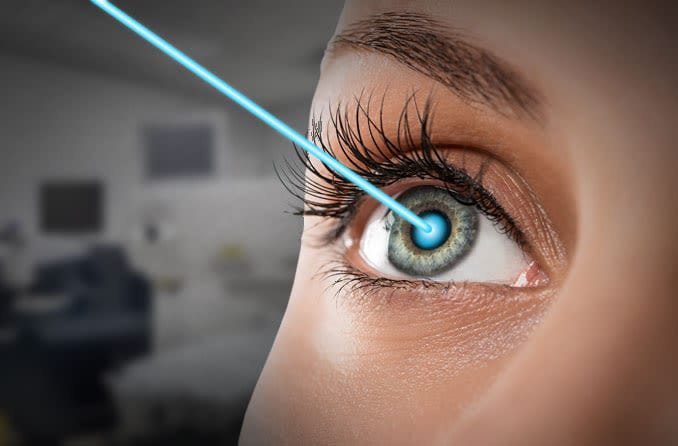
If you’re exploring laser eye surgery and want a safer alternative to LASIK, LASEK (Laser-Assisted Sub-Epithelial Keratectomy) may be the ideal solution. Especially beneficial for patients with thin corneas, dry eyes, or active lifestyles, LASEK offers long-lasting vision correction with fewer risks. In this post, we’ll explore the top benefits of LASEK eye surgery to help you decide whether it’s worth it for your vision needs.
1. Ideal for Patients with Thin Corneas
One of the key benefits of LASEK is that it preserves more of your corneal structure compared to LASIK. While LASIK creates a deeper corneal flap, LASEK involves only the removal of the thin epithelial layer, which is repositioned after the procedure.
✅ Why this matters:
- People with thin or irregular corneas may be disqualified from LASIK.
- LASEK offers a safe and effective alternative without compromising results.
2. Minimized Risk of Flap Complications
Unlike LASIK, LASEK does not involve cutting a flap into the cornea, which means:
- No risk of flap displacement due to trauma or rubbing your eyes
- Better suited for athletes, military personnel, and contact sport participants
- Reduces the chance of post-surgical dry eye syndrome
✅ LASEK is flap-free, making it safer for high-impact or physically demanding lifestyles.
3. Excellent Long-Term Visual Outcomes
LASEK achieves comparable visual clarity to LASIK and PRK, especially for low to moderate refractive errors.
Clinical studies report:
- Over 95% of patients achieve 20/40 vision or better
- High rates of patient satisfaction and minimal long-term side effects
- Stable results after full healing, with low regression risk
✅ Lasting vision correction without compromising corneal health.
4. Lower Risk of Dry Eyes
Dry eye is a common side effect after LASIK due to the cutting of corneal nerves. Since LASEK avoids creating a deep flap, fewer nerves are disrupted.
Benefits include:
- Less dependence on artificial tears
- Reduced discomfort during the healing process
- Better option for those with pre-existing dry eye conditions
✅ LASEK is often recommended for patients prone to dry eyes.
5. Surface-Based Healing with No Flap Weakness
Since the procedure targets the surface of the eye, there’s no structural weakening of the deeper corneal layers.
This is advantageous because:
- The cornea maintains greater biomechanical stability
- There’s less risk of complications from future trauma or surgeries
- Re-treatment (enhancement) is easier in some cases
✅ Safer long-term corneal integrity, especially important for active lifestyles.
6. Great Option for People With Active or Risk-Prone Jobs
Whether you’re a police officer, firefighter, martial artist, or in the military, you may face environments where eye injuries are more likely. Since LASEK doesn’t involve a permanent corneal flap:
- It’s less risky in combat or physical roles
- You can resume intense activity sooner after healing
✅ LASEK is one of the best choices for career-specific vision correction.
7. Affordable and Widely Available
LASEK is often more affordable than LASIK due to the lack of flap-creating technology (such as a femtosecond laser). Additionally, it’s available at most laser vision centers worldwide.
- Competitive pricing for high-quality results
- May be covered partially by FSAs, HSAs, or insurance reimbursements
- Fewer follow-up complications may reduce long-term costs
✅ Cost-effective with comparable results to more expensive alternatives.
8. Customizable Treatment for Unique Vision Needs
LASEK can be combined with wavefront-guided or topography-guided technology, offering a customized laser profile that addresses subtle imperfections.
- Improved night vision and contrast sensitivity
- Lower risk of glare and halos
- Tailored correction for your unique eye shape
✅ Advanced customization for crisp, clear, high-definition vision.
So, Is LASEK Worth It?
Here’s a quick summary of when LASEK is the right choice:
| Ideal for You If | Not Ideal If |
|---|---|
| You have thin or irregular corneas | You want the fastest recovery time |
| You suffer from dry eye | You have extremely high prescriptions |
| You lead an active or risky lifestyle | You’re unwilling to wait several days for clear vision |
| You want a flap-free, surface-based surgery | You prefer instant results like LASIK |
Final Verdict:
Yes—LASEK is absolutely worth it for the right candidate. It offers excellent vision correction, fewer complications, and a strong safety profile. While recovery can take a bit longer than LASIK, the long-term rewards—especially for people with special vision or lifestyle needs—are significant.


