
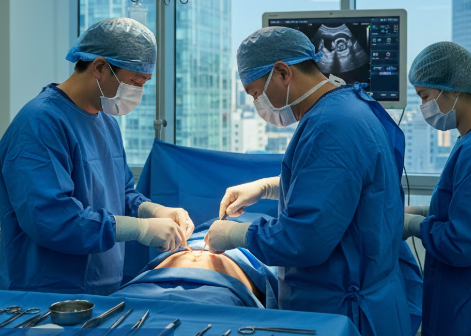
Treatment Overview
Bilateral Orchidopexy in Korea is a specialized urological procedure performed to correct undescended testicles (cryptorchidism) or stabilize both testicles following testicular torsion. The surgery involves surgically repositioning both testicles into the scrotum and fixing them to prevent future torsion or complications.
Korean urologists use advanced microsurgical and minimally invasive techniques to ensure proper positioning, optimal cosmetic results, and preservation of testicular function. The procedure is suitable for both pediatric and adult patients and is widely recognized for high success rates and low complication rates.
Purpose & Benefits
The main purpose of bilateral orchidopexy is to restore proper testicular position, prevent torsion, and preserve fertility in both testicles.
Key benefits include:
- Proper placement of both undescended or mobile testicles in the scrotum
- Prevention of torsion and injury to either testicle
- Preservation of fertility and sexual function
- Minimally invasive techniques for faster recovery
- Reduced risk of long-term complications such as testicular atrophy or malignancy
- Improved cosmetic appearance of the scrotum
- Short hospital stay and minimal postoperative discomfort
- High success rates in Korea’s leading urology centers
Korean hospitals focus on both functional and cosmetic outcomes for bilateral procedures.
Ideal Candidates
Bilateral orchidopexy is suitable for patients who:
- Have both testicles undescended (cryptorchidism)
- Require fixation of both testicles after testicular torsion
- Have mobile or retractile testicles prone to torsion
- Are pediatric or adult patients seeking correction for malpositioned testicles
- Desire fertility preservation and prevention of long-term complications
- Are international patients seeking high-quality urological care in Korea
Early intervention, especially in pediatric cases, optimizes fertility outcomes and reduces risks.
Possible Risks & Complications
Although generally safe, potential risks of bilateral orchidopexy include:
- Mild swelling, bruising, or discomfort at the surgical sites
- Infection at the incision sites (rare due to Korea’s strict surgical standards)
- Bleeding or hematoma formation
- Rare recurrence of testicular malposition
- Testicular atrophy if blood supply is compromised
- Scar formation or adhesion
- Anesthesia-related complications (extremely rare)
Korean microsurgical expertise ensures minimal risk and high testicular viability for both sides.
Techniques & Technology Used
Korean hospitals utilize advanced techniques for bilateral orchidopexy:
Open Surgical Bilateral Orchidopexy
Scrotal or inguinal incisions allow mobilization of both testicles and fixation in the scrotum.
Minimally Invasive / Laparoscopic Orchidopexy
Used for non-palpable or high undescended testicles on one or both sides to minimize tissue trauma.
Microsurgical Techniques
Magnification ensures careful handling of spermatic vessels and cords for optimal fertility preservation.
Imaging Guidance
High-resolution ultrasound or laparoscopy helps locate and mobilize non-palpable testicles.
Rapid Recovery Protocols
Enhanced recovery strategies reduce hospital stay and postoperative discomfort for bilateral procedures.
Treatment Process in Korea
The treatment process for bilateral orchidopexy is structured for safety, speed, and comfort:
Consultation & Evaluation
Detailed physical examination and imaging determine testicular location, vascularity, and surgical approach.
Preoperative Preparation
Routine blood tests, anesthesia assessment, and preoperative instructions are completed.
Surgical Procedure
Under general anesthesia, both testicles are mobilized, positioned in the scrotum, and fixed. Surgery typically lasts 60–120 minutes depending on complexity.
Postoperative Observation
Patients are monitored for swelling, pain, or bleeding. Pediatric patients may stay overnight; adults may be discharged the same day.
Follow-Up
Follow-up appointments evaluate wound healing, testicular position, and function. Telemedicine follow-ups are available for international patients.
Recovery & After-Care
Recovery after bilateral orchidopexy is generally smooth with proper care:
Recommended after-care includes:
- Wearing supportive underwear or scrotal support garments
- Keeping the incision sites clean and dry
- Taking prescribed pain or anti-inflammatory medications
- Avoiding heavy lifting, strenuous activity, and sexual activity for 2–4 weeks
- Monitoring for swelling, redness, bleeding, or infection
- Attending follow-up visits for testicular function assessment
Most patients resume light activities within 1–2 weeks, with full recovery and fertility assessment within 4–6 weeks.
Results & Longevity
Bilateral orchidopexy in Korea provides safe, effective, and long-lasting outcomes:
Expected results include:
- Proper placement of both testicles within the scrotum
- Prevention of torsion and testicular injury
- Preservation of fertility and sexual function
- Minimal visible scarring due to microsurgical technique
- Improved cosmetic appearance and confidence
- Rapid return to daily activities and normal life
Long-term follow-up ensures proper testicular growth and overall reproductive health.
Why Korea Is a Top Destination
Korea is a preferred destination for bilateral orchidopexy due to:
- Highly skilled urologists specializing in pediatric and adult bilateral procedures
- Advanced imaging, laparoscopic, and microsurgical techniques
- Short hospital stays with rapid recovery
- Low complication and recurrence rates
- Comprehensive international patient services including translators, transport, and coordinators
- Affordable, high-quality care compared to Western countries
- Thorough postoperative follow-up and fertility preservation support
Medical tourists choose Korea for precise, safe, and fertility-preserving bilateral orchidopexy.
Cost Range
The cost of bilateral orchidopexy in Korea varies depending on complexity:
- Standard bilateral orchidopexy for palpable testicles: $5,000 – $8,000
- Laparoscopic or complex cases for non-palpable testicles: $8,000 – $12,000
Costs generally include consultation, imaging, anesthesia, surgery, medications, and follow-up care. Many hospitals offer international medical packages.
Popular Clinics in Korea
Some of the top hospitals and clinics for bilateral orchidopexy include:
- Seoul National University Hospital – Pediatric & Adult Urology Center
- Asan Medical Center – Male Reproductive & Pediatric Urology Division
- Samsung Medical Center – Microsurgery & Andrology Clinic
- Severance Hospital (Yonsei University) – Pediatric & Adult Urology Center
- Korea University Hospital – Male Fertility & Urology Center
- Wooridul Urology Clinic
- Hana Urology Clinic (Seoul)
These facilities are known for advanced bilateral surgical care, fertility preservation, and international patient support.


