
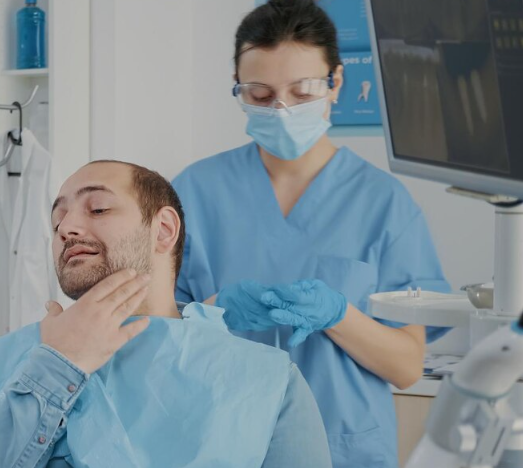
Treatment Overview
Bimaxillary Orthognathic Surgery in Korea is a highly advanced jaw correction procedure that simultaneously realigns both the upper (maxilla) and lower (mandible) jaws to achieve functional balance and facial harmony.
This dual-jaw procedure is performed using 3D CT imaging, AI-assisted virtual surgical planning (VSP), and CAD/CAM-guided osteotomy systems, ensuring millimeter-level precision and natural aesthetic outcomes.
Korea’s top oral and maxillofacial surgeons integrate digital facial analysis, nerve-safe ultrasonic bone tools, and 3D-printed surgical guides to deliver results that improve bite function, jaw symmetry, and facial aesthetics — all while minimizing pain, swelling, and downtime.
The surgery is ideal for patients with severe jaw misalignment, facial asymmetry, open bite, or skeletal discrepancies, and it represents the pinnacle of modern digital orthognathic surgery.
Purpose & Benefits
Purpose
- Correct both upper and lower jaw positions for ideal bite and facial balance.
- Resolve severe overbite, underbite, or open bite.
- Improve breathing, chewing, and speech functions.
- Enhance overall facial symmetry and aesthetic proportions.
- Restore long-term jaw stability and comfort.
Benefits
- Digital Precision: 3D CT and AI-guided simulation ensure exact surgical movement.
- Functional Correction: Restores proper bite alignment and jaw function.
- Aesthetic Enhancement: Improves facial balance and profile harmony.
- Minimally Invasive: Ultrasonic bone surgery minimizes trauma and swelling.
- Nerve-Safe Technology: Real-time nerve mapping prevents injury.
- Predictable Healing: PRF and laser-assisted therapy accelerate recovery.
Ideal Candidates
Bimaxillary Orthognathic Surgery is designed for patients with complex or severe jaw misalignment affecting both function and appearance.
Ideal Candidates Include:
- Individuals with underbite, overbite, or open bite involving both jaws.
- Patients with facial asymmetry or jaw size imbalance.
- Those suffering from chewing, speech, or breathing difficulties.
- Individuals with long face syndrome or protruded jaw structure.
- International patients seeking advanced digital jaw surgery in Korea.
Possible Risks & Complications
Although performed with advanced technology, some mild temporary effects may occur:
- Swelling or bruising for 1–2 weeks.
- Temporary numbness in the lips or cheeks (typically resolves).
- Jaw tightness during early healing stages.
- Rare relapse without proper orthodontic follow-up.
Korean oral surgeons minimize these risks through AI-based 3D surgical planning, nerve-tracking systems, and precision bone repositioning, ensuring patient safety and lasting results.
Surgical Techniques Used
Korea’s Bimaxillary Orthognathic Surgery System merges digital planning, 3D modeling, and regenerative healing science to ensure both functional correction and aesthetic refinement.
Key Techniques Include:
- 3D CBCT Imaging: Detailed 3D scans of facial and skeletal structure.
- AI Surgical Simulation (VSP): Virtual planning of jaw repositioning movements.
- CAD/CAM Surgical Guides: Digitally designed splints for surgical accuracy.
- 3D-Printed Bone Models: Used for pre-surgical rehearsal and planning.
- Ultrasonic Piezosurgery: Precise bone reshaping with minimal trauma.
- Orthodontic Integration: Pre- and post-surgical orthodontics for perfect bite.
- PRF (Platelet-Rich Fibrin) Therapy: Enhances bone and soft tissue healing.
- Laser Healing Therapy: Reduces inflammation and accelerates recovery.
Recovery & Aftercare
Recovery after bimaxillary orthognathic surgery in Korea is significantly faster and smoother due to the minimally invasive digital surgical approach.
- Expect mild swelling for the first few days; major swelling subsides within 2 weeks.
- Maintain a soft or liquid diet for 2–3 weeks.
- Sleep with your head elevated to reduce swelling.
- Avoid strenuous activities during the initial recovery phase.
- Follow postoperative instructions and attend regular checkups.
Typical Recovery Time: 3–6 weeks for daily activity recovery; 3–6 months for complete bone healing.
Results & Longevity
Expected Results
- Perfectly aligned upper and lower jaws.
- Balanced, symmetrical, and harmonious facial structure.
- Enhanced chewing, breathing, and speech function.
- Natural-looking facial rejuvenation and improved confidence.
Longevity
- Permanent correction of skeletal misalignment.
- Stable bite and long-lasting jaw comfort.
- Sustainable facial balance with continued orthodontic care.
Treatment Process in Korea
Korea’s Digital Bimaxillary Orthognathic Surgery Workflow combines advanced technology, artistry, and surgical precision for world-class results.
Step-by-Step Process:
- Comprehensive Consultation & 3D CBCT Scan: Full facial and skeletal assessment.
- AI Surgical Planning (VSP): Digital simulation of upper and lower jaw repositioning.
- Orthodontic Preparation: Pre-surgical tooth alignment ensures perfect bite correction.
- Custom Surgical Guide Fabrication: CAD/CAM splints used for precise movement.
- Dual-Jaw Surgery: Upper and lower jaws repositioned under general anesthesia.
- PRF & Laser Healing: Stimulates natural tissue recovery.
- Digital Postoperative Follow-Up: 3D imaging confirms alignment and stability.
Why Korea Is a Top Destination
- Global Leaders in Digital Orthognathic Surgery: Korea integrates AI, CBCT, and surgical robotics.
- Aesthetic-Focused Results: Surgery designed for facial harmony, not just function.
- High Safety Standards: Real-time nerve tracking and sterile surgical systems.
- Fast Healing: Minimally invasive, regenerative-based techniques.
- Affordable Excellence: 40–60% less than comparable Western clinics.
- Multilingual Support: English, Japanese, and Chinese-speaking dental teams.
Korea’s Bimaxillary Orthognathic Surgery blends digital precision, surgical excellence, and aesthetic artistry, redefining facial and jaw correction for patients worldwide.
Unique Korean Methods & Technology
- 3D CBCT Imaging & AI Surgical Simulation
- Virtual Surgical Planning (VSP)
- CAD/CAM Custom Splints & Guides
- 3D-Printed Bone & Facial Models
- Ultrasonic Piezosurgery Systems
- PRF Bio-Regenerative Healing
- Laser Postoperative Recovery Systems
- Sedation & Digital Monitoring
These innovations make Korea a global leader in advanced, dual-jaw (bimaxillary) orthognathic surgery.
Cost Range
- Standard Dual-Jaw Orthognathic Surgery: ₩10,000,000 – ₩14,000,000 KRW (≈ $7,400 – $10,300 USD)
- AI-Guided Digital Package: ₩14,000,000 – ₩18,000,000 KRW (≈ $10,300 – $13,200 USD)
- Premium 3D Aesthetic Reconstruction Package: ₩18,000,000 – ₩25,000,000 KRW (≈ $13,200 – $18,400 USD)
Packages include 3D CBCT imaging, AI simulation, anesthesia, surgery, PRF therapy, postoperative care, and orthodontic integration.
Top Clinics in Korea
- Seoul National University Dental Hospital: Global experts in double-jaw digital orthognathic surgery.
- Yonsei University Dental Hospital: Pioneers in AI-guided dual-jaw reconstruction.
- Asan Medical Center Oral & Maxillofacial Surgery: Renowned for complex facial skeletal correction.
- JK Maxillofacial Surgery Center (Gangnam): Premium aesthetic jaw alignment and reconstruction clinic.
- K-Ortho Digital Surgery Lab (Busan): Specializes in 3D bimaxillary simulation and digital navigation systems.


