
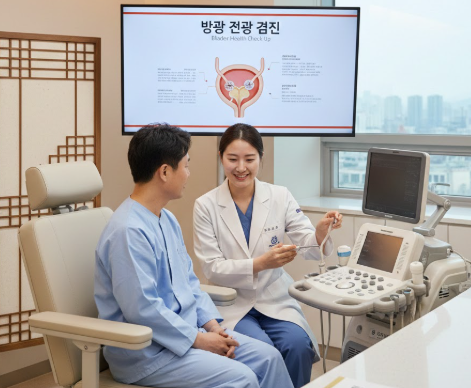
Treatment Overview
A bladder health check-up is an essential preventive measure to maintain urinary system wellness and detect potential issues early. It helps identify conditions such as overactive bladder (OAB), interstitial cystitis (IC), urinary tract infections (UTIs), bladder stones, and early-stage tumors before they progress.
Korea is recognized for its advanced diagnostic programs, combining state-of-the-art technology, expert urologists, and personalized care, making it a top destination for both domestic and international patients seeking comprehensive bladder health evaluation.
Purpose & Benefits
The purpose of a bladder health check-up is to:
- Detect early signs of bladder and urinary tract disorders.
- Evaluate bladder function and overall urinary system health.
- Identify risk factors that may lead to chronic conditions.
- Provide personalized recommendations for preventive care or treatment.
Benefits include timely detection of disorders, prevention of complications, improved bladder function, and peace of mind for patients.
Ideal Candidates
Bladder health check-ups in Korea are suitable for:
- Adults experiencing urinary frequency, urgency, or mild discomfort.
- Individuals with recurrent UTIs or bladder infections.
- Patients with family history of bladder or urinary diseases.
- Older adults prone to urinary incontinence or other age-related bladder issues.
- International patients seeking comprehensive bladder evaluation before treatment or as part of preventive care.
Programs are customized according to age, health status, and risk factors.
Possible Risks & Complications
Bladder health check-ups are generally safe and non-invasive, but minor considerations may include:
- Urinalysis or urine culture: Slight discomfort during sample collection.
- Cystoscopy: Temporary mild pain, urinary urgency, or minor bleeding.
- Imaging (Ultrasound, CT, MRI): Rare allergic reactions to contrast agents.
- Blood Tests: Minor bruising at the puncture site.
Korean clinics ensure all procedures are conducted under strict hygiene and safety protocols.
Techniques & Technology Used
Bladder health check-ups in Korea use cutting-edge diagnostic tools:
- Urinalysis and Urine Culture: Detect infection, hematuria, or early signs of bladder disease.
- Cystoscopy: Visualizes the bladder lining to identify inflammation, lesions, or tumors.
- Ultrasound and Imaging: Assess structural abnormalities, stones, or tumors.
- Blood Tests and Biomarkers: Evaluate kidney and urinary tract function.
- Urodynamic Testing: Measures bladder pressure and capacity, aiding early OAB detection.
- Preventive Health Programs: Comprehensive evaluations that combine laboratory, imaging, and functional assessments.
- Telemedicine Services: For international patients, pre-consultation and follow-up care can be provided remotely.
These methods ensure accurate assessment, early diagnosis, and precise preventive recommendations.
Treatment Process in Korea
The typical bladder health check-up process includes:
- Initial Consultation: Medical history, lifestyle review, and symptom assessment.
- Preliminary Tests: Urine and blood tests, urination pattern evaluation.
- Diagnostic Evaluation: Imaging studies, cystoscopy, or urodynamic tests if indicated.
- Comprehensive Assessment: Analysis of results to detect early abnormalities or risk factors.
- Personalized Recommendations: Preventive measures, lifestyle modifications, or treatment if necessary.
- Follow-Up and Monitoring: Regular evaluation to ensure bladder health is maintained and any issues are addressed promptly.
International patients benefit from streamlined processes, teleconsultation, and English-speaking coordinators.
Recovery & After-Care
Most bladder health check-ups are non-invasive or minimally invasive, so recovery is quick:
- Minor discomfort may occur during cystoscopy or urodynamic studies, resolving within hours.
- Normal hydration and activity are recommended after tests.
- Follow-up ensures patients understand results and receive guidance on preventive care, lifestyle adjustments, and any treatment plans.
Proper after-care ensures ongoing bladder health and early management of any detected issues.
Results & Longevity
Patients undergoing bladder health check-ups in Korea often benefit from:
- Early detection of urinary, bladder, or kidney conditions.
- Opportunities for preventive interventions to avoid chronic complications.
- Improved bladder function and reduced risk of recurrent infections or disease progression.
- Enhanced peace of mind with professional evaluation and follow-up.
- Long-term maintenance of urinary and bladder health with appropriate lifestyle and medical guidance.
Regular check-ups contribute to sustained bladder wellness and improved quality of life.
Why Korea Is a Top Destination
Korea is a leading destination for bladder health check-ups due to:
- Advanced Diagnostic Technology: Modern imaging, cystoscopy, and laboratory tools.
- Specialized Urology Clinics: Experienced urologists and multidisciplinary teams.
- International Patient Services: English-speaking staff, teleconsultation, and coordinated care packages.
- Comprehensive Programs: Screening, functional assessment, and risk evaluation in one visit.
- Patient-Centered Approach: Personalized recommendations and long-term preventive strategies.
International patients benefit from efficient, precise, and holistic bladder health evaluations.
Cost Range
The cost of bladder health check-ups in Korea varies based on tests and services:
- Initial consultation: $100 – $250
- Urinalysis and urine culture: $30 – $80
- Imaging studies (Ultrasound, CT, MRI): $150 – $500
- Cystoscopy: $300 – $600
- Urodynamic testing: $200 – $500
- Comprehensive check-up packages: $500 – $2,500
- Teleconsultation for international patients: $50 – $150
Structured packages allow international patients to plan their evaluation efficiently.
Popular Clinics in Korea
Top hospitals and clinics offering bladder health check-ups include:
- Samsung Medical Center, Seoul
- Asan Medical Center, Seoul
- Severance Hospital (Yonsei University), Seoul
- Seoul National University Hospital, Seoul
- CHA Bundang Medical Center, Seongnam
These centers provide expert evaluation, advanced diagnostic services, and personalized care for domestic and international patients.


