
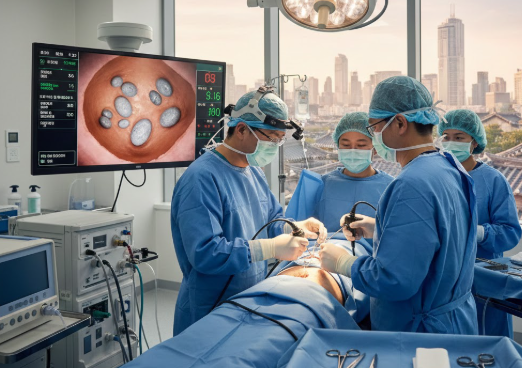
Treatment Overview
Bladder stones are more common in older adults due to age-related changes in bladder function, weakened bladder muscles, enlarged prostate, chronic urinary retention, and recurrent urinary tract infections. These stones can cause pain, difficulty urinating, blood in urine, and frequent infections.
Korea has become a leading destination for bladder stone treatment in elderly patients because of its modern medical technology, safe minimally invasive procedures, and highly trained urologists. Treatment options in Korea focus on effectiveness, comfort, and fast recovery, making it especially suitable for seniors who need gentle and precise care.
Purpose & Benefits
The main purpose of bladder stone removal in elderly patients is to relieve symptoms, prevent infections, and restore normal urinary function while avoiding complications. Korean hospitals provide comprehensive care designed around the needs of older individuals.
Key benefits include:
- Minimally invasive procedures, reducing risks for elderly patients
- High success rate for complete stone removal
- Quick recovery with less pain and minimal downtime
- Advanced diagnostic tools for accurate assessment
- Lower risk of complications, especially for patients with comorbidities
- Comprehensive elderly-focused care, including cardiology and anesthesia support
Korea’s healthcare system ensures safe, comfortable, and effective treatment for older adults.
Ideal Candidates
Elderly patients who benefit most from bladder stone removal include those who:
- Experience pain or discomfort during urination
- Have difficulty emptying the bladder completely
- Suffer from recurrent UTIs
- Have an enlarged prostate leading to urinary retention
- Notice blood in their urine (hematuria)
- Have previously been diagnosed with bladder or kidney stones
- Experience urinary urgency, frequency, or nighttime urination
Older adults with chronic conditions such as diabetes, hypertension, or heart disease are evaluated carefully to ensure the safest treatment method.
Possible Risks & Complications
Although bladder stone removal is generally safe in Korea, elderly patients may have slightly higher risks due to age-related health issues. Possible complications include:
- Mild bleeding or blood in urine after the procedure
- Temporary urinary discomfort
- Infection, although rare with proper care
- Incomplete removal, requiring additional treatment
- Anesthesia-related risks, especially for seniors with other health problems
Korean hospitals minimize these risks through detailed preoperative evaluations, advanced imaging, and specialized elderly-care anesthesia teams.
Techniques & Technology Used
Korea uses the latest techniques and equipment to ensure safe, precise, and minimally invasive bladder stone removal for elderly patients. Common methods include:
Extracorporeal Shock Wave Lithotripsy (ESWL)
A non-invasive method that uses shock waves from outside the body to break stones into pieces that pass naturally. Ideal for elderly patients due to its safety and no-incision approach.
Laser Lithotripsy (Holmium Laser)
A minimally invasive procedure where a tiny camera (cystoscope) is inserted into the bladder to directly break stones with a laser. It is highly effective, especially for large or hard stones.
Transurethral Cystolitholapaxy
Often used when stones are large or when the patient has prostate enlargement. The procedure uses tiny surgical instruments to crush and remove stones directly.
Digital Imaging & Diagnostics
CT scans, ultrasound, and urine tests help determine the safest and most effective treatment method for elderly patients.
Korea’s advanced medical tools reduce risk and ensure a smooth recovery.
Treatment Process in Korea
Elderly patients in Korea benefit from a streamlined and well-coordinated treatment journey. The process includes:
- Comprehensive Evaluation
Includes CT scans, ultrasound, blood tests, urine culture, prostate assessment, and cardiology clearance if needed. - Treatment Planning
Doctors choose the safest procedure based on age, medical history, stone size, and bladder function. - Procedure
- ESWL is performed externally with no incision.
- Laser lithotripsy or cystolitholapaxy is performed using minimally invasive tools.
These procedures typically take 30–60 minutes.
- Post-Procedure Monitoring
Elderly patients are observed for a few hours to ensure stable recovery. - Discharge & Follow-up
Most patients return home the same day, while others may stay overnight depending on their health condition.
International patients receive translation, transportation assistance, and personalized medical coordination.
Recovery & After-Care
Recovery for elderly patients is generally smooth due to Korea’s advanced techniques. After-care instructions include:
- Drinking plenty of water to flush out stone fragments
- Taking medications as prescribed
- Avoiding heavy physical activity for 2–3 days
- Watching for signs of infection (rare)
- Completing follow-up appointments for imaging or urine tests
Most elderly patients fully recover within 3–7 days, depending on the procedure.
Results & Longevity
Bladder stone removal in Korea provides excellent long-term results for elderly patients:
- High stone-free rate after a single procedure
- Reduced urinary symptoms
- Lower risk of recurrent infections
- Improved bladder function and quality of life
Doctors also address underlying causes—such as prostate enlargement, dehydration, or chronic infections—to prevent future stone formation.
Why Korea Is a Top Destination
Korea is one of the best countries for elderly bladder stone treatment because of:
- Advanced minimally invasive technologies
- Experienced urologists specializing in elderly care
- Safe anesthesia management for seniors
- Fast and efficient treatment process
- Affordable healthcare costs compared to Europe or the US
- Excellent international patient services
Korean hospitals prioritize patient comfort, safety, and recovery—making the country a trusted choice for seniors seeking treatment abroad.
Cost Range
The cost of bladder stone removal for elderly patients in Korea depends on the procedure and the patient’s health condition:
- Diagnostic tests: $150 – $350
- ESWL (shock wave): $2,000 – $3,500
- Laser lithotripsy: $3,000 – $5,000
- Cystolitholapaxy: $3,500 – $6,000
Approximate total: $2,500 – $7,000, depending on the complexity and hospital.
Popular Clinics in Korea
Korea’s top hospitals for elderly bladder stone treatment include:
- Seoul National University Hospital
- Samsung Medical Center
- Asan Medical Center
- Severance Hospital, Yonsei University
- Seoul St. Mary’s Hospital
- Specialized Urology Clinics in Seoul Gangnam District
These medical centers provide elderly-friendly facilities and world-class urological care.


