
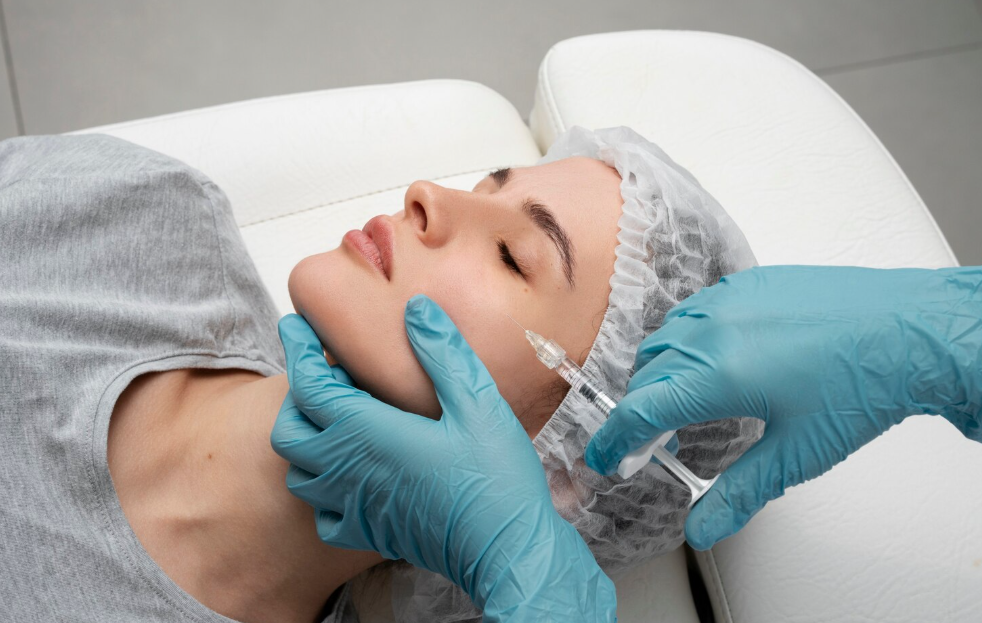
Treatment Overview
Bone-Structure Fillers are advanced dermal filler techniques designed to enhance and restore the underlying facial framework, including the jawline, cheekbones, chin, and temples. Unlike hydration-based skin boosters, these fillers use firmer hyaluronic acid (HA) or collagen-stimulating products such as Radiesse (calcium hydroxyapatite) or Sculptra (poly-L-lactic acid), which provide both structure and long-term regeneration.
In Korea, Bone-Structure Fillers are a popular non-surgical alternative to facial contouring surgeries, giving patients natural yet defined results. Korean dermatologists specialize in precise placement techniques, ensuring balance, symmetry, and a youthful “V-line” or well-contoured profile while avoiding an overfilled look.
Purpose & Benefits
- Facial Contouring: Defines jawline, chin, cheekbones, and temples.
- Restores Volume Loss: Corrects hollow cheeks or sunken temples.
- Lifting Effect: Provides subtle lift to sagging midface.
- Wrinkle & Fold Reduction: Softens deep nasolabial folds and marionette lines.
- Long-Term Collagen Boost: With biostimulatory fillers (Radiesse, Sculptra), skin quality improves over time.
- Non-Surgical Solution: Achieves structural definition without implants or surgery.
Ideal Candidates
- Adults with facial volume loss due to aging.
- Individuals seeking a more defined jawline, chin, or cheekbones.
- Patients with hollow temples or midface sagging.
- Men and women desiring contouring without surgery.
- Those who want longer-lasting results compared to regular HA fillers.
Possible Risks & Complications
- Temporary redness, swelling, or bruising at injection sites.
- Rare risk of lumps, nodules, or unevenness (minimized with expert injectors).
- With biostimulatory fillers: gradual collagen build-up may require multiple sessions.
- Small chance of vascular complications if injected improperly.
- Not dissolvable with hyaluronidase (for Radiesse/Sculptra), so corrections require expertise.
Techniques Used
- Microcannula or Needle Injections: For precise placement with minimal bruising.
- Layered Technique: Filler placed deep near bone to mimic natural structure.
- Firm HA Fillers: For sharper contouring with instant results.
- Radiesse / Sculptra (Collagen-Stimulating): For gradual, long-term lift and firmness.
- Combination Approach: Sometimes paired with skin boosters or thread lifts for complete rejuvenation.
Recovery & Aftercare
- Day 1–2: Mild swelling, redness, or bruising possible.
- Day 3–7: Filler settles, and results become more natural.
- Week 2–4: Full effect visible; collagen stimulation begins (with Radiesse/Sculptra).
Aftercare Guidelines:
- Avoid alcohol, saunas, and intense exercise for 24–48 hours.
- Do not press or massage treated areas unless instructed.
- Apply cold compresses if swelling occurs.
- Use SPF daily to maintain skin quality.
- Schedule maintenance treatments as advised.
Results & Longevity
- Instant contouring and definition with HA fillers.
- Progressive collagen stimulation with Radiesse/Sculptra, improving results over months.
- Results last:
- Firm HA fillers: 9–18 months.
- Radiesse/Sculptra: Up to 2 years (with repeat sessions for optimal results).
- Natural, balanced results when performed by skilled Korean dermatologists.
Treatment Process in Korea
1. Consultation & Facial Mapping
- Dermatologist evaluates bone structure, volume loss, and symmetry.
- Customized plan designed for natural contouring.
2. Treatment Day
- Cleansing and optional numbing cream.
- Fillers injected strategically along jawline, chin, temples, or cheekbones.
- Procedure time: 30–45 minutes.
3. Post-Treatment Care
- Cooling mask or gentle soothing applied.
- Patients typically return to daily activities the same day.
4. Follow-Up & Maintenance
- Touch-up session may be scheduled after 2–4 weeks.
- Maintenance every 12–24 months depending on filler type.
Why Korea is a Top Destination
- Korean dermatologists are renowned for precision and artistry in facial contouring.
- Emphasis on natural definition and balance, avoiding an overdone look.
- Clinics offer both HA and collagen-stimulating fillers for customized results.
- More affordable compared to Western countries while maintaining global standards.
- Seoul clinics provide English-speaking staff and advanced aftercare for international patients.
Cost Range
The cost of Bone-Structure Fillers in Korea depends on filler type (HA vs. Radiesse/Sculptra), clinic reputation, and areas treated:
- HA Contouring Filler (per syringe, 1ml): ₩300,000 – ₩500,000 (~USD $220–$380).
- Jawline/Chin Sculpting (2–3 syringes): ₩800,000 – ₩1,500,000 (~USD $600–$1,150).
- Radiesse or Sculptra (per vial): ₩600,000 – ₩900,000 (~USD $450–$700).
- Full-Face Structural Rejuvenation Package: ₩2,000,000 – ₩3,500,000 (~USD $1,500–$2,700).
Additional Costs:
- Consultation Fee: ₩30,000 – ₩70,000 (~USD $20–$50).
- Aftercare products (SPF, hydrating creams): ₩50,000 – ₩150,000 (~USD $40–$120).
Popular Clinics
- Banobagi Plastic Surgery (Seoul): Experts in contouring fillers for balanced bone structure.
- ID Dermatology (Seoul): Specializes in HA and Radiesse for structural rejuvenation.
- View Clinic (Seoul): Offers jawline, chin, and cheekbone enhancement packages.
- JW Plastic Surgery (Seoul): Premium clinic with advanced facial sculpting protocols.
- Oracle Skin Clinic (Nationwide): Accessible and international-friendly with filler contouring options.


