
Treatment Overview
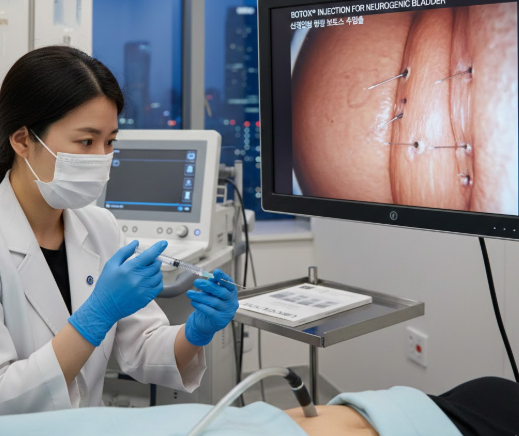
Botox (onabotulinumtoxinA) injections are an advanced treatment for neurogenic bladder, particularly for patients with overactive bladder or uncontrolled urinary urgency caused by nerve dysfunction. The injections target the bladder muscle (detrusor), relaxing it to improve storage capacity, reduce involuntary contractions, and control urinary incontinence.
In Korea, Botox therapy is performed in specialized urology clinics using minimally invasive cystoscopic techniques under local or general anesthesia. This treatment is especially effective for patients who have not responded to oral medications or other conservative therapies.
Purpose & Benefits
H5 Key benefits of Botox injections for neurogenic bladder include:
- Reduces involuntary bladder contractions and urinary urgency
- Improves bladder storage capacity and reduces incontinence episodes
- Provides relief for patients resistant to oral medications
- Minimally invasive procedure with a short recovery time
- Can be repeated periodically for long-term symptom control
- Enhances quality of life by improving daily bladder management
- Reduces reliance on catheterization or other invasive procedures
- Supported by advanced techniques and monitoring in Korean clinics
Botox injections offer a highly effective, non-surgical solution for managing complex neurogenic bladder symptoms.
Ideal Candidates
H5 Botox therapy is suitable for:
- Adults and children with neurogenic overactive bladder
- Patients experiencing urinary urgency, frequency, or leakage due to nerve damage
- Individuals with spinal cord injury, multiple sclerosis, or other neurological conditions
- Patients not responding to oral anticholinergic or beta-3 agonist medications
- Patients seeking minimally invasive, outpatient treatment with fast recovery
- Individuals requiring periodic intervention to manage symptoms
Korean clinics evaluate bladder function carefully to ensure Botox therapy is appropriate.
Possible Risks & Complications
H5 While Botox therapy is generally safe, possible risks include:
- Temporary urinary retention requiring catheterization
- Urinary tract infections
- Mild hematuria (blood in urine) or bladder irritation
- Pain or discomfort during the procedure
- Rare allergic reactions to Botox
- Need for repeat injections as effects gradually wear off
Experienced Korean urologists monitor patients closely to minimize risks and manage side effects.
Techniques & Technology Used
H5 Botox injections are performed using advanced minimally invasive techniques in Korea:
Cystoscopic Injection
- Botox is injected directly into the bladder wall using a cystoscope
- Multiple injection sites ensure even distribution and effective bladder relaxation
Anesthesia & Comfort
- Procedure may be done under local anesthesia with sedation or general anesthesia
- Patients are monitored for comfort and safety throughout the procedure
Pre-Procedure Assessment
- Urodynamic studies and bladder imaging guide injection planning
- Urine tests ensure no active infection is present before treatment
Post-Procedure Monitoring
- Patients are observed briefly for complications
- Catheterization may be used temporarily if urinary retention occurs
Repeat Treatments
- Effects usually last 6–12 months
- Follow-up injections are scheduled as needed for long-term management
Treatment Process in Korea
H5 Step 1: Initial Consultation
Specialists assess symptoms, medical history, and prior treatments to confirm suitability for Botox therapy.
H5 Step 2: Diagnostic Evaluation
Includes urinalysis, imaging, and urodynamic testing to guide treatment.
H5 Step 3: Botox Injection Procedure
Performed in outpatient or day-surgery settings using cystoscopic guidance.
H5 Step 4: Immediate Post-Procedure Care
Monitoring for short-term complications and instruction on urinary management.
H5 Step 5: Follow-Up Assessment
Patients return after a few weeks to assess symptom improvement and bladder function.
H5 Step 6: Repeat Treatment Planning
Periodic injections are scheduled to maintain symptom control over time.
Recovery & After-Care
H5 Post-injection care includes:
- Short-term observation (usually a few hours)
- Monitoring for urinary retention or infection
- Temporary catheterization if necessary
- Resumption of normal activities immediately in most cases
- Follow-up consultations to adjust treatment or plan repeat injections
Minimal downtime and outpatient procedure make Botox therapy convenient for both local and international patients.
Results & Longevity
H5 Expected outcomes include:
- Significant reduction in urinary urgency and incontinence episodes
- Improved bladder capacity and quality of life
- Reduced dependence on oral medications
- Lasting effects of 6–12 months per injection
- Repeat injections maintain long-term symptom control
- Safe and effective for both adults and children with neurogenic bladder
Regular follow-up ensures optimal management and long-lasting results.
Why Korea Is a Top Destination
H5 Korea is a leading destination for Botox therapy for neurogenic bladder due to:
- Highly trained urologists and specialists in minimally invasive bladder treatments
- State-of-the-art cystoscopic and urodynamic equipment
- Comprehensive patient care including diagnostics, treatment, and follow-up
- Short waiting times and efficient treatment scheduling for international patients
- Competitive pricing compared to Western countries
- Medical tourism support including language assistance, travel arrangements, and accommodation
- Evidence-based protocols ensuring safety and effectiveness
International patients benefit from Korea’s advanced techniques and patient-centered care.
Cost Range
H5 Estimated costs in Korea:
- Initial Consultation & Diagnostics: $150–$400
- Botox Injection Procedure: $900–$1,500 per session
- Follow-Up Visits: $50–$150
- Catheterization Supplies (if needed temporarily): $50–$150 per month
- Complete Treatment Package (consultation, diagnostics, injection, follow-up): $1,000–$2,000
Costs vary depending on hospital, patient condition, and international patient services.
Popular Clinics in Korea
H5 Leading clinics offering Botox therapy for neurogenic bladder include:
- Seoul National University Hospital (SNUH)
- Samsung Medical Center
- Asan Medical Center
- Severance Hospital (Yonsei University)
- Mirae Urology & Pelvic Health Clinic
- Wooridul Urology Center
- CHA Women’s Medical Center
- Seoul Urology & Pelvic Health Clinic
These institutions provide expert care, advanced technology, and comprehensive follow-up for safe and effective treatment.


