
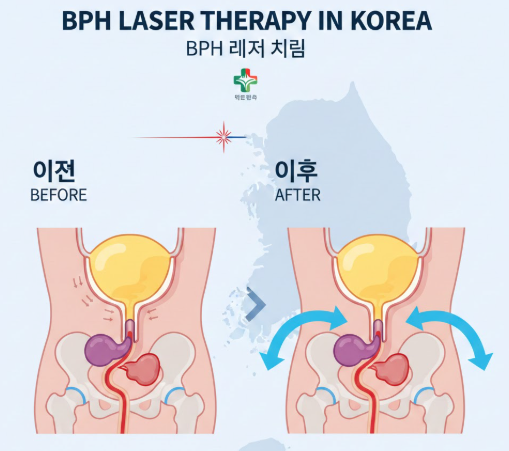
What Is Laser Therapy for BPH
Laser therapy for Benign Prostatic Hyperplasia (BPH) involves using laser energy to remove or shrink excess prostate tissue that causes urinary obstruction. Common techniques include Holmium Laser Enucleation of the Prostate (HoLEP) and GreenLight Photoselective Vaporization of the Prostate (GreenLight / PVP).
Laser therapy is typically recommended when medication or conservative management fails to relieve urinary symptoms, or when the prostate enlargement is significant enough to cause obstruction or complications.
What Patients Look Like Before Treatment
Patients who come for laser therapy often share the following conditions:
- Moderate to severe urinary symptoms: weak urine flow, difficulty starting urination, frequent urination, urgency, or incomplete bladder emptying
- Reduced maximum urinary flow rate (Qmax) on uroflowmetry — often well below normal flow rates
- Elevated symptom burden as measured by instruments like the International Prostate Symptom Score (IPSS), including poor quality of life and complications such as urinary retention or bladder stones
- Enlarged prostate volume (often measured by ultrasound or imaging), contributing to obstruction
Daily life is often significantly affected — poor sleep due to nighttime urination, constant urinary urgency, and general discomfort. Many have already tried medications with limited relief.
What Happens During Laser Therapy
In Korea, the typical process is:
- Pre-operative evaluation: measurements of prostate size, uroflowmetry, symptom scoring, possibly imaging
- Surgery day: under anesthesia (spinal or general), the surgeon uses an endoscopic scope inserted via the urethra; laser energy is directed to remove or vaporize overgrown prostate tissue
- Post-operative care: temporary urinary catheter placement, 1–2 nights in hospital, hydration, pain/irritation control, and follow-up visits
Because of the laser’s precision, tissue trauma is minimized, bleeding is lower than traditional surgery, and recovery tends to be faster.
Typical “After” Outcomes: What Improves — and How Much
Laser therapy for BPH yields substantial improvements:
- Symptom scores (IPSS) drop significantly; maximum flow rate (Qmax) increases
- Quality-of-life scores improve in parallel with symptom reduction
- Durable long-term improvement: symptoms decrease, urine flow nearly doubles, and post-void residual urine drops
- Many patients no longer need BPH medications or have much reduced dependence
In short: after laser therapy, patients often experience much stronger urine flow, fewer urinary symptoms, better bladder emptying, and improved quality of life.
Recovery and Adjustment Period
- Immediately after surgery (first 1–3 days): catheter, possible blood in urine, burning or irritation during urination; most patients are discharged 1–2 days after
- First few days to 1–2 weeks: gradual return to light activity, avoid heavy lifting, drink plenty of water, follow doctor’s medication advice
- 1–3 months: most functional improvements become clearer; irritative symptoms usually subside
- Long-term: good urinary function maintained, sometimes for 10+ years with minimal side effects
Potential Side-Effects or Complications
Laser therapy is generally safe, but possible post-treatment effects include:
- Temporary urinary symptoms — urgency, frequency, irritation, blood in urine
- Short-term incontinence (stress or urge type) in a small minority
- Rare risk of urethral stricture or bladder-neck contracture
- Possible infection or need for temporary catheterization
Compared to older or more invasive prostate surgeries, laser therapy tends to have fewer complications, shorter hospital stays, and faster return to daily life.
Why Many Choose Korea for Laser Therapy
- Extensive experience with HoLEP and GreenLight laser procedures
- Advanced hospital infrastructure and post-operative care systems
- Skilled surgeons familiar with minimally invasive laser techniques
- High-quality care at competitive cost for international patients
Summary — From “Before” to “After” Laser Therapy
| Before Laser Therapy | After Laser Therapy (Typical Results) |
|---|---|
| Weak urine flow, frequent urination, urgency, incomplete emptying, poor quality of life | Stronger urine flow, reduced urinary symptoms, better bladder emptying, improved quality of life |
| Reliance on medication for symptoms | Many patients no longer need medications, or have much reduced dependence |
| Discomfort, disturbed sleep, poor bladder function, risk of complications | Fewer nighttime trips, better bladder function, reduced risk of urinary tract issues, long-term symptom relief |
| Large prostate volume obstructing urethra | Reduction (or removal) of obstructive tissue via laser — improved urinary passage |


