
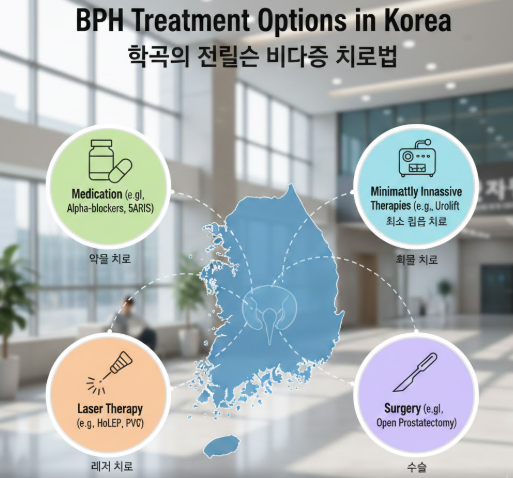
Treatment Overview
Benign Prostatic Hyperplasia (BPH), or prostate enlargement, is a common condition affecting men over 50, often causing urinary problems such as weak urine flow, urgency, frequency, and nocturia. In Korea, a variety of advanced treatment options are available for BPH, ranging from medication and minimally invasive procedures to surgical interventions.
Korean hospitals are renowned for combining modern technology with experienced urologists to provide personalized care plans. Treatments are designed not only to relieve symptoms but also to improve urinary function, reduce complications, and enhance quality of life.
Purpose & Benefits
The purpose of BPH treatment is to reduce prostate size, relieve urinary obstruction, and restore normal urinary function. Key benefits of receiving treatment in Korea include:
- Highly effective symptom relief for improved quality of life
- Minimally invasive options with faster recovery
- Advanced surgical techniques for complex or severe cases
- Accurate diagnosis and treatment planning using modern imaging and urodynamic tests
- Specialized care for international patients, including translators and coordinators
- Comprehensive post-treatment follow-up to prevent recurrence or complications
Korean urology centers prioritize patient safety, comfort, and optimal outcomes with a combination of medication, procedures, and lifestyle guidance.
Ideal Candidates
BPH treatment in Korea is suitable for:
- Men experiencing urinary obstruction, weak urine flow, or frequent nighttime urination
- Patients with recurrent urinary tract infections caused by prostate enlargement
- Individuals whose symptoms are not adequately managed by lifestyle changes or medication
- Men with significant prostate enlargement confirmed by imaging
- Elderly patients or those with comorbidities seeking minimally invasive treatment
- International patients seeking advanced, coordinated care
Doctors perform detailed evaluations to determine the most suitable treatment plan for each patient.
Possible Risks & Complications
While BPH treatments in Korea are generally safe, potential risks may include:
- Temporary blood in urine after procedures
- Mild urinary urgency, frequency, or discomfort
- Infection, usually managed with antibiotics
- Rare complications related to anesthesia or surgery
- Retrograde ejaculation or temporary erectile dysfunction in surgical cases
- Incomplete symptom relief requiring follow-up treatment
Korean hospitals mitigate these risks with careful preoperative assessment, skilled surgical teams, and thorough post-treatment monitoring.
Techniques & Technology Used
Korean urology centers offer multiple treatment options tailored to patient needs:
Medication Therapy
- Alpha-Blockers: Relax prostate and bladder neck muscles to improve urine flow
- 5-Alpha-Reductase Inhibitors: Reduce prostate size over time
- Combination Therapy: Effective for moderate to severe symptoms
Minimally Invasive Procedures
- Transurethral Microwave Therapy (TUMT): Uses heat to shrink prostate tissue
- Transurethral Needle Ablation (TUNA): Destroys prostate tissue using radiofrequency energy
- Prostatic Urethral Lift (PUL): Minimally invasive implants to open the urethra
Surgical Options
- Transurethral Resection of the Prostate (TURP): Gold standard surgical procedure for moderate to severe BPH
- Laser Enucleation of the Prostate (HoLEP): Laser-based removal of prostate tissue for larger prostates
- Open or Laparoscopic Prostatectomy: Reserved for very large or complex cases
Advanced Diagnostics & Imaging
- High-resolution ultrasound, MRI, and urodynamic studies guide precise treatment planning and ensure the best outcomes.
Treatment Process in Korea
The BPH treatment process in Korea is structured and patient-focused:
- Initial Consultation & Evaluation
- Symptom assessment, PSA blood tests, imaging, and urodynamic studies.
- Personalized Treatment Planning
- Doctors recommend medication, minimally invasive procedures, or surgery based on severity, prostate size, and patient preference.
- Treatment Implementation
- Medication is prescribed for mild to moderate BPH
- Minimally invasive procedures are performed in outpatient settings
- Surgery is scheduled for complex or severe cases with hospital admission if needed
- Post-Treatment Monitoring
- Patients are observed for urinary function, complications, and symptom relief.
- Follow-Up & Lifestyle Guidance
- Regular check-ups, imaging, and medication adjustments ensure optimal long-term outcomes.
International patients benefit from translation services, appointment coordination, and follow-up care support after returning home.
Recovery & After-Care
Recovery depends on the type of treatment:
- Medication: Symptom improvement may take weeks; regular monitoring is required.
- Minimally Invasive Procedures: Most patients resume normal activities within a few days; mild urinary frequency or urgency may occur temporarily.
- Surgical Interventions (TURP, HoLEP): Hospital stay of 1–3 days; catheter may be required for 1–2 days; full recovery within 2–4 weeks.
After-care includes:
- Adequate hydration to support urinary function
- Avoiding heavy lifting or strenuous activity for several weeks
- Following prescribed medications and attending follow-up appointments
- Monitoring urinary patterns and reporting any complications promptly
Adhering to after-care instructions ensures long-lasting symptom relief and optimal urinary health.
Results & Longevity
BPH treatments in Korea provide effective long-term outcomes:
- Relief from urinary obstruction, nocturia, and urgency
- Improved quality of life and urinary function
- High success rates with minimally invasive and surgical procedures
- Reduced risk of urinary tract infections and complications
- Long-term symptom control with lifestyle guidance and medication as needed
Follow-up care ensures sustained benefits and prevention of recurrence.
Why Korea Is a Top Destination
Korea is a global leader in BPH treatment due to:
- Highly skilled urologists specializing in both minimally invasive and surgical procedures
- Advanced diagnostic and treatment technologies
- Affordable treatment costs compared to the US, Europe, and Japan
- Efficient, patient-centered care for domestic and international patients
- Comprehensive medical tourism support including translators, transport, and appointment coordination
These factors make Korea an ideal choice for men seeking safe, effective, and long-term management of BPH.
Cost Range
The cost of BPH treatment in Korea varies depending on the procedure:
- Medication Therapy: USD 50 – 200 per month
- Minimally Invasive Procedures (TUMT, TUNA, PUL): USD 2,000 – 4,000
- TURP Surgery: USD 3,500 – 6,000
- Laser Enucleation (HoLEP): USD 4,000 – 6,500
- Diagnostics & Follow-Up: USD 150 – 500
International hospitals may offer package deals including consultation, diagnostics, procedure, hospitalization, and follow-up care.
Popular Clinics in Korea
Leading hospitals and clinics for BPH treatment include:
- Seoul National University Hospital (SNUH)
- Samsung Medical Center, Seoul
- Asan Medical Center, Seoul
- Severance Hospital (Yonsei University)
- St. Mary’s Hospital, Seoul
- Gangnam Urology Specialist Clinics
These hospitals offer advanced treatment technologies, experienced urologists, and dedicated support for international patients.


