
Treatment Overview
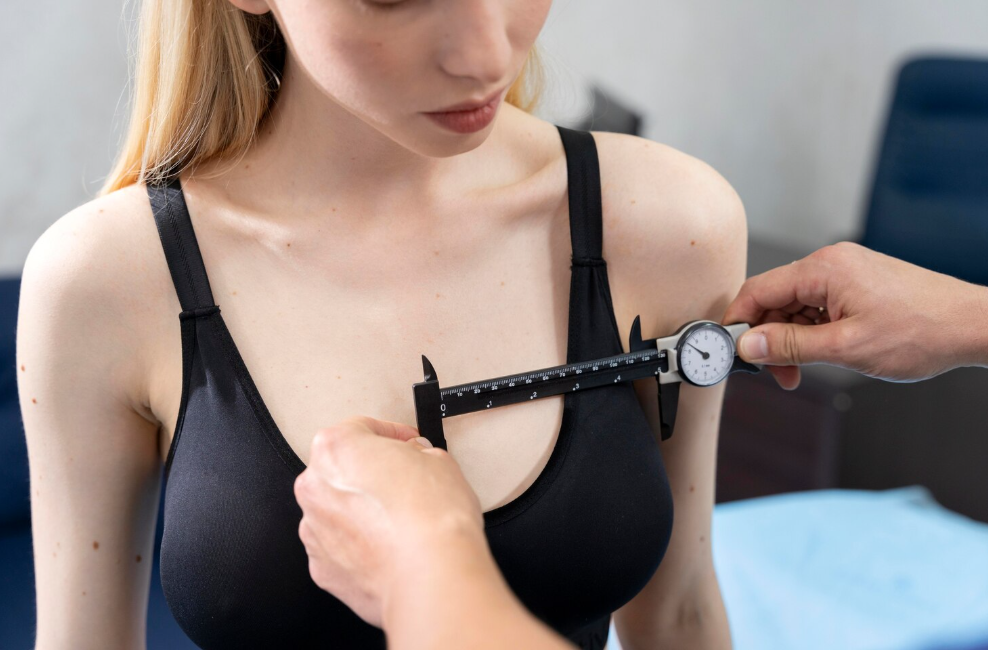
Breast Lift Surgery, also known as mastopexy, is a cosmetic procedure designed to lift and reshape sagging or drooping breasts. In Korea, this surgery is performed with advanced techniques to restore youthful breast contours while minimizing scars. Korean plastic surgeons are highly skilled in achieving natural-looking results that enhance both breast shape and symmetry.
Purpose & Benefits
The main purpose of a breast lift is to correct sagging breasts, often caused by aging, pregnancy, breastfeeding, or weight fluctuations.
Key benefits include:
- Elevated and firmer breast position
- Restored youthful breast shape
- Enhanced symmetry and proportion
- Improved nipple and areola positioning
- Boost in self-confidence and aesthetic appeal
Ideal Candidates
This surgery is ideal for individuals who:
- Have sagging or drooping breasts
- Desire a more youthful, lifted breast appearance
- Have stretched skin or downward-pointing nipples
- Are in good health and have realistic expectations
- Want to combine lifting with augmentation for added volume
Possible Risks & Complications
While Korea provides world-class surgical care, breast lift surgery carries potential risks, including:
- Scarring around incision sites
- Temporary swelling, bruising, or discomfort
- Changes in nipple sensation (usually temporary)
- Minor asymmetry in breast shape or position
- Rare infection or bleeding
- Anesthesia-related complications (very rare)
Surgical Techniques Used
Korean surgeons use precise and innovative methods to achieve minimal scarring and natural results:
- Anchor Technique – ideal for severe sagging, involving incisions around the areola, vertically down the breast, and along the crease.
- Lollipop (Vertical) Technique – for moderate sagging, minimizes scars while providing significant lift.
- Periareolar Technique – smaller incision around the areola, suitable for mild sagging.
- Combination with Implants – breast lift can be paired with augmentation to restore volume in addition to lifting.
Recovery & Aftercare
Korean clinics emphasize structured post-operative care for smooth recovery:
- Light activities can resume in 5–7 days.
- Sutures are typically removed after 7–10 days.
- Swelling and tenderness generally subside in 2–3 weeks.
- Strenuous exercise or upper-body movements should be avoided for 4–6 weeks.
- Compression bras and scar management therapies are recommended.
- Follow-up visits include scar laser therapy, swelling monitoring, and ongoing consultation.
Results & Longevity
Results are immediately visible, with breasts appearing lifted, firmer, and more youthful. Final results settle within 2–3 months as swelling decreases. Korean breast lift surgeries are designed to maintain results long-term, although natural aging, pregnancy, or weight changes can affect breast position over time.
Treatment Process in Korea
Korea is widely recognized as a global hub for breast lift surgery due to its combination of advanced surgical technology, aesthetic expertise, and patient-centered care:
- Pre-Surgery Consultation & Planning: Korean clinics use 3D imaging and digital simulations to allow patients to visualize results. Surgeons assess skin elasticity, breast volume, and nipple position to create a personalized surgical plan.
- Advanced Surgical Techniques: Minimally invasive tools, laser-assisted skin tightening, and absorbable sutures are commonly used to reduce scarring and enhance healing.
- Combination Procedures: Many patients in Korea opt for a breast lift combined with implants or fat grafting for added volume, resulting in fuller, naturally lifted breasts.
- Highly Skilled Surgeons: Korean surgeons are internationally trained, board-certified, and experienced in high-volume breast procedures, ensuring precise and natural results.
- Comprehensive Medical Tourism Services: English-speaking coordinators, luxury recovery accommodations, airport transfers, and detailed post-op guidance make Korea a stress-free option for international patients.
- Post-Operative Monitoring: Patients receive close follow-up, including scar management, compression garment guidance, and swelling reduction therapies. Laser scar treatments and massage therapy are widely used to optimize outcomes.
- High Patient Satisfaction: The combination of technical precision, aesthetic expertise, and comprehensive care results in consistently high patient satisfaction, making Korea a top choice for breast lift surgery.
Cost Range
Breast lift surgery in Korea is competitively priced while maintaining international standards of care:
- Standalone Breast Lift: ₩5,000,000 – ₩9,000,000 KRW (Approx. $3,800 – $6,800 USD)
- Breast Lift with Implants: ₩8,000,000 – ₩14,000,000 KRW (Approx. $6,100 – $10,700 USD)
- Factors Affecting Cost:
- Surgical technique (anchor vs. vertical vs. periareolar)
- Use of implants (silicone, cohesive gel, or saline)
- Surgeon’s expertise and clinic reputation
- Additional treatments (fat grafting, scar therapy, post-op laser care)
- Clinic location (Gangnam district clinics generally charge higher fees)
- Additional Costs: Pre-operative testing, post-op medications, compression bras, and follow-up therapies may add ₩500,000 – ₩1,000,000 KRW ($380 – $760 USD).
Popular Clinics
Some of the top Korean clinics for breast lift surgery include:
- Banobagi Plastic Surgery Clinic – renowned for breast aesthetic procedures and international patient care
- JK Plastic Surgery Center – high-volume surgery center with comprehensive post-op services
- View Plastic Surgery Hospital – advanced surgical planning and minimally invasive techniques
- ID Hospital Seoul – one of Korea’s largest cosmetic surgery hospitals
- Regen Plastic Surgery – highly experienced in breast lift and combined breast procedures


