
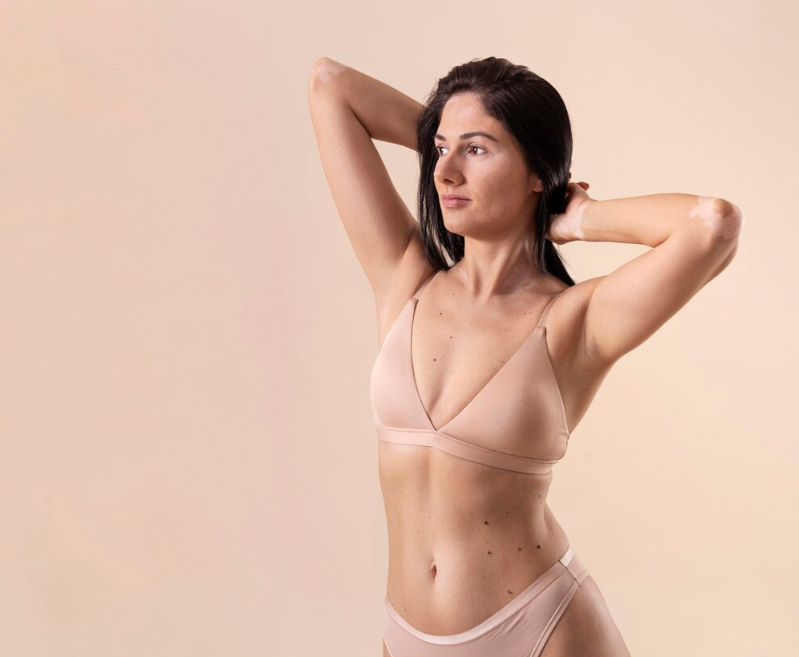
Treatment Overview
Breast Lift in Korea, also known as mastopexy, is a cosmetic surgical procedure designed to raise and reshape sagging breasts, restore youthful contours, and improve overall breast aesthetics. This procedure addresses drooping caused by aging, pregnancy, breastfeeding, or significant weight changes, creating a firmer, more proportionate breast appearance.
Korea is internationally recognized for its advanced surgical techniques, precision, and natural-looking results, making it a top destination for breast lift procedures.
Purpose & Benefits
The main purpose of a breast lift is to reposition and reshape the breasts for a more youthful and aesthetically pleasing appearance.
Key benefits include:
- Lifts sagging or drooping breasts
- Restores a firm, perky breast contour
- Improves breast symmetry and proportion
- Enhances self-confidence and body image
- Can be combined with breast augmentation for added volume
- Minimally visible scars using advanced Korean techniques
Ideal Candidates
A breast lift is suitable for individuals who:
- Have sagging breasts due to aging, pregnancy, or weight changes
- Desire a firmer, more youthful breast shape
- Have realistic expectations about surgical outcomes
- Are in good health and not pregnant or breastfeeding
- Wish to improve breast symmetry and aesthetics
Possible Risks & Complications
Although Korean clinics maintain high standards, potential risks include:
- Temporary swelling, bruising, or tenderness
- Minor asymmetry between breasts
- Scarring along incision lines (typically minimal with modern techniques)
- Changes in nipple sensation (usually temporary)
- Infection or delayed healing
- Rare complications related to anesthesia
Surgical Techniques Used
Korean surgeons employ advanced techniques to achieve natural, long-lasting results:
- Periareolar Lift: Incision around the areola, suitable for mild sagging.
- Vertical (Lollipop) Lift: Incision around the areola and vertically down the breast, ideal for moderate sagging.
- Anchor (Inverted-T) Lift: Incision around the areola, vertically, and along the inframammary fold, used for significant sagging.
- Combination with Augmentation: Adds implants or fat grafting for enhanced volume and contour.
- Minimally Invasive Techniques: Precision suturing and strategic incisions reduce scarring.
Recovery & Aftercare
Recovery in Korean clinics is structured to ensure optimal healing and safety:
- Light activities can resume within 3–5 days.
- Swelling and bruising usually subside within 2–4 weeks.
- Supportive bras or compression garments are worn for 4–6 weeks.
- Avoid strenuous exercise or heavy lifting for at least 4–6 weeks.
- Follow-up appointments monitor healing, scar formation, and breast shape.
Results & Longevity
Results are visible immediately, with the final breast shape appearing within 2–3 months as swelling resolves.
- Breast lift results are long-lasting, particularly when combined with proper support and weight maintenance.
- Korean surgeons focus on natural contour, symmetry, and minimal scarring, ensuring lasting patient satisfaction.
Treatment Process in Korea
Korea is a leading destination for breast lift surgery due to its expertise, advanced technology, and patient-focused care:
- Detailed Consultation: Surgeons assess breast shape, sagging severity, tissue quality, and patient goals.
- Customized Surgical Plan: Technique selection (periareolar, vertical, anchor) is tailored to the individual’s anatomy.
- Advanced Surgical Methods: Precise incisions, meticulous suturing, and tissue reshaping ensure optimal aesthetics and minimal scarring.
- Combination Procedures: Many patients combine a lift with breast augmentation or fat grafting for improved volume and contour.
- Post-Operative Care: Structured follow-ups, scar management, and compression garments optimize recovery.
- Medical Tourism Support: English-speaking coordinators, accommodations, and guided recovery care for international patients.
- Emphasis on Natural Aesthetics: Surgeons prioritize symmetry, proportion, and a youthful breast shape aligned with Korean beauty standards.
Cost Range
Breast lift surgery in Korea is competitively priced while providing high-quality outcomes:
- Typical Price Range: ₩6,000,000 – ₩12,000,000 KRW
(Approx. $4,500 – $9,000 USD)
Factors Affecting Cost:
- Surgical technique used (periareolar, vertical, anchor)
- Combination with breast augmentation or fat grafting
- Surgeon’s experience and clinic reputation
- Hospital or operating facility fees
Additional Costs:
- Pre-operative tests: ₩150,000 – ₩400,000 KRW ($115 – $300 USD)
- Compression garments and supportive bras: ₩150,000 – ₩300,000 KRW ($115 – $230 USD)
- Post-operative medications and follow-up care: ₩200,000 – ₩500,000 KRW ($150 – $380 USD)
Popular Clinics
Top Korean clinics for breast lift surgery include:
- Banobagi Plastic Surgery Clinic – highly experienced in mastopexy and combination procedures
- JK Plastic Surgery Center – internationally accredited, offering precise and natural results
- View Plastic Surgery Hospital – advanced techniques for lifting and reshaping the breast
- ID Hospital Seoul – specialized in complex breast lift and augmentation cases
- Regen Plastic Surgery – expert in achieving youthful, proportionate breast contours


