
Treatment Overview
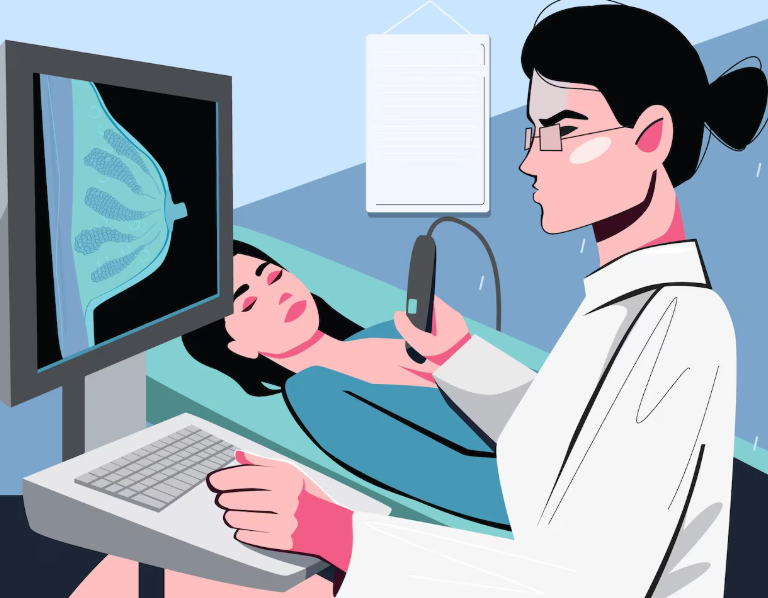
Breast MRI Diagnostic Screening in Korea is a cutting-edge imaging method that offers one of the most comprehensive evaluations of breast tissue. MRI (Magnetic Resonance Imaging) uses strong magnetic fields and radio waves to create detailed three-dimensional images of the breasts. This high-resolution imaging technique provides exceptional contrast between normal and abnormal tissue, making it a powerful tool for early breast cancer detection, especially in high-risk patients.
Korea has become a global leader in breast MRI technology, offering advanced screening programs that integrate AI-assisted imaging, high-field MRI systems, and expert radiological interpretation. The Breast MRI Diagnostic Screening program is designed to detect abnormalities that may not be visible with mammography or ultrasound, such as small lesions or tumors in dense breast tissue.
This diagnostic approach is critical for women at elevated risk of breast cancer, those with inconclusive mammogram results, and patients with complex breast anatomy requiring highly sensitive imaging. Korea’s program combines technical excellence with expert care, making it a trusted choice for comprehensive breast health screening.
Purpose & Benefits
The purpose of breast MRI diagnostic screening is to detect and characterize breast abnormalities with unmatched accuracy.
Key benefits include:
- High sensitivity for detecting breast cancer, especially in dense breast tissue.
- Detailed visualization of breast structures, enabling detection of small lesions.
- Assessment of cancer extent and detection of multifocal or multicentric disease.
- Pre-surgical planning for breast cancer treatment.
- Monitoring treatment response in patients undergoing therapy.
- Radiation-free imaging, making it safe for repeated use when necessary.
Korean breast centers integrate MRI with other screening tools, such as mammography and automated breast ultrasound, to provide a comprehensive assessment tailored to each patient.
Ideal Candidates
Breast MRI diagnostic screening is recommended for:
- Women at high risk of breast cancer due to family history or genetic mutations (BRCA1/BRCA2).
- Patients with dense breast tissue where mammography may be limited.
- Individuals with previous breast cancer requiring follow-up and surveillance.
- Women with inconclusive results from mammography or ultrasound.
- Patients with implants requiring precise imaging.
- Women requiring preoperative mapping of breast lesions for surgical planning.
Korean clinics tailor MRI screening protocols based on risk profiles, ensuring the most effective and efficient evaluation.
Possible Risks & Complications
Breast MRI is a safe procedure, but some considerations include:
- Mild discomfort due to lying still in the MRI machine for an extended time.
- Possible allergic reactions to contrast agents used in some cases.
- Claustrophobia or anxiety due to the enclosed MRI environment.
- Rare cases of false positives that require further investigation.
Korean breast imaging centers prioritize patient comfort, using open MRI systems and patient counseling to minimize anxiety. Contrast agents are carefully screened for safety.
Techniques Used
Korea’s breast MRI diagnostic screening incorporates advanced technology:
- High-Field MRI Scanners (1.5T and 3T): Provide high-resolution images for precise evaluation.
- Dynamic Contrast-Enhanced MRI (DCE-MRI): Highlights vascular patterns of lesions for better differentiation.
- Diffusion-Weighted Imaging (DWI): Assesses tissue cellularity to distinguish benign from malignant lesions.
- AI-Assisted Image Interpretation: Improves diagnostic accuracy by identifying subtle abnormalities.
- Integration with Mammography and Ultrasound: For a comprehensive breast health assessment.
- Digital Archiving: Enables long-term comparison for ongoing monitoring.
These techniques make Korea’s breast MRI screening among the most advanced in the world.
Recovery & Aftercare
Breast MRI is non-invasive but requires a brief recovery period due to the time needed for the scan and possible administration of contrast agents.
Aftercare includes:
- Reviewing results with a breast imaging specialist.
- Additional diagnostic procedures if MRI reveals abnormalities.
- Guidance on follow-up imaging schedules.
- Personalized recommendations for preventive breast health measures.
Korean clinics provide clear post-procedure guidance and ensure patients understand the results and next steps.
Results & Longevity
Breast MRI screening results are generally available within a few days. Reports include:
- High-resolution 3D images of breast tissue.
- Identification and characterization of lesions.
- Assessment of disease extent and surgical planning information if applicable.
- Recommendations for further testing or treatment.
These results create a robust baseline for ongoing breast health monitoring and are invaluable for high-risk women.
Treatment Process in Korea
The breast MRI screening process in Korea is structured for accuracy and patient comfort:
- Initial Consultation: Discussion of medical history, breast health concerns, and risk assessment.
- Preparation: Patients may be advised to avoid certain foods or medications before the MRI.
- MRI Scanning: Patients lie still in a specialized MRI scanner while high-resolution images are taken.
- Image Analysis: Radiologists, often supported by AI, interpret the scans.
- Follow-Up Consultation: Patients receive a comprehensive report and advice on further action.
Korean clinics emphasize patient-centered care, offering detailed explanations and support throughout the process.
Cost Range
The cost of breast MRI diagnostic screening in Korea varies based on the complexity of the examination:
- Basic breast MRI: ₩700,000–₩1,200,000 KRW ($560–$960 USD).
- MRI with contrast and advanced analysis: ₩1,200,000–₩2,000,000 KRW ($960–$1,600 USD).
Many Korean breast centers offer comprehensive packages combining MRI with mammography or ultrasound for a complete breast health evaluation.
Popular Clinics
- Samsung Medical Center Breast Health Center – Offers advanced MRI breast imaging with AI-assisted analysis.
- Asan Medical Center Breast Imaging Center – Renowned for high-quality breast MRI and early detection programs.
- CHA Bundang Women’s Hospital – Specializes in integrated breast health screening, including MRI.
- Seoul National University Hospital (Breast Center) – Offers advanced MRI diagnostics combined with expert interpretation.
- Banobagi Women’s Clinic – Known for personalized breast health programs and cutting-edge imaging.
- Ewha Womans University Medical Center – Combines advanced MRI with patient-focused care.
Breast MRI Diagnostic Screening in Korea stands as a world-class approach to breast health, combining cutting-edge imaging technology, expert analysis, and patient-centered care. This program is especially valuable for high-risk patients and those requiring the highest level of diagnostic precision. By enabling early and accurate detection, Korea’s breast MRI screening significantly contributes to improving breast cancer outcomes and promoting women’s health.


