
Treatment Overview
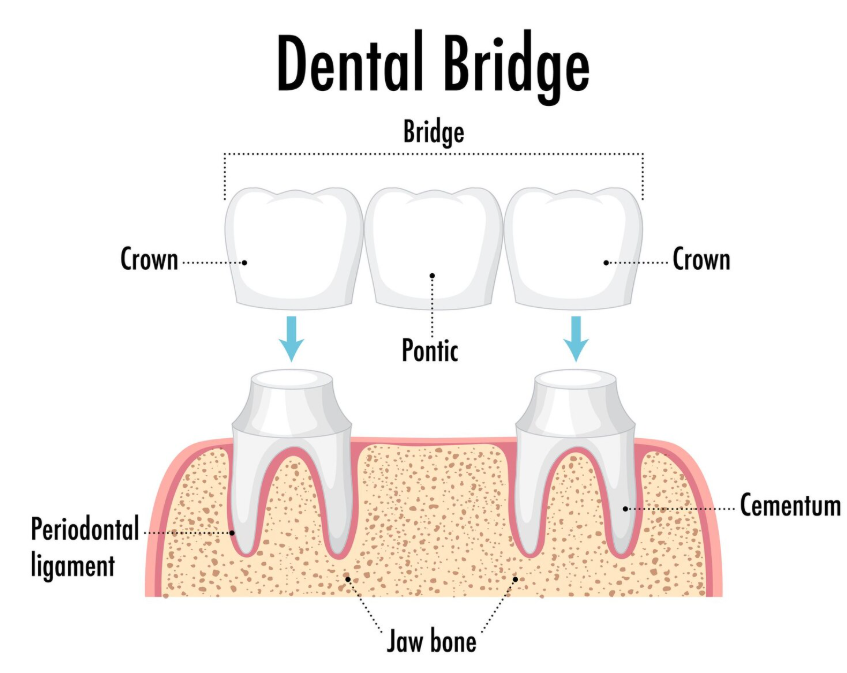
Bridge-on-Implant in Korea is a state-of-the-art restorative solution designed to replace multiple missing teeth with a fixed, permanent bridge supported by dental implants.
This innovative treatment combines digital implant technology, AI-guided surgery, and CAD/CAM precision design to create a bridge that looks, feels, and functions just like natural teeth.
Unlike traditional dentures, the Bridge-on-Implant technique securely anchors a custom bridge onto strategically placed implants, ensuring stability, superior chewing power, and a natural smile.
Korean dental clinics are global pioneers in digital implantology, integrating 3D CBCT imaging, robotic navigation, PRF (Platelet-Rich Fibrin) healing technology, and aesthetic digital smile design (DSD) for flawless outcomes.
This treatment reflects Korea’s global leadership in aesthetic implant restoration, digital planning, and biologic bone integration — offering both functional strength and artistic precision.
Purpose & Benefits
The Bridge-on-Implant System is designed to permanently replace missing teeth using a fixed implant-supported structure that restores natural function and aesthetics.
Purpose
- Replace several missing teeth with a stable, implant-supported bridge.
- Restore full chewing function, comfort, and bite balance.
- Prevent bone loss and facial collapse due to missing teeth.
- Achieve natural smile aesthetics with digital precision.
- Offer a long-term, fixed alternative to removable dentures.
Benefits
- AI-Guided Accuracy: Ensures perfect implant position and bridge alignment.
- Full Digital Workflow: From 3D imaging to CAD/CAM fabrication.
- Natural Aesthetics: Mimics real teeth in shape, color, and texture.
- Immediate Function: Often includes same-day temporary bridge placement.
- Bone Preservation: Stimulates jawbone through implant integration.
- Comfortable & Stable: No slipping or adhesive required.
- High Success Rate: Over 99% success in top Korean implant centers.
Ideal Candidates
Bridge-on-Implant Treatments are ideal for patients who have lost multiple teeth and want a permanent, stable, and natural-looking replacement solution.
Ideal Candidates Include
- Individuals missing several consecutive teeth in one arch.
- Patients seeking a long-term fixed alternative to partial dentures.
- Those with sufficient jawbone for implant placement (or suitable for grafting).
- Patients looking for digital precision and minimal recovery time.
- International patients seeking advanced, affordable implant care in Korea.
Possible Risks & Complications
While Bridge-on-Implant Surgery is highly safe, minor and temporary effects may occur, such as:
- Mild swelling or gum tenderness for 1–3 days.
- Temporary speech or bite adjustment during bridge fitting.
- Rare implant integration delay (monitored via digital scans).
Korean specialists minimize these risks through AI-guided planning, biologic PRF healing, and Piezoelectric microsurgery, ensuring predictable, pain-free recovery.
Surgical Techniques Used
Korea’s Bridge-on-Implant Procedures employ the most advanced digital and biologic techniques for accuracy, safety, and superior cosmetic results.
Common Techniques Include
- 3D CBCT Imaging: Digital bone and nerve mapping for precise planning.
- AI-Guided Surgical Simulation: Predicts implant depth and angulation.
- Flapless Digital Implant Surgery: Minimally invasive, no visible scarring.
- CAD/CAM Bridge Design: Custom bridge digitally designed for perfect fit.
- PRF (Platelet-Rich Fibrin) Integration: Promotes natural bone regeneration.
- Digital Bite Analysis: Ensures perfect occlusion and balance.
- Laser-Assisted Sterilization: Maintains a clean, infection-free surgical site.
Recovery & Aftercare
Recovery from a Bridge-on-Implant Procedure in Korea is rapid, smooth, and supported by digital healing protocols and biologic tissue regeneration.
Aftercare Guidelines
- Eat soft foods for 48 hours post-procedure.
- Brush and floss carefully around implant areas.
- Use prescribed antibacterial mouthwash daily.
- Avoid smoking and alcohol during healing.
- Attend scheduled digital follow-ups for implant verification.
Most patients return to normal activities within 2 days, with complete bone integration achieved in 2–3 months.
Results & Longevity
Expected Results
- Fixed, natural-looking bridge securely supported by implants.
- Improved chewing power and speech clarity.
- Enhanced facial balance and confident smile.
- Seamless comfort with no irritation or movement.
Longevity
- Implant lifespan: 25–30+ years with proper care.
- Bridge lifespan: 10–15 years depending on material and hygiene.
- Success rate: 98–99% in Korea’s top implant hospitals.
Korean digital implant systems ensure lifetime comfort, strength, and aesthetic perfection.
Treatment Process in Korea
Korea’s Bridge-on-Implant Workflow merges AI technology, biologic enhancement, and digital artistry to deliver a seamless full-mouth restoration experience.
Step-by-Step Process
- Consultation & 3D CBCT Scan: Full digital evaluation of bone and smile line.
- AI Simulation & Planning: Virtual implant positioning and bridge modeling.
- Guided Implant Surgery: Flapless and digitally navigated for precision.
- Temporary Bridge (Optional): Same-day fixed smile restoration.
- Healing & Osseointegration (2–3 months): Bone fuses with implants.
- Permanent CAD/CAM Bridge: Custom-designed for perfect aesthetics.
- Final Fitting & Bite Adjustment: Ensures stability and comfort.
- Digital Follow-Up: Monitored via CBCT verification.
Why Korea Is a Top Destination
Korea is globally recognized for digital precision, biologic regeneration, and high-end aesthetic implantology, attracting patients from all over the world.
- AI & Robotic Navigation Systems: Guarantee unmatched precision.
- Full Digital Workflow: From diagnosis to final smile design.
- PRF Biologic Healing: Promotes rapid recovery and bone growth.
- Minimally Invasive Surgery: Faster healing, less discomfort.
- Premium Implant Brands: Straumann®, Osstem®, Dentium®, Nobel Biocare®.
- Multilingual Global Care: English, Japanese, and Chinese support.
- Affordable Excellence: 40–60% less expensive than Western countries.
Korea’s seamless integration of digital innovation, biologic science, and smile aesthetics makes it the #1 global destination for Bridge-on-Implant treatments.
Unique Korean Methods & Technology
- AI-Guided 3D Navigation for Implant Surgery.
- CAD/CAM Digital Bridge Fabrication.
- PRF (Platelet-Rich Fibrin) Regenerative Therapy.
- Digital Smile Design (DSD) for Aesthetic Planning.
- Piezoelectric Ultrasonic Microsurgery.
- Laser-Assisted Gum Contouring & Sterilization.
- Real-Time CBCT Monitoring During Surgery.
These innovations ensure Bridge-on-Implant in Korea achieves exceptional precision, comfort, and long-lasting beauty.
Cost Range
| Type of Bridge-on-Implant Procedure | Cost (KRW) | Approx. USD |
|---|---|---|
| Standard Bridge-on-Implant | ₩4,500,000 – ₩6,500,000 | $3,330 – $4,810 |
| PRF-Enhanced Bridge-on-Implant | ₩6,000,000 – ₩8,000,000 | $4,440 – $5,920 |
| Full Digital CAD/CAM Bridge Package | ₩8,500,000 – ₩10,500,000 | $6,290 – $7,770 |
| Premium Aesthetic Bridge-on-Implant | ₩11,000,000 – ₩14,000,000 | $8,150 – $10,370 |
Packages typically include: consultation, CBCT scan, AI planning, guided implant surgery, PRF preparation, bridge fabrication, and digital follow-up care.
Popular Clinics
- Seoul National University Dental Hospital: Leaders in digital implantology and advanced bridge reconstruction.
- Yonsei University Dental Hospital: Experts in PRF-enhanced and aesthetic implant bridges.
- Asan Medical Center Dental Clinic: Specialists in biologic bone regeneration and full-arch rehabilitation.
- Samsung Medical Dental Center: Innovators in CAD/CAM and robotic implant systems.
- JK Dental Implant Center (Gangnam): Premium international clinic for aesthetic, full-mouth implant treatments.


