
Hair loss can be a deeply emotional experience — especially when it’s caused by something you can’t see, like stress or hormonal imbalances. For many people, sudden shedding or gradual thinning seems to appear overnight, often triggered by life changes, illness, or internal disruptions.
If you’re struggling with stress-related hair loss or hormonally driven thinning, you may be wondering:
Can PRP (Platelet-Rich Plasma) therapy help?
The short answer: Yes — but with important caveats. PRP therapy can be highly effective, especially when it’s used as part of a comprehensive plan that addresses the underlying cause of your hair loss.
Understanding Stress-Related and Hormonal Hair Loss
📉 Stress-Induced Hair Loss (Telogen Effluvium)
Stress — whether emotional, physical, or psychological — can push hair follicles into a resting phase (telogen), causing sudden, diffuse shedding a few months later. This condition is known as Telogen Effluvium and is often triggered by:
- Major life changes (divorce, loss, trauma)
- Surgery or illness (including COVID-19)
- Crash dieting or rapid weight loss
Telogen effluvium is usually temporary, but the recovery can be slow and distressing.
🔄 Hormonal Hair Loss
Hormonal fluctuations can lead to progressive hair thinning, especially in women. Common culprits include:
- Postpartum changes
- Menopause
- Thyroid disorders (hypo- or hyperthyroidism)
- Polycystic Ovary Syndrome (PCOS)
- Stopping or starting birth control pills
Hormones like estrogen, progesterone, and androgens (like DHT) directly affect the hair growth cycle and follicle health.
How PRP Therapy Works
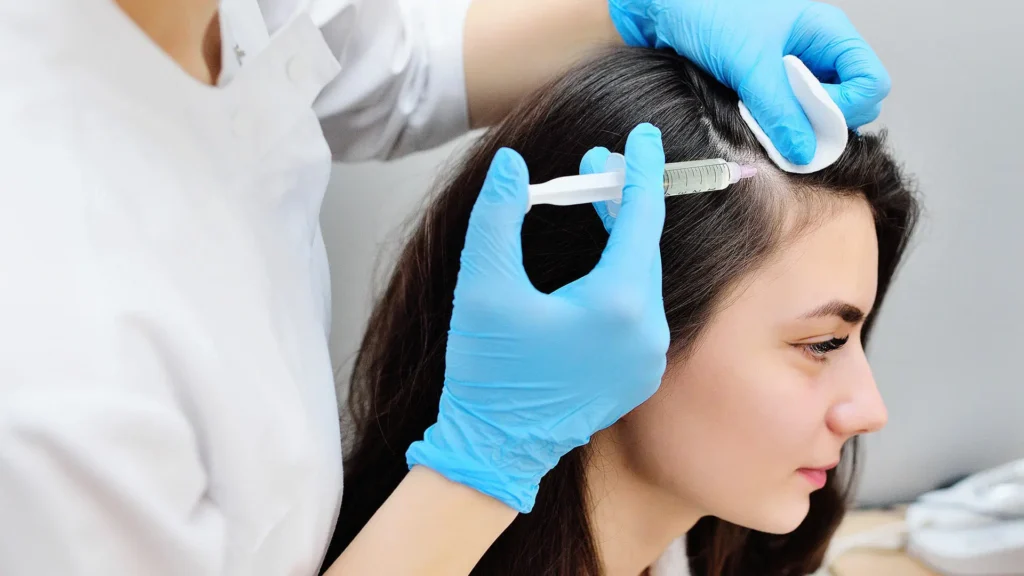
PRP (Platelet-Rich Plasma) therapy uses concentrated platelets from your own blood, which are injected into the scalp to stimulate dormant or weakened hair follicles.
Platelets are rich in growth factors and regenerative proteins that help:
- Increase blood flow to the scalp
- Promote cellular repair
- Prolong the growth (anagen) phase of the hair cycle
- Improve follicle thickness and health
The goal is to kickstart the body’s natural healing and regrowth process.
Can PRP Help with Stress or Hormonal Hair Loss?
✅ Yes — for Stimulating Recovery and Regrowth
PRP is especially useful when the root cause of hair loss has been identified and treated, but the follicles need help recovering.
PRP Can Help:
- Accelerate regrowth after telogen effluvium (stress shedding)
- Boost hair density in hormonally affected areas like the temples or crown
- Improve hair thickness and quality
- Stabilize ongoing shedding, especially when paired with other treatments
Think of PRP as a “fertilizer” for your scalp — it won’t fix the cause, but it can dramatically speed up the recovery and improve the quality of regrowth.
When PRP May Not Be Effective
PRP works best when hair follicles are still alive but dormant or miniaturized — not completely gone.
It may be less effective if:
- The hormonal imbalance is untreated or uncontrolled
- Hair loss has progressed to complete follicle atrophy or scarring
- You have an autoimmune-related hair loss like alopecia areata or lupus-related alopecia
In those cases, PRP may still help, but results will be limited unless combined with systemic treatments (e.g., hormone therapy, thyroid medication, anti-androgens).
Ideal Candidates for PRP in Stress or Hormonal Hair Loss
You may benefit from PRP if you:
- Have noticeable thinning or shedding that began after a stressful event or hormonal change
- Are in early to moderate stages of hair loss
- Have ruled out underlying deficiencies (iron, vitamin D, etc.)
- Are not ready or willing to use long-term medications
- Prefer a natural, non-surgical solution
What to Expect with PRP Treatment
🩸 Procedure Overview:
- Small blood draw (usually from your arm)
- Platelets are isolated using a centrifuge
- PRP is injected into the scalp’s thinning areas
- Optional: microneedling to enhance absorption
🕒 Treatment Schedule:
- Initial phase: 3–6 sessions spaced 4–6 weeks apart
- Maintenance: Every 4–6 months after desired results are achieved
💡 When You’ll See Results:
- Reduced shedding: Often within the first 1–2 months
- Improved density and texture: Usually noticeable by 3–6 months
- Best results: Seen after a full treatment cycle (6–12 months)
Complementary Treatments to Boost Results
To get the best outcome from PRP, especially in stress or hormone-related cases, it’s often combined with:
- Minoxidil (Rogaine) – topical treatment that prolongs growth phase
- Spironolactone – anti-androgen for women with PCOS or high DHT
- Thyroid or hormonal therapy – if labs show an imbalance
- Nutritional support – iron, biotin, vitamin D, collagen
- Stress management – mindfulness, therapy, adaptogens
Final Thoughts: A Regenerative Boost When You Need It Most
Hair loss from stress or hormonal fluctuations doesn’t have to be permanent — and PRP offers a powerful way to help your body reset the hair growth cycle naturally.
If you’re in recovery from postpartum changes, chronic stress, or a thyroid imbalance, PRP may be the missing link that restores your confidence and your hair.
The key is early intervention, realistic expectations, and a comprehensive, medically guided approach.


