
Treatment Overview
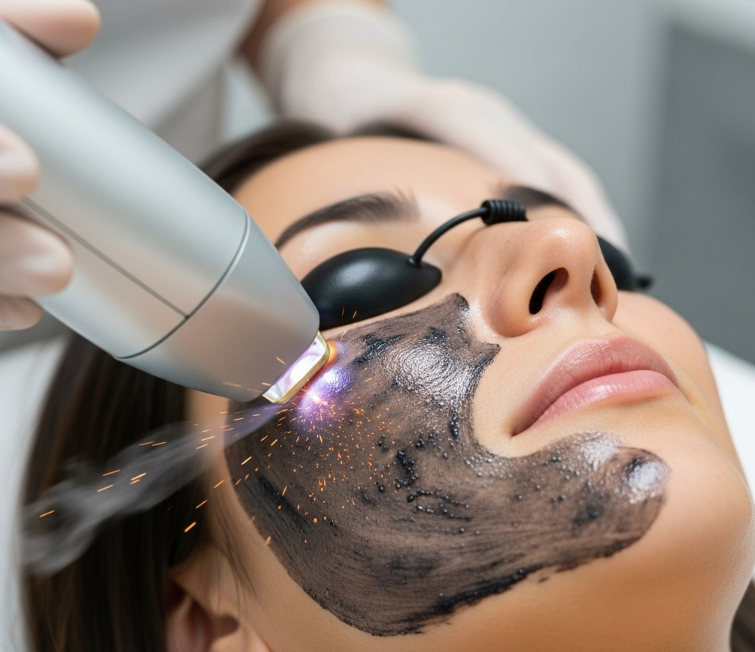
Carbon Laser Peel (also known as Hollywood Peel or Charcoal Laser Peel) is a non-invasive Korean dermatology treatment that deeply cleanses pores, controls oil, reduces dullness, and brightens the skin. It involves applying a thin layer of carbon solution onto the skin, followed by a Q-switched Nd:YAG laser that breaks down impurities, exfoliates dead skin cells, and stimulates collagen production.
For dull skin, Carbon Laser Peel works by removing debris, tightening pores, reducing excess sebum, and evening out skin tone. It is particularly effective for patients with oily, congested, or acne-prone skin who also struggle with a lack of glow.
It belongs to the Skin Concerns: Dull Skin / Oil Congestion family (Carbon Laser Peel, Aqua Peel, BB Laser, Laser Toning, Microdermabrasion):
- Carbon Laser Peel: Best for oil control + pore cleansing + glow.
- Aqua Peel: Best for hydration + gentle exfoliation.
- BB Laser: Best for tone refinement + “BB cream effect.”
- Laser Toning: Best for pigmentation and melasma.
- Microdermabrasion: Best for resurfacing rough texture.
Purpose & Benefits
- Deep Cleansing: Carbon absorbs impurities, laser eliminates them.
- Oil & Sebum Control: Reduces shine and congestion.
- Brightening & Glow: Restores radiance by exfoliating dull surface.
- Pore Tightening: Minimizes enlarged pores.
- Acne & Blackhead Reduction: Clears clogged pores and bacteria.
- Collagen Stimulation: Improves elasticity and texture.
- Synergy with Other Treatments: Often combined with Aqua Peel, BB Laser, or Rejuran Healer.
Ideal Candidates
Carbon Laser Peel in Korea is recommended for:
- Adults with dull, oily, or congested skin.
- Patients with enlarged pores, blackheads, or acne-prone skin.
- Those who want a brighter complexion with pore refinement and oil control.
Men and women comparing treatments:
- Carbon Laser Peel: Best for oil control + pore cleansing + glow.
- Aqua Peel: Best for hydration + skin refresh.
- BB Laser: Best for glow + pore tightening + tone correction.
- Laser Toning: Best for pigmentation issues.
- Microdermabrasion: Best for rough or thickened skin.
Possible Risks & Complications
Carbon Laser Peel is safe, but mild side effects may include:
- Redness or Warmth: Temporary, fades in a few hours.
- Mild Tingling: During and after treatment.
- Dryness or Flakiness: Short-lived, relieved with moisturizer.
- Rare Risks: Temporary irritation if skin barrier is very sensitive.
Surgical Techniques Used
Carbon Laser Peel involves a two-step process with precision technology:
- Carbon Lotion Application: A thin layer of medical-grade carbon is applied to absorb oil and impurities.
- Q-Switched Nd:YAG Laser: Targets carbon particles, shattering them along with debris and dead cells.
- Exfoliation & Renewal: Immediate resurfacing and collagen stimulation.
- Targeted Zones: T-zone, cheeks, and oily/dull areas.
- Protocol: Typically 3–6 sessions every 2–4 weeks; maintenance every 3–6 months.
Recovery & Aftercare
- Immediately: Fresh, matte, and brighter skin.
- 1–2 Days: Any mild redness or dryness subsides.
- 2–4 Weeks: Pores shrink, skin tone becomes clearer and more radiant.
Aftercare Tips:
- Avoid makeup for 12–24 hours.
- Apply soothing, hydrating products (HA, aloe, ceramides).
- Daily SPF 50+ to protect results.
- Avoid harsh scrubs, retinoids, or chemical peels for 3–5 days.
Results & Longevity
- Immediate: Clean, matte skin with smoother texture.
- Short-Term (2–4 Weeks): Brighter skin tone, reduced congestion.
- Medium-Term (1–3 Months): Collagen remodeling improves firmness and pore size.
- Long-Term: Results last 3–6 months with regular sessions.
Treatment Process in Korea
- Consultation & Skin Analysis – Doctor examines dullness, pore size, and oil levels.
- Preparation – Cleansing and application of carbon lotion.
- Laser Treatment – Q-switched laser passes over skin, targeting carbon particles.
- Optional Add-Ons – Aqua Peel, BB Laser, or Rejuran for extra glow.
- Post-Care – Cooling gel mask or hydrating serums.
- Follow-Up – Recommended multiple sessions for lasting results.
Why Korea is a Top Destination
- Korea is a leader in laser-based skin glow and pore treatments.
- Clinics use advanced Q-switched Nd:YAG systems approved by KFDA/FDA.
- Dermatologists specialize in combining Carbon Laser Peel with brightening boosters.
- Affordable compared to Western dermatology clinics.
- Seoul is known for quick, no-downtime glow treatments popular among K-pop idols.
Cost Range (Detailed Breakdown)
Pricing for Carbon Laser Peel in Korea varies by clinic and package:
- Single Session (full face): USD 120 – 200
- 3–5 Session Package (recommended): USD 300 – 700
- Carbon Laser Peel + Aqua Peel/BB Laser: USD 200 – 400 per session
- Premium Pore & Glow Package (Carbon Laser + PN Booster + Exosomes): USD 1,200 – 2,000
Additional Costs in Korea:
- Consultation: USD 20 – 40
- Add-ons (Vitamin infusion, PN boosters, serums): USD 80 – 250
💡 Patients often call Carbon Laser Peel the “Hollywood Glow Treatment”, as it delivers red-carpet radiance with deep pore cleansing.
Popular Clinics
- Banobagi Dermatology (Seoul): Carbon Laser Peel + Aqua Peel for dull, oily skin.
- Oracle Dermatology (Seoul): Focuses on Carbon Peel for acne-prone and enlarged pores.
- Renewme Skin Clinic (Seoul): Specialized in Carbon Laser for oily, congested skin.
- View Plastic & Dermatology (Seoul): Carbon Laser + BB Laser combo for glow and tone.
- Chaum Anti-Aging Center (Seoul): Premium Carbon Laser Peel with anti-aging serums and add-ons.


