
Treatment Overview
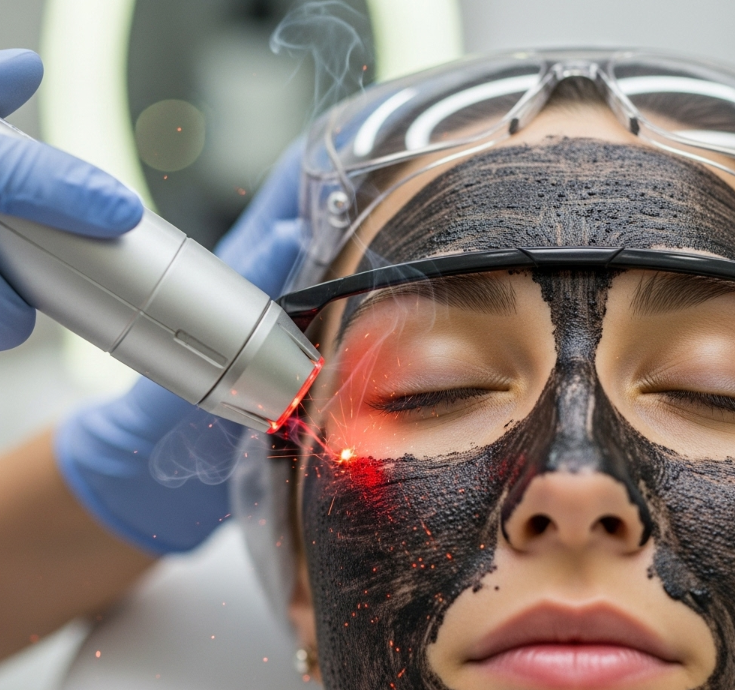
Carbon Laser Toning in Korea is a non-invasive skin whitening and rejuvenation treatment that uses a thin layer of medical-grade liquid carbon applied to the skin, followed by a Q-switched Nd:YAG laser. The laser energy is absorbed by the carbon particles, which gently exfoliate dead skin, clear clogged pores, and break down excess melanin. This results in brighter, smoother, and more even-toned skin across the treated body area.
In Korean dermatology clinics, Carbon Laser Toning is a popular option for full-body whitening or treating specific darkened areas such as the back, arms, or underarms. It is often combined with Arbutin peels, glutathione drips, or whitening injections for more dramatic results.
Purpose & Benefits
- Skin Whitening: Reduces melanin for a lighter, more radiant skin tone.
- Even Skin Tone: Fades dark patches, pigmentation, and post-inflammatory marks.
- Gentle Exfoliation: Removes dead skin and clears pores.
- Texture Improvement: Smooths rough or bumpy skin.
- Non-Invasive & Quick: No downtime, safe for sensitive skin.
Ideal Candidates
Carbon Laser Toning in Korea is recommended for:
- Individuals seeking overall body whitening and radiance.
- Patients with pigmentation, dark patches, or uneven tone.
- Those with post-inflammatory hyperpigmentation from acne or irritation.
- People who want a non-peel, laser-based brightening option.
- Patients combining whitening laser with peels or IV drips for enhanced results.
Possible Risks & Complications
- Mild Redness: Temporary, fades in a few hours.
- Dryness or Flaking: Light exfoliation may occur.
- Rare Risks: Hyperpigmentation or irritation if sun exposure occurs without SPF.
- Not Suitable For: Pregnant women, patients with severe eczema, or those recently sunburned.
Surgical Techniques Used
Carbon Laser Toning is non-surgical but requires advanced laser systems:
- Q-switched Nd:YAG Laser (1064 nm): Breaks down melanin and rejuvenates skin.
- Carbon Lotion Application: Enhances absorption of laser energy.
- Laser Exfoliation: Carbon particles vaporized to remove impurities and dead skin.
- Korean Combination Protocols: Frequently paired with whitening drips, arbutin peels, or glutathione boosters.
- Sessions Required: 4–8 sessions spaced 2–3 weeks apart.
Recovery & Aftercare
- Immediately: Slight redness, skin feels refreshed and smooth.
- 1–3 Days: Tone brightens, mild dryness possible.
- 1–2 Months: Gradual whitening and evenness with consistent sessions.
Aftercare Tips:
- Apply moisturizer daily to prevent dryness.
- Avoid hot baths, saunas, and tanning for 48 hours.
- Apply SPF 50+ if body skin will be exposed outdoors.
- Use gentle, non-irritating cleansers and avoid harsh scrubbing.
Results & Longevity
- After 1 Session: Brighter and smoother skin.
- After 3–4 Sessions: Visible lightening of pigmentation and even skin tone.
- After 6–8 Sessions: Significant body whitening and radiance.
- Longevity: Results last 6–12 months; maintenance every 3–6 months recommended.
Treatment Process in Korea
Consultation & Skin Analysis
- Dermatologist evaluates pigmentation and skin tone goals.
- Customized treatment plan designed.
Preparation
- Targeted body area cleansed; carbon lotion applied.
Carbon Laser Toning Session
- Step 1: Laser energy applied over the carbon-coated skin.
- Step 2: Carbon particles absorb laser energy and exfoliate.
- Step 3: Pigmentation reduced, collagen stimulated.
- Step 4: Session lasts ~30–45 minutes.
Post-Treatment Care in Clinic
- Cooling gel applied to soothe skin.
- Aftercare instructions provided.
Follow-Up
- 4–8 sessions recommended for optimal whitening.
- Maintenance every 3–6 months.
Why Korea is a Top Destination
- Latest Nd:YAG Laser Systems: Korean clinics use advanced Q-switched technology.
- Safe Whitening Protocols: Customized for Asian skin to minimize risks of hyperpigmentation.
- Combination Treatments: Integrated with whitening drips, peels, and serums for enhanced results.
- Body-Focused Whitening Programs: Special packages for back, arms, and full body.
- Global Reputation: Korea is internationally recognized for innovative and safe whitening therapies.
Cost Range (Estimated)
- Single Carbon Laser Toning Session (Body Area): USD 150 – 300
- 4-Session Package: USD 500 – 1,000
- 8-Session Package: USD 1,000 – 1,800
Additional Costs:
- Consultation: USD 20 – 50
- Add-ons (Arbutin Peel, Glutathione Drip, Whitening Injections): USD 200 – 600 per session
- Premium Whitening Programs (Laser + boosters): USD 2,000 – 4,000
Popular Clinics
- Oracle Dermatology: Carbon laser toning with body whitening programs.
- Banobagi Plastic Surgery: Laser-based brightening combined with whitening drips.
- Renewme Skin Clinic: Carbon toning + mesotherapy for pigmentation control.
- View Plastic & Dermatology: Full-body whitening with carbon toning + peels.
- Chaum Anti-Aging Center: Premium body whitening with laser + regenerative boosters.


