
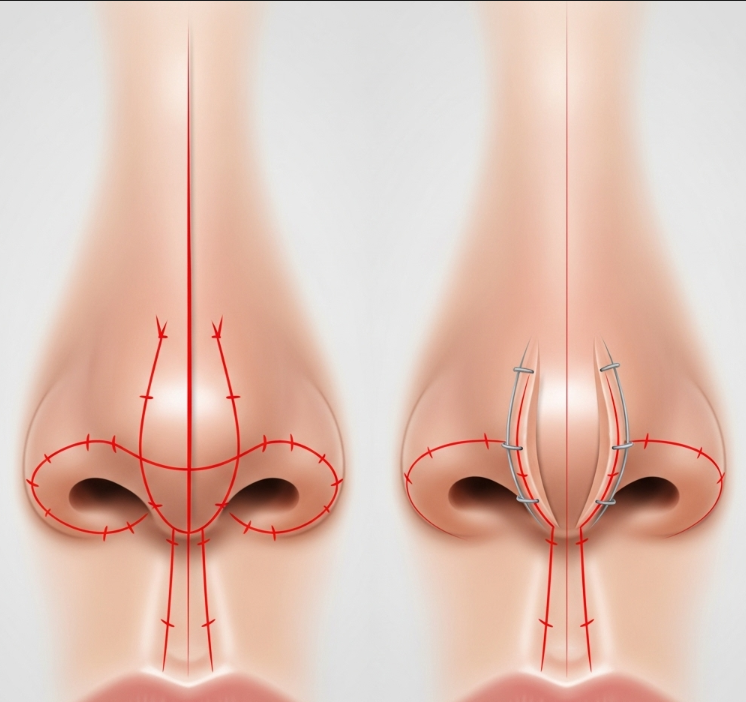
Treatment Overview
Cartilage-Mimicking Filler Injection in Korea is a non-surgical rhinoplasty technique that uses advanced dermal fillers designed to replicate the firmness and structural support of nasal cartilage. This procedure allows for subtle augmentation, bridge enhancement, tip refinement, and contour correction without surgery. Korean aesthetic specialists are known for their precise, natural-looking results that mimic the feel and shape of real nasal cartilage.
Purpose & Benefits
- Enhances nasal bridge height and overall facial profile.
- Provides tip support and refinement mimicking structural cartilage.
- Corrects minor asymmetries, depressions, or irregularities.
- Non-surgical and scarless, performed entirely via injections.
- Quick procedure with immediate visible results and minimal downtime.
- Reversible and adjustable, offering a safe alternative to surgical grafting.
- Can be combined with Botox-assisted lifts or other fillers for complete nose shaping.
Ideal Candidates
- Individuals with flat or weak nasal bridges.
- Patients seeking tip support without surgery.
- Men and women desiring non-invasive, temporary nasal structure enhancement.
- Those looking to test changes before committing to surgical rhinoplasty.
- Candidates with minor dorsal irregularities or mild tip droop.
Possible Risks & Complications
- Temporary swelling, redness, or bruising at injection sites.
- Minor asymmetry or overcorrection, usually adjustable.
- Rare risk of vascular compromise or infection if injected improperly.
- Temporary results lasting 6–18 months, requiring maintenance.
- Mild discomfort during or immediately after injection.
Techniques Used
- Specialized Fillers: High-density, cartilage-mimicking fillers designed to maintain structure and firmness.
- Precision Injection: Using fine needles or cannulas to place filler exactly where structural support is needed.
- Customized Contouring: Tailored to the patient’s nasal anatomy for natural and proportionate results.
- Optional Combination: Can be used alongside Botox or conventional fillers for complete non-surgical rhinoplasty.
Recovery & Aftercare
- Downtime: Minimal; most patients can resume daily activities immediately.
- Care Instructions: Avoid pressing, massaging, or lying face down for 24–48 hours.
- Follow-Up: Check-up within 1–2 weeks to assess symmetry and shape.
- Maintenance: Effects last 6–18 months depending on filler type and patient metabolism.
- Ice packs may help reduce minor swelling or redness in the first 24 hours.
Results & Longevity
- Provides structured and firm nasal contours similar to surgical cartilage grafts.
- Immediate visual improvement in bridge, tip, and overall nasal profile.
- Maintains natural look and feel without the need for invasive surgery.
- Effects last 6–18 months, with touch-ups recommended for sustained results.
- Reversible and adjustable for future refinements.
Treatment Process in Korea
- Consultation & Assessment:
- Facial and nasal analysis to determine bridge, tip, and contour requirements.
- Customized plan for filler type and placement.
- Pre-Procedure Preparation:
- Cleansing and sterilization of injection sites.
- Optional topical numbing for comfort.
- Filler Injection Procedure:
- High-density cartilage-mimicking filler is precisely injected into targeted nasal areas.
- Molding and shaping performed to ensure smooth and natural contours.
- Immediate Post-Care:
- Mild swelling or redness may appear temporarily.
- Most patients resume daily activities immediately.
- Follow-Up & Maintenance:
- Reassessment after 1–2 weeks for symmetry and contour evaluation.
- Touch-ups recommended every 6–18 months to maintain results.
Why Korea is a Top Destination:
- Korean specialists are trained in advanced filler techniques that replicate structural cartilage.
- Use of high-quality, FDA-approved or Korean-certified fillers ensures safety and durability.
- Clinics provide efficient procedures, patient guidance, and support for international clients.
Cost Range
- Standard cartilage-mimicking filler injection: ₩600,000 – ₩1,200,000 KRW ($460 – $920 USD) per syringe
- Combination with tip or bridge enhancements: ₩1,200,000 – ₩2,500,000 KRW ($920 – $1,900 USD)
- Costs generally include:
- Consultation and assessment
- Filler material and injection procedure
- Post-procedure follow-up and guidance
- Optional translation or patient support for international clients
Popular Clinics in Korea
- ID Hospital (Seoul): Specialist in non-surgical cartilage-mimicking filler rhinoplasty.
- Banobagi Plastic Surgery (Seoul): Known for precise tip and bridge structural enhancement.
- JW Plastic Surgery (Seoul): Skilled in high-density filler techniques for structural support.
- View Plastic Surgery (Seoul): Popular for non-surgical, natural-looking nasal contouring.
- The PLUS Plastic Surgery (Seoul): Trusted for advanced filler procedures by international patients.


