
Treatment Overview
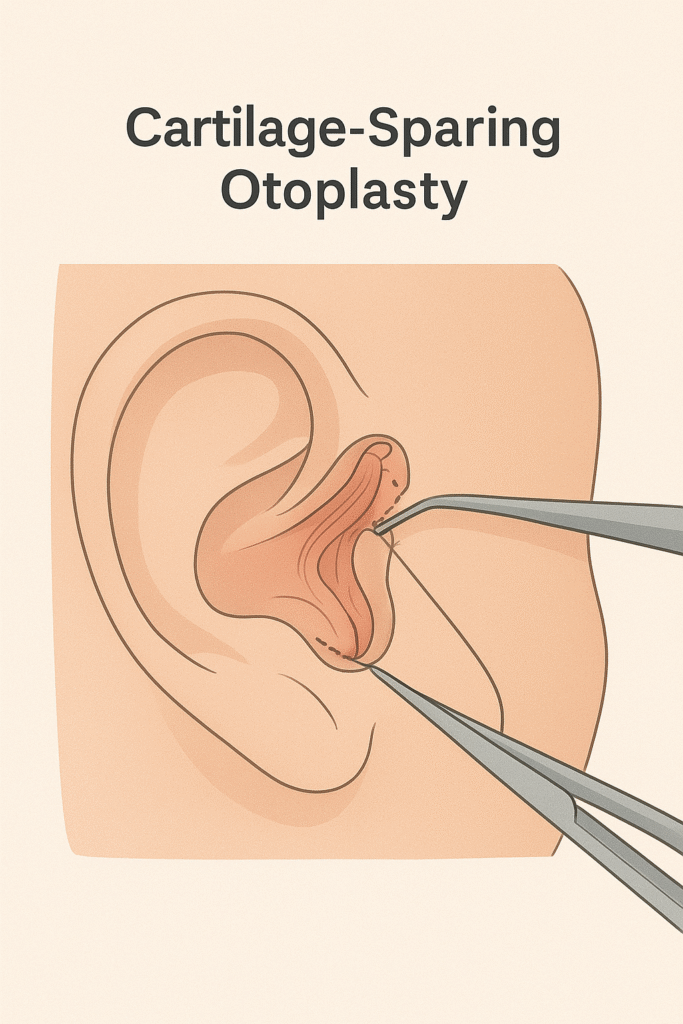
Cartilage-sparing otoplasty is a modern surgical technique used to correct protruding or prominent ears without aggressive cartilage cutting or removal. Instead of scoring or excising ear cartilage, this method relies on permanent sutures and gentle reshaping to reposition the ears closer to the head in a natural way.
In Korea, this procedure has gained popularity among both domestic and international patients because it offers natural results, minimal downtime, and long-term stability. Korean surgeons are highly experienced in advanced otoplasty methods, often combining cartilage-sparing techniques with aesthetic refinements to create a more balanced facial profile.
Purpose & Benefits
The purpose of cartilage-sparing otoplasty is to correct ear prominence while maintaining the natural curvature and structure of the ear. Instead of leaving visible scars or creating an overly “pinned” appearance, Korean surgeons focus on subtle reshaping.
Key benefits include:
- Natural-looking ear shape without over-correction.
- Minimal trauma to cartilage compared to traditional otoplasty.
- Faster recovery and less post-surgical pain.
- Permanent correction of protruding ears.
- Minimal scarring, as incisions are hidden behind the ear.
- Suitable for both adults and children (from around age 6 onward).
Ideal Candidates
This procedure is well-suited for:
- Patients with protruding or asymmetrical ears.
- Individuals who want a less invasive alternative to traditional otoplasty.
- Patients concerned about the risks of cartilage cutting (overcorrection, unnatural folds).
- Children with prominent ears who may face self-esteem issues.
- Adults who prefer a natural-looking correction rather than dramatic repositioning.
Possible Risks & Complications
While cartilage-sparing otoplasty is safer than traditional cartilage-removal methods, potential risks still exist, such as:
- Temporary swelling, redness, or mild discomfort.
- Asymmetry if healing occurs unevenly.
- Rare cases of suture complications or extrusion.
- Minor relapse if the cartilage is very strong or sutures loosen.
Korean clinics reduce risks through precise preoperative planning, durable suture materials, and meticulous technique, ensuring both stability and aesthetics.
Surgical Techniques Used
Cartilage-sparing otoplasty in Korea primarily relies on permanent suture techniques. These methods reshape and reposition the ears without cutting or scoring cartilage. Common approaches include:
- Mustardé Sutures: Create or enhance the natural antihelical fold.
- Furnas Sutures: Bring the conchal bowl closer to the head.
- Combination Approaches: Customized use of both techniques for balanced correction.
- Hidden Incisions: Placed behind the ear to conceal scars.
Unlike traditional otoplasty, Korean surgeons avoid aggressive cartilage cutting, which reduces the risk of visible irregularities and ensures a smoother, natural ear contour.
Recovery & Aftercare
Recovery after cartilage-sparing otoplasty is relatively quick:
- First 1–2 weeks: Patients wear a protective headband, especially while sleeping, to support healing. Swelling and mild bruising are expected but manageable.
- 2–3 weeks: Most patients can return to daily activities and social interactions.
- 1–3 months: Ears fully settle into their final position, with natural results.
Korean clinics provide specialized aftercare, including scar treatments, anti-swelling therapies, and frequent check-ups to monitor healing.
Results & Longevity
The results of cartilage-sparing otoplasty are long-lasting and often permanent. Patients enjoy:
- Improved facial balance and symmetry.
- Ears that look natural, not overcorrected or “pinned back.”
- Stable results supported by durable suture techniques.
- Increased confidence, particularly in patients who were self-conscious about prominent ears.
Treatment Process in Korea
Korea has become a top destination for otoplasty thanks to its focus on aesthetics, precision, and minimally invasive techniques. The treatment process typically includes:
- 3D imaging and simulation: To preview outcomes before surgery.
- Customized surgical planning: Based on facial proportions and patient goals.
- Minimally invasive methods: Ensuring natural contours with hidden incisions.
- International patient care: English-speaking coordinators, luxury recovery options, and personalized follow-up care.
Korean surgeons often combine cartilage-sparing otoplasty with facial contouring or eyelid surgery for patients seeking overall aesthetic balance.
Cost Range
The cost of cartilage-sparing otoplasty in Korea varies depending on whether it is performed for one or both ears, and the complexity of the case:
- Unilateral otoplasty (one ear): USD $2,500 – $4,000
- Bilateral otoplasty (both ears): USD $4,000 – $7,000
- Revision otoplasty: USD $6,000 – $10,000
While not the cheapest globally, Korea offers world-class expertise and advanced techniques at competitive prices compared to the US or Europe.
Popular Clinics in Korea
Some of the most reputable clinics for cartilage-sparing otoplasty include:
- ID Hospital – renowned for advanced facial contouring and ear reshaping.
- Banobagi Plastic Surgery – focuses on natural, subtle corrections.
- JW Plastic Surgery – experienced in both pediatric and adult otoplasty.
- View Plastic Surgery – popular with international patients for minimally invasive ear surgery.


