
Treatment Overview
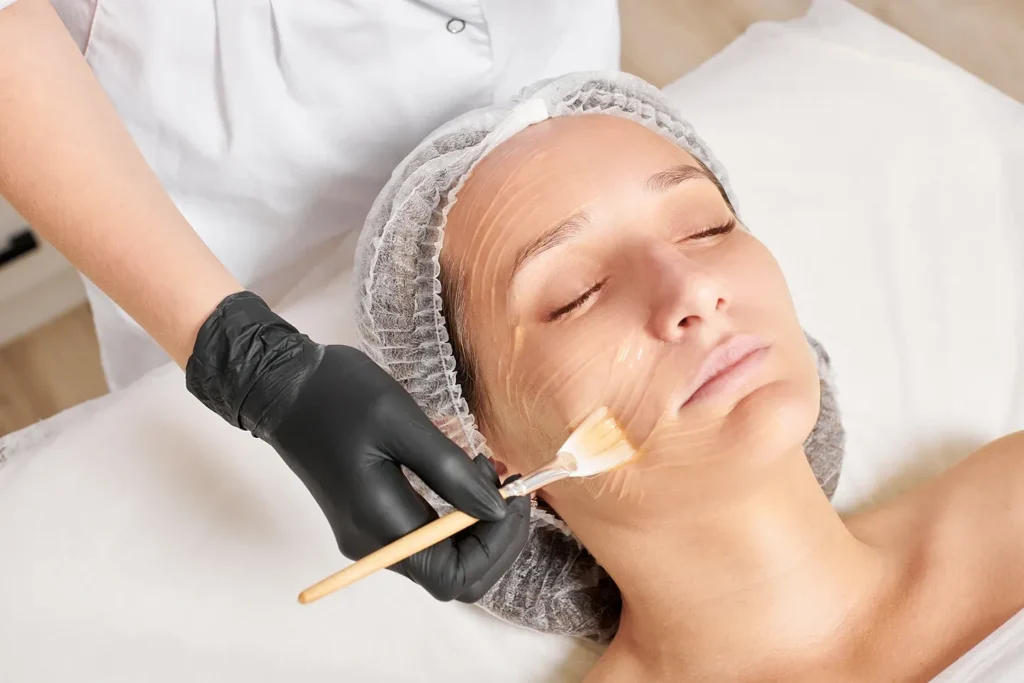
The Chemical Peel Hyperpigmentation Treatment in Korea is a targeted dermatology procedure designed to reduce dark spots, melasma, sun damage, and uneven skin tone. This non-invasive treatment utilizes professional-grade chemical peels such as glycolic acid, salicylic acid, lactic acid, trichloroacetic acid, or Jessner’s peel to exfoliate the outer skin layers, accelerate cell turnover, and reduce melanin deposits.
Korean dermatology clinics are internationally recognized for their expertise in layered chemical peeling protocols, combining peels with whitening serums, laser treatments, and antioxidant therapies to achieve maximum hyperpigmentation correction, brighter skin, and smoother texture.
Purpose & Benefits
Chemical Peel Hyperpigmentation Treatment provides multiple benefits:
- Reduction of Dark Spots & Pigmentation – Fades sun spots, post-acne marks, and melasma.
- Even Skin Tone – Restores uniform complexion.
- Radiance & Brightness – Removes dull, dead skin cells to reveal fresh, glowing skin.
- Smoother Skin Texture – Exfoliation reduces roughness, fine lines, and enlarged pores.
- Non-Invasive & Safe – Provides effective whitening results without surgery.
- Enhanced Results with Combination Therapy – Can be combined with lasers or whitening serums for superior outcomes.
Ideal Candidates
This treatment is suitable for individuals who:
- Have hyperpigmentation, sun damage, or melasma.
- Want even skin tone and brighter complexion.
- Prefer non-surgical dermatology treatments.
- Are seeking enhanced results through combination therapies.
- Have dull, uneven, or rough skin.
Possible Risks & Complications
Chemical Peel Hyperpigmentation Treatment is generally safe under licensed Korean dermatologists. Possible side effects may include:
- Temporary redness, irritation, or mild swelling.
- Peeling or flaking of the skin for a few days post-treatment.
- Rare allergic reactions to chemical agents.
- Temporary hyperpigmentation rebound if sun protection is neglected.
Techniques Used in Korea
Korean dermatology clinics employ advanced chemical peeling techniques for effective hyperpigmentation control:
- Customized Chemical Peels – Selection of peel type (glycolic, salicylic, lactic, trichloroacetic, or Jessner’s) based on skin type and pigmentation severity.
- Layered Protocols – Multiple peels combined with whitening serums and topical antioxidants to enhance results.
- Combination Therapy – Often paired with Q-switched Nd:YAG lasers, picosecond lasers, or whitening IV therapy for cumulative improvement.
- Professional Monitoring – Ensures correct peel strength, safety, and optimal skin penetration.
- Korean Expertise – Clinics are renowned for precise layering, advanced techniques, and integration with other K-Beauty whitening treatments.
Recovery & Aftercare
- Mild redness or peeling may occur, typically resolving within 3–7 days.
- Avoid direct sun exposure and use sunscreen (SPF 30+) diligently.
- Gentle moisturizers recommended during recovery.
- Avoid harsh scrubs or exfoliants for at least one week post-treatment.
- Follow-up sessions are recommended for optimal and long-lasting results.
Results & Longevity
- Immediate effect: Improved skin brightness and texture.
- Optimal results: Multiple sessions (3–6) provide cumulative reduction of hyperpigmentation.
- Longevity: With proper skincare and sun protection, results can last several months, extended with maintenance treatments.
- Enhanced combination results: Pairing with whitening serums, IV therapy, or laser treatments further improves clarity, radiance, and pigmentation control.
Treatment Process in Korea
Korean dermatology clinics follow a structured protocol for Chemical Peel Hyperpigmentation Treatment:
- Consultation & Skin Analysis – Assessment of pigmentation, skin type, and sun exposure history.
- Skin Preparation – Cleansing and degreasing to remove surface oils and impurities.
- Application of Chemical Peel – Selected peel applied to targeted areas to exfoliate pigmented layers.
- Neutralization & Soothing – Peel neutralized after a specific time; calming serums applied to reduce irritation.
- Optional Add-Ons – Combination with whitening lasers, IV therapy, or brightening facials.
- Post-Treatment Instructions – Guidance on sun protection, hydration, and skincare.
- Maintenance Sessions – Recommended 3–6 sessions for significant reduction of hyperpigmentation and lasting results.
Korea is a leading destination for chemical peel hyperpigmentation treatments due to expertise in multi-step peeling protocols, integration with advanced whitening therapies, and highly skilled dermatologists.
Cost Range
The price of Chemical Peel Hyperpigmentation Treatment in Korea varies depending on clinic, peel type, and combination therapies:
- Single session: KRW 120,000 – KRW 350,000
- Enhanced session (peel + serum or laser): KRW 350,000 – KRW 600,000
- Full program (3–6 sessions): KRW 900,000 – KRW 2,200,000
This treatment is an effective, non-invasive solution for targeting hyperpigmentation, brightening the skin, and improving overall texture.
Popular Clinics in Korea
Leading clinics offering Chemical Peel Hyperpigmentation Treatment include:
- Banobagi Dermatology Clinic (Seoul) – Advanced peeling and whitening protocols.
- Oracle Dermatology Clinics (Nationwide) – Customized hyperpigmentation treatment programs.
- Regen Clinic (Seoul) – Combines chemical peels, laser therapy, and IV treatments for optimal whitening results.
- ID Hospital Dermatology Center (Seoul) – Professional peeling protocols for hyperpigmentation and skin rejuvenation.
- Wonjin Beauty Medical Group (Seoul) – Luxury dermatology packages focusing on pigmentation correction and brightening.


