
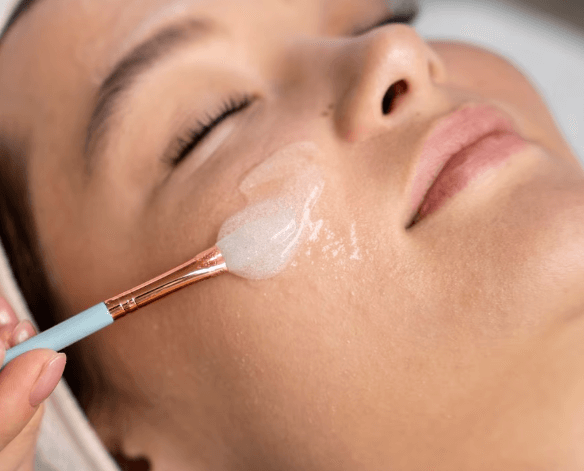
Treatment Overview
Chemical Peels are a long-established dermatology treatment in Korea for age spots (liver spots), freckles, sun-induced pigmentation, uneven tone, acne marks, and overall skin rejuvenation.
The procedure involves applying a controlled solution of acids (such as glycolic, salicylic, lactic, TCA, or mixed blends) to the skin, which gently exfoliates the outer layers. This process sheds pigmented keratinocytes, accelerates cell turnover, and stimulates regeneration of brighter, clearer skin.
In Korea, dermatologists customize peels for Asian skin safety, combining them with brightening serums, boosters, or laser toning for enhanced results.
It belongs to the Pigmentation Treatment family (Spectra, Nd:YAG Toning, Dual Toning, Pico Lasers, Fraxel Dual, Clear + Brilliant, Carbon Peel, CO₂, Chemical Peels):
- Spectra: Best for freckles + PIH + acne marks.
- BB Laser: Best for age spots + sun freckles.
- Carbon Peel: Best for pigment + glow + oily skin.
- Chemical Peels: Best for surface-level age spots (liver spots) + texture.
- Pico Lasers: Best for resistant age spots.
- Fraxel Dual: Best for age spots + wrinkles + sun damage.
- Clear + Brilliant: Best for prevention + mild pigment.
- CO₂ Fractional: Best for pigment + scars/texture.
Purpose & Benefits
- Age Spot Reduction: Peels exfoliate pigmented surface cells, fading sun-induced liver spots.
- Skin Brightening: Reveals clearer, fresher skin.
- Texture Improvement: Smooths rough patches and evens skin tone.
- Versatility: Can also treat acne scars, melasma, and fine wrinkles.
- Cost-Effective: More affordable than lasers, often used as a first-line pigmentation treatment.
Ideal Candidates
Chemical Peels in Korea are recommended for:
- Adults with mild to moderate age spots (liver spots) or sun-induced freckles.
- Patients with pigment + dull skin or uneven texture.
- Individuals seeking a budget-friendly, gradual brightening option.
Treatment Comparison
- Spectra: Best for freckles + acne pigment.
- BB Laser: Best for sun freckles + liver spots.
- Carbon Peel: Best for pigment + pores + glow.
- Chemical Peels: Best for surface age spots + rough skin.
- Pico Lasers: Best for stubborn, resistant pigment.
- Fraxel Dual: Best for age spots + wrinkles + sun damage.
Possible Risks & Complications
Chemical Peels are safe when performed by dermatologists, but may cause:
- Redness or Tingling: Temporary, resolves within hours to days.
- Peeling/Flaking: Normal renewal phase over 3–5 days.
- Dryness or Tightness: Manageable with moisturizers.
- Rare Risks: PIH (if done too aggressively, but minimized in Korean low-depth peels).
Types & Techniques Used
- Superficial Peels: Glycolic, lactic, or salicylic acid — gentle exfoliation.
- Medium Peels: TCA (trichloroacetic acid) — deeper pigment removal.
- Combination Peels: Brightening formulas (e.g., glycolic + kojic acid).
- Protocol: 3–6 sessions, every 2–4 weeks, with yearly maintenance.
Recovery & Aftercare
- Immediately: Mild redness or stinging.
- 1–3 Days: Light flaking or peeling of surface skin.
- 1 Week: Clearer, smoother skin with pigment lightened.
Aftercare Tips:
- Apply SPF 50+ daily.
- Use gentle, hydrating creams and serums.
- Avoid exfoliants, scrubs, and retinoids for 5–7 days.
- Do not pick or peel flaking skin.
Results & Longevity
- After First Peel: Brighter complexion and slight spot fading.
- 2–3 Peels: Visible reduction of age spots and smoother texture.
- 3–6 Peels: Significant clearance of superficial pigment.
- Long-Term: Maintenance peels every 6–12 months help sustain results.
Treatment Process in Korea
- Consultation & Skin Analysis – Evaluate age spots and skin sensitivity.
- Preparation – Cleansing + protective measures.
- Application of Peel – Customized acid solution applied for controlled exfoliation.
- Neutralization & Soothing – Peel is neutralized, calming mask applied.
- Follow-Up – Repeated sessions scheduled for cumulative results.
Why Korea is a Top Destination
- Korean dermatologists specialize in low-strength, safe peels for Asian skin.
- Clinics often combine peels with lasers, toning, or brightening infusions.
- More affordable than Western pigmentation treatments.
- Widely used as a maintenance treatment alongside lasers.
Cost Range (Estimated)
- Single Peel Session: USD 80 – 150
- 3–6 Session Package: USD 250 – 700
- Premium Peel Program (Chemical Peel + Lasers/Boosters): USD 800 – 1,800
Additional Costs:
- Consultation: USD 20 – 50
- Add-ons (Rejuran, PN, exosomes, whitening drips): USD 100 – 400
💡 In Korea, Chemical Peels are known as the “entry-level age spot treatment” — effective for mild liver spots and dull skin, often paired with lasers for deeper pigmentation.
Popular Clinics in Seoul
- Oracle Dermatology: Customized chemical peels for age spots + acne pigment.
- Banobagi Dermatology: Combination programs (Chemical Peel + Laser Toning).
- Renewme Skin Clinic: Brightening peels with whitening serums.
- View Plastic & Dermatology: Chemical Peel + Fraxel for pigment + texture.
- Chaum Anti-Aging Center: Premium chemical peel protocols with boosters.


