
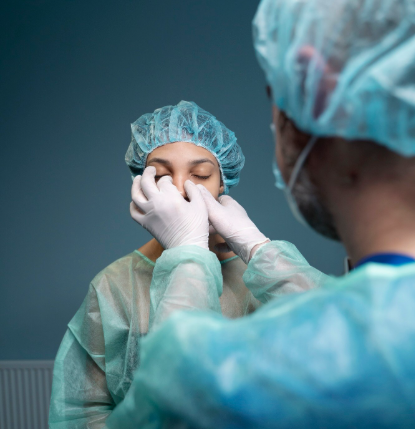
Treatment Overview
Chorioretinal Adhesion Surgery in Korea is a specialized microsurgical procedure designed to treat retinal tears, retinal detachments, and other vitreoretinal disorders by creating a firm adhesion between the retina and the underlying choroid. The procedure stabilizes the retina, prevents fluid accumulation, and reduces the risk of recurrent detachment. Techniques often involve laser photocoagulation, cryotherapy, or a combination, sometimes paired with pars plana vitrectomy (PPV) for complex cases.
Korea is internationally recognized for advanced chorioretinal adhesion programs that integrate:
- Microincision vitrectomy surgery (25G/27G) for minimal trauma and faster recovery
- Targeted laser or cryotherapy application for precise retinal adhesion
- Intraoperative OCT guidance for real-time retinal visualization
- AI-assisted surgical planning for optimal adhesion mapping
- Combination procedures with membrane peeling, gas or silicone oil tamponade if required
- Rapid outpatient or short-stay surgical protocols
This approach provides durable retinal attachment, preserves visual function, and reduces the risk of recurrent detachment.
Purpose & Benefits
Purpose
- Secure the retina to the choroid in retinal tears or detachments
- Prevent recurrent fluid accumulation or detachment
- Stabilize the retina following vitrectomy or membrane peeling
- Complement adjunctive procedures such as laser photocoagulation or anti-VEGF therapy
Benefits
- Minimally invasive and high-precision microsurgical technique
- Controlled creation of chorioretinal adhesion reduces recurrent detachment risk
- Intraoperative OCT ensures accurate retinal alignment
- Shorter recovery and faster visual rehabilitation
- Can be combined with vitrectomy or cataract surgery if necessary
Ideal Candidates
Chorioretinal Adhesion Surgery in Korea is ideal for:
- Patients with rhegmatogenous retinal tears
- Individuals with retinal detachment requiring stabilization
- Eyes with lattice degeneration or high-risk peripheral retinal lesions
- High-risk patients undergoing vitrectomy or membrane peeling
- Patients requiring combined retinal and cataract surgery
Possible Risks & Complications
Common/Moderate Risks
- Temporary blurred vision post-surgery
- Mild postoperative inflammation
- Minor retinal edema or hemorrhage
Rare/Serious Risks
- Recurrent retinal detachment
- Retinal tear or macular injury
- Endophthalmitis (intraocular infection)
- Cataract progression in phakic patients
- Vision loss in severe cases
Korean specialists minimize risks through:
- Microincision vitrectomy (25G/27G) for minimal trauma
- Precise laser or cryotherapy guided by OCT
- Careful intraoperative monitoring and postoperative follow-up
Related Diagnostic & Treatment Techniques
- Pars Plana Vitrectomy (PPV) – Core surgical technique if required
- Laser Photocoagulation – Creates controlled chorioretinal adhesion
- Cryotherapy – Alternative method for peripheral retinal lesions
- Internal Limiting Membrane (ILM) Peeling – Reduces traction if needed
- OCT-Guided Monitoring – Ensures precise adhesion and retinal alignment
- Adjunctive Gas or Silicone Oil Tamponade – Provides internal retinal support if necessary
Treatment Process in Korea
Step 1 – Preoperative Assessment
- Comprehensive ophthalmologic exam including OCT, fundus photography, and visual acuity testing
- Mapping retinal tears, detachments, and high-risk areas
- Planning for vitrectomy or chorioretinal adhesion technique
Step 2 – Surgical Planning
- Decide vitrectomy gauge (25G/27G) if required
- Choose laser or cryotherapy modality for adhesion
- Evaluate adjunctive tamponade or membrane peeling requirements
Step 3 – Chorioretinal Adhesion Surgery
- Local or general anesthesia
- Microincision vitrectomy if needed to remove vitreous traction
- Apply laser or cryotherapy to retinal tears or detachment areas
- Combine with membrane peeling or tamponade if required
- Ensure precise retinal positioning postoperatively
Step 4 – Postoperative Evaluation
- OCT imaging to confirm adhesion and retinal stability
- Visual acuity and intraocular pressure monitoring
- Prescribed anti-inflammatory and antibiotic drops
Step 5 – Follow-Up & Maintenance
- Regular OCT and fundus exams
- Additional interventions only if complications or recurrence occur
Duration: 60–150 minutes depending on complexity
Setting: Advanced vitreoretinal surgery center
Recovery & After-Care
After-Care Guidelines
- Avoid eye rubbing or pressure on the operated eye
- Maintain prescribed head positioning if tamponade used
- Follow all medication instructions strictly
- Attend scheduled postoperative visits
Recovery Timeline
- Immediate: Mild blurred vision due to laser/cryotherapy effects
- 1–2 Weeks: Inflammation subsides, partial visual improvement
- 2–4 Weeks: OCT confirms adhesion and retinal stabilization
- Long-Term: Periodic monitoring prevents recurrent detachment
Results & Longevity
Expected Results
- Durable chorioretinal adhesion
- Stabilization of retina and prevention of recurrent detachment
- Preservation of visual function
- Reduced risk of future retinal tears or detachments
Longevity
- Permanent adhesion at treated sites
- Lifelong OCT monitoring recommended for high-risk patients
- Combined surgical and pharmacologic management ensures long-term outcomes
Why Korea Is a Top Destination
- Highly experienced vitreoretinal surgeons with adhesion expertise
- Microincision 25G/27G vitrectomy for minimal trauma
- Precise laser and cryotherapy techniques guided by OCT
- AI-assisted surgical planning for personalized treatment
- Access to combination procedures with membrane peeling or tamponade
- High success rates with rapid outpatient or short-stay protocols
Unique Korean Innovations
- Intraoperative OCT-assisted chorioretinal adhesion
- AI-assisted planning for precise laser/cryotherapy application
- Microincision 27G vitrectomy for minimal trauma
- Personalized postoperative positioning protocols
- Integration with adjunctive anti-VEGF or pharmacologic therapies
Cost Range (Indicative Estimate)
| Package | Price (KRW) | Approx. USD | Inclusions |
|---|---|---|---|
| Standard Chorioretinal Adhesion | ₩4,500,000 – ₩7,500,000 | ~$3,500 – $5,800 | Laser or cryotherapy adhesion + OCT follow-up |
| Adhesion + Membrane/ILM Peeling | ₩6,000,000 – ₩9,500,000 | ~$4,600 – $7,300 | Vitrectomy + membrane peeling + laser/cryotherapy + OCT monitoring |
| Combined Procedure (Adhesion + Cataract) | ₩7,500,000 – ₩12,000,000 | ~$5,800 – $9,200 | Adhesion + vitrectomy + cataract surgery + follow-up |
Popular Clinics in Korea
- B&VIIT Eye Center (Seoul)
- Dream Eye Center (Seoul)
- BGN Eye Clinic (Seoul & Busan)
- Kim’s Eye Hospital (Seoul)
- Seoul National University Hospital Retina Center
- NUNE Eye Hospital (Daegu)
- Glory Seoul Eye Clinic
- Gangnam Severance Hospital Ophthalmology


