
Treatment Overview
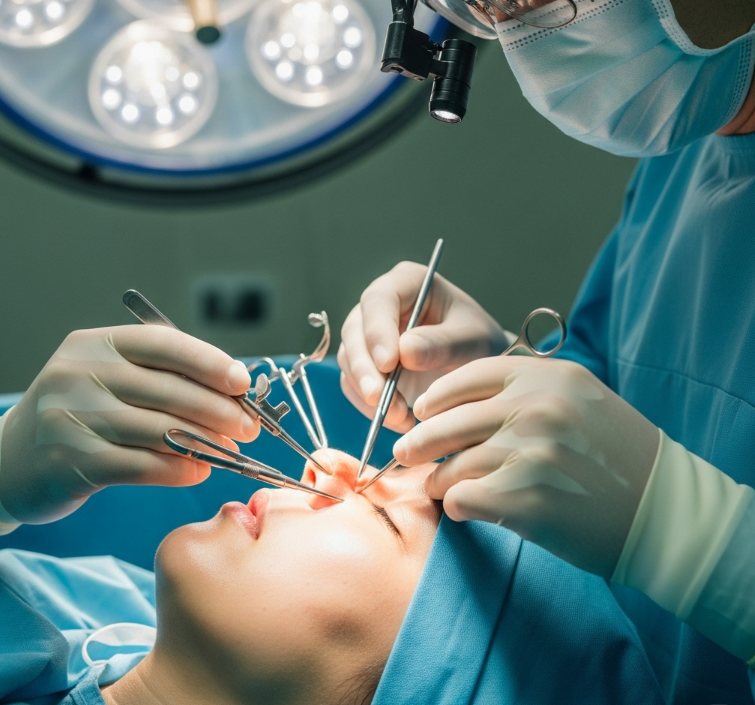
Closed Deviated Septum Rhinoplasty in Korea is a minimally invasive surgical procedure designed to correct septal deviation through internal incisions, without external scarring. This technique allows surgeons to straighten the nasal septum, improve airflow, and subtly refine nasal aesthetics. Korean surgeons are highly skilled in closed techniques, achieving both functional improvement and natural-looking nasal symmetry with minimal recovery time.
Purpose & Benefits
- Corrects septal deviation to improve nasal airflow.
- Reduces breathing difficulties, snoring, and sinus issues.
- Maintains natural nasal shape and appearance without external incisions.
- Provides subtle tip refinement and bridge alignment when needed.
- Offers quick recovery with minimal swelling and bruising compared to open techniques.
Ideal Candidates
- Men and women with a deviated septum causing nasal obstruction.
- Patients seeking functional improvement without visible scars.
- Individuals with mild to moderate septal deviation.
- Those in good health with realistic expectations for results.
- Patients who want combined functional and aesthetic refinement.
Possible Risks & Complications
Although generally safe in Korea, potential risks include:
- Temporary swelling and bruising
- Minor residual asymmetry
- Infection (rare with proper surgical care)
- Limited access for complex structural deviations
- Rare need for revision surgery if deviation is severe
Surgical Techniques Used
- Closed Septoplasty: Straightens the nasal septum via internal incisions.
- Cartilage Reshaping: Uses septal, ear, or rib cartilage to reinforce structural support if needed.
- Internal Tip or Bridge Adjustment: Subtle refinement for improved nasal symmetry.
- Minimally Invasive Approach: No external incisions, reducing scarring and recovery time.
- Korean Precision Technique: Focuses on natural nasal contours, masculine aesthetics, and long-term stability.
Recovery & Aftercare
- Downtime: 5–7 days for initial recovery; swelling may persist 2–3 weeks.
- Splint or Packing Removal: Usually within 5–7 days post-surgery.
- Aftercare: Avoid trauma, heavy activity, and smoking.
- Korean clinics provide structured post-operative care including:
- Nasal irrigation to prevent crusting and infection
- Swelling and bruising management
- Follow-up visits to monitor healing and nasal symmetry
- Breathing exercises to ensure optimal airflow
Results & Longevity
- Permanent correction of septal deviation for improved nasal function.
- Subtle enhancement of nasal symmetry and aesthetics.
- Faster recovery compared to open septoplasty.
- Long-lasting outcomes when performed by experienced Korean surgeons.
Treatment Process in Korea
Korea is a top destination for closed deviated septum rhinoplasty because of:
- Expertise in Functional Rhinoplasty: Surgeons skilled in both aesthetic and functional outcomes.
- Advanced Surgical Planning: 3D imaging and pre-operative assessment for precise septal correction.
- Minimally Invasive Technique: Reduces scarring, bruising, and downtime.
- Comprehensive Post-Operative Care: Swelling management, nasal irrigation, and follow-up evaluations to ensure optimal healing.
Why Korea is a Top Destination:
- Highly experienced surgeons specializing in male and female deviated septum correction.
- Advanced closed techniques for precise, natural, and durable outcomes.
- Integration of functional and aesthetic improvements in one procedure.
- Full support for international patients, including translators, accommodation, and post-operative care.
Cost Range
The cost of Closed Deviated Septum Rhinoplasty in Korea varies depending on complexity:
- Basic Closed Septoplasty: ₩3,000,000 – ₩5,000,000 KRW ($2,300 – $3,800 USD)
- Closed Septoplasty with Tip or Bridge Refinement: ₩5,000,000 – ₩8,500,000 KRW ($3,800 – $6,500 USD)
- Revision or Complex Closed Septal Correction: ₩8,500,000 – ₩12,000,000 KRW ($6,500 – $9,200 USD)
Inclusions:
- Surgeon’s fee and anesthesia
- Clinic or hospital facilities
- Post-operative care and follow-ups
- Optional medical tourism packages including accommodation and translation
Popular Clinics in Korea
- ID Hospital (Gangnam, Seoul): Expert in closed septoplasty and functional rhinoplasty.
- Banobagi Plastic Surgery (Seoul): Specializes in closed techniques for septal deviation correction.
- View Plastic Surgery (Seoul): Uses advanced imaging and precision methods for closed septoplasty.
- DA Plastic Surgery (Seoul): Focused on functional and aesthetic outcomes for deviated septum patients.
- JK Plastic Surgery (Seoul): JCI-accredited clinic offering high-quality care for international patients.


