
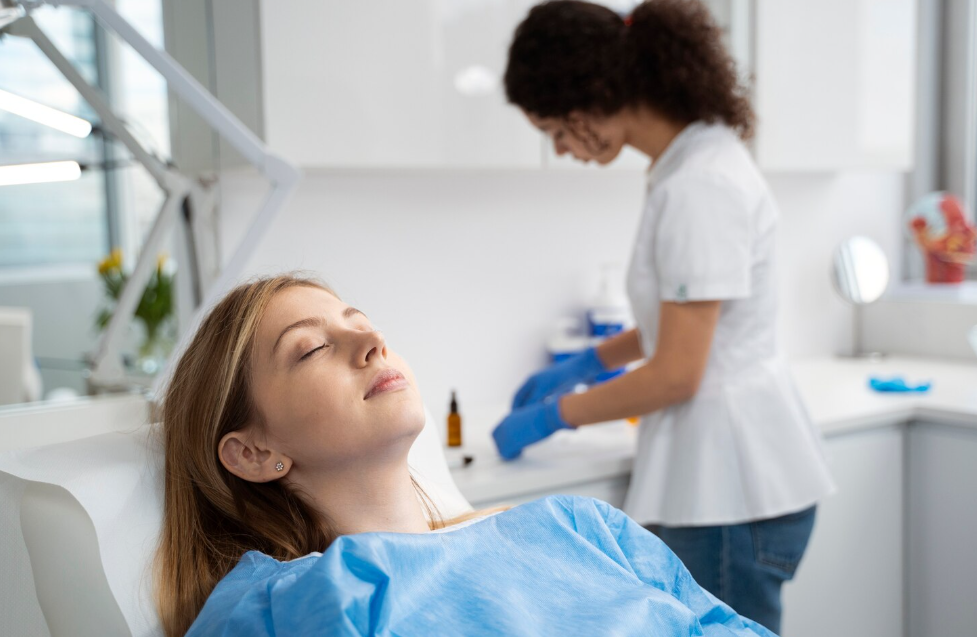
Treatment Overview
CO₂ Fractional Laser is one of the most powerful and effective treatments for moderate to severe acne scars. It works by using carbon dioxide laser energy to create thousands of controlled micro-injuries in the skin, stimulating collagen remodeling, elastin regeneration, and scar resurfacing.
In Korea, CO₂ fractional lasers are a cornerstone in multi-step acne scar protocols, often combined with subcision, PRP, Rejuran, microneedling RF, or Pico/Fraxel lasers to maximize results while minimizing risks.
This treatment is especially effective for rolling, boxcar, and ice-pick scars, as it both resurfaces damaged skin and triggers deep healing from within.
Purpose & Benefits
- Scar Resurfacing: Breaks down scar tissue and smooths uneven texture.
- Collagen Remodeling: Stimulates new collagen production for long-term repair.
- Skin Tightening: Improves laxity around scarred areas.
- Pore Refinement: Shrinks enlarged pores often associated with acne-prone skin.
- Pigmentation Improvement: Reduces post-inflammatory hyperpigmentation (PIH).
- Synergy: Works best with subcision, fillers, or regenerative boosters.
Ideal Candidates
CO₂ Fractional Laser in Korea for acne scars is recommended for:
- Patients with moderate to severe atrophic acne scars (rolling, boxcar, ice-pick).
- Individuals with rough texture, large pores, or PIH from past acne.
- Adults who have tried milder treatments (peels, microneedling) with limited results.
- Those seeking a strong resurfacing treatment with long-lasting benefits.
Comparison with Other Treatments:
- CO₂ Fractional Laser: Best for deep scar remodeling and texture improvement.
- Fraxel Dual: Milder, best for pigmentation + light scarring.
- Pico Laser: Best for PIH and shallow scars.
- Subcision + Fillers: Best for tethered/depressed scars.
- Microneedling RF: Good for collagen stimulation with less downtime.
Possible Risks & Complications
CO₂ Fractional Laser is safe in Korean dermatology clinics, but due to its intensity, temporary side effects may include:
- Redness & Swelling: Common, lasts 3–7 days.
- Scabbing & Peeling: Normal part of skin renewal.
- Post-Inflammatory Hyperpigmentation (PIH): More common in darker skin but minimized with Korean protocols.
- Infection (rare): Prevented with sterile technique and aftercare.
Treatment Techniques Used
- Fractional Mode: Laser creates microscopic treatment zones, leaving healthy skin intact for faster healing.
- Variable Depth Control: Adjusted for scar type (shallow vs deep).
- Scar-Specific Targeting: Higher intensity for boxcar/ice-pick scars.
- Session Protocol: 2–4 sessions, spaced 4–8 weeks apart.
- Combination Therapy: Often paired with subcision, PRP, or Rejuran for enhanced recovery and results.
Recovery & Aftercare
- Immediately: Redness, warmth, and swelling.
- 2–5 Days: Scabbing, peeling, and “bronzed” skin effect.
- 1–2 Weeks: Brighter, smoother skin begins to emerge.
- 1–3 Months: Progressive collagen remodeling improves scar depth.
Aftercare Tips:
- Apply prescribed ointments and soothing creams.
- Avoid sun exposure; use SPF 50+ sunscreen daily.
- Do not pick at scabs.
- Avoid strong skincare (retinol, acids, scrubs) for 2 weeks.
- Stay hydrated and follow doctor’s aftercare instructions closely.
Results & Longevity
- Short-Term (2–3 Weeks): Initial skin smoothing and glow.
- Medium-Term (2–3 Months): Noticeable scar reduction and texture improvement.
- Long-Term (6–12 Months): Continuous collagen remodeling with lasting scar improvement.
Treatment Process in Korea
- Consultation & Scar Mapping – Doctor assesses scar type and depth.
- Preparation – Cleansing and application of numbing cream.
- CO₂ Fractional Laser Session – Targeted passes performed across scarred areas.
- Optional Add-Ons – PRP, Rejuran, or exosome therapy for healing.
- Post-Care – Cooling mask and recovery ointments.
- Follow-Up – Additional sessions scheduled every 1–2 months.
Why Korea is a Top Destination
- Korean dermatologists are internationally recognized for acne scar combination protocols.
- Clinics use authentic, KFDA-approved CO₂ fractional devices.
- Multi-step healing programs include laser + regenerative boosters + LED therapy.
- Treatments are more affordable and customizable compared to Western clinics.
- Seoul is a global hub for advanced scar and texture repair technologies.
Cost Range (Detailed Breakdown)
Pricing for CO₂ Fractional Laser in Korea for acne scars:
- Single Session (localized scars): USD 200 – 400
- Full Face Session: USD 400 – 700
- 3-Session Package: USD 1,000 – 1,500
- Premium Scar Package (CO₂ Laser + PRP/Rejuran + Subcision): USD 1,800 – 3,000 (3 sessions)
Additional Costs in Korea:
- Consultation: USD 20 – 40
- Add-ons (PRP, Rejuran, Exosomes, Subcision, Microneedling): USD 150 – 600
💡 Many patients call CO₂ Fractional Laser the “gold standard for acne scars”, as it not only resurfaces the skin but also rebuilds it from within.
Popular Clinics in Seoul
- Banobagi Dermatology – CO₂ laser + subcision for severe scars.
- Oracle Dermatology – CO₂ + PRP/exosome recovery programs.
- Renewme Skin Clinic – Multi-step CO₂ laser + scar toning.
- View Plastic & Dermatology – CO₂ + Rejuran for scar remodeling.
- Chaum Anti-Aging Center – Luxury scar programs with CO₂ + regenerative boosters.


