
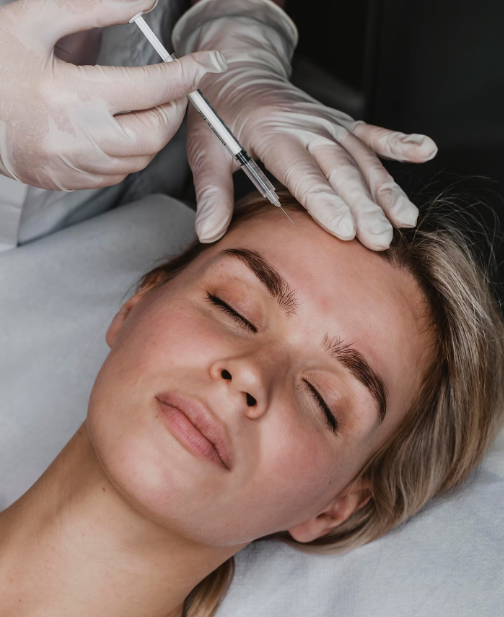
Treatment Overview
Collagen Stimulating Fillers are advanced injectables that not only restore lost volume but also trigger the skin’s natural collagen production, leading to progressive and long-lasting rejuvenation. Unlike hyaluronic acid (HA) fillers, which give immediate hydration and volume, collagen-stimulating fillers such as Sculptra (poly-L-lactic acid) and Radiesse (calcium hydroxyapatite) work gradually to improve firmness, elasticity, and skin quality from within.
In Korea, Collagen Stimulating Fillers are widely used for anti-aging and skin rejuvenation because they align with the Korean philosophy of subtle, natural, and long-lasting beauty. Dermatologists use these fillers strategically for structural lift, scar repair, and overall facial rejuvenation, often in combination with HA fillers or skin boosters.
Purpose & Benefits
- Long-Lasting Volume & Firmness: Stimulates collagen production for natural results.
- Wrinkle Reduction: Softens deep folds and lines (nasolabial folds, marionette lines).
- Facial Contouring: Improves jawline, chin, and cheek structure.
- Skin Texture Improvement: Refines pores and smooths roughness.
- Scar Treatment: Effective in treating acne scars and depressions.
- Gradual & Natural Rejuvenation: Results develop over months, avoiding an “overfilled” look.
Ideal Candidates
- Adults with moderate to severe wrinkles or facial volume loss.
- Patients looking for longer-lasting results than standard HA fillers.
- Individuals with sagging, skin laxity, or sunken areas (temples, cheeks).
- Those wanting natural collagen regeneration without surgery.
- Patients interested in treating wrinkles, scars, and loss of elasticity simultaneously.
Possible Risks & Complications
- Temporary redness, swelling, or bruising at injection sites.
- Mild tenderness or firmness in treated areas.
- Gradual effect – results appear over weeks to months, not instantly.
- Rare risk of lumps, nodules, or asymmetry if poorly injected.
- Unlike HA fillers, collagen-stimulating fillers cannot be dissolved easily.
Techniques Used
- Deep Injection Technique: Fillers are placed in deeper layers near bone or fat pads.
- Layered Approach: Ensures natural contour and symmetry.
- Sculptra: PLLA particles stimulate gradual collagen growth for up to 2 years.
- Radiesse: CaHA microspheres provide instant lift and long-term collagen stimulation.
- Combination Therapy: Often paired with HA fillers for immediate results + long-term effects.
Recovery & Aftercare
- Day 1–3: Mild swelling, redness, or bruising may occur.
- Day 3–7: Swelling subsides; early firmness may be felt.
- Week 2–4: Gradual improvement in skin quality and volume.
Aftercare Guidelines:
- Massage treated areas 5 minutes, 5 times a day, for 5 days (for Sculptra) to prevent nodules.
- Avoid alcohol, sauna, or strenuous exercise for 24–48 hours.
- Use SPF daily to protect collagen-stimulating effects.
- Attend scheduled follow-up sessions for optimal results.
Results & Longevity
- Progressive improvements over 4–12 weeks.
- Skin looks firmer, smoother, and rejuvenated as collagen builds.
- Results typically last:
- Sculptra: 18–24 months (with multiple sessions).
- Radiesse: 12–18 months.
- Long-term rejuvenation maintained with touch-up sessions every 1–2 years.
Treatment Process in Korea
1. Consultation & Planning
- Dermatologist assesses wrinkles, sagging, and volume loss.
- Choice of filler (Radiesse, Sculptra, or combination) is customized.
2. Treatment Day
- Cleansing and numbing cream applied.
- Fillers injected into target areas with fine needles or cannulas.
- Procedure time: 30–45 minutes.
3. Post-Treatment Care
- Cooling gel or mask applied.
- Patients can usually resume activities the same day.
4. Follow-Up & Maintenance
- 2–3 initial sessions (for Sculptra) spaced 4–6 weeks apart recommended.
- Maintenance every 12–24 months.
Why Korea is a Top Destination
- Korean dermatologists are skilled in precise, natural filler placement.
- Clinics emphasize balance, harmony, and youthful contours.
- Wide availability of advanced collagen-stimulating fillers.
- Lower costs compared to Western clinics, with premium care quality.
- International-friendly clinics in Seoul provide English-speaking staff and tailored aftercare.
Cost Range
The cost of Collagen Stimulating Fillers in Korea depends on filler type, number of vials, and clinic reputation:
- Radiesse (per syringe/vial): ₩600,000 – ₩900,000 (~USD $450–$700).
- Sculptra (per vial): ₩700,000 – ₩1,000,000 (~USD $530–$750).
- Full-Face Rejuvenation (2–4 vials): ₩2,000,000 – ₩3,500,000 (~USD $1,500–$2,700).
- Acne Scar Packages: ₩1,200,000 – ₩2,500,000 (~USD $900–$1,900 for multiple sessions).
Additional Costs:
- Consultation Fee: ₩30,000 – ₩70,000 (~USD $20–$50).
- Aftercare serums & SPF: ₩50,000 – ₩150,000 (~USD $40–$120).
Popular Clinics
- Banobagi Plastic Surgery (Seoul): Specialists in long-lasting fillers and anti-aging rejuvenation.
- ID Dermatology (Seoul): Known for Radiesse and Sculptra collagen-boosting treatments.
- View Clinic (Seoul): Customized anti-aging filler protocols with combination therapy.
- JW Plastic Surgery (Seoul): Premium clinic focusing on natural, long-term results.
- Oracle Skin Clinic (Nationwide): Accessible option offering collagen-stimulating filler packages.


