
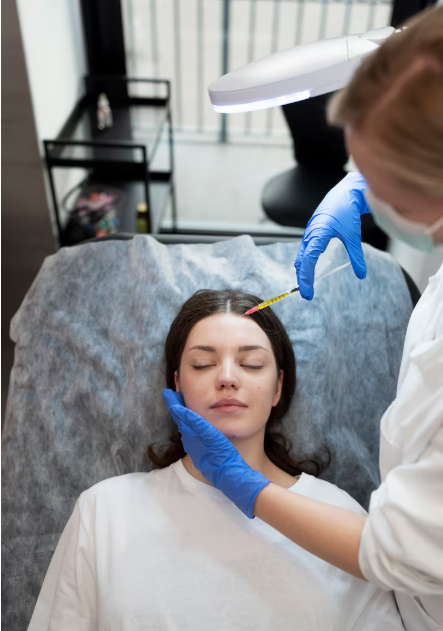
Treatment Overview
Collagen Stimulating Fillers are injectable treatments that not only restore lost volume but also stimulate the body’s natural collagen production to improve skin thickness, firmness, and elasticity over time. Common types used in Korea include Sculptra (poly-L-lactic acid), Radiesse (calcium hydroxyapatite), and Ellansé (polycaprolactone).
For thin or thinning skin, these fillers gradually thicken the dermis, improve elasticity, and reduce fine lines and sagging. Unlike hyaluronic acid fillers, which provide immediate but temporary results, collagen-stimulating fillers deliver long-term structural improvement in skin quality.
Purpose & Benefits
- Dermal Thickening: Restores volume and strength to thin, fragile skin.
- Collagen & Elastin Boost: Triggers the skin to regenerate itself naturally.
- Skin Firmness: Improves laxity and prevents premature sagging.
- Wrinkle Reduction: Smooths fine lines from sun exposure and aging.
- Natural-Looking Results: Gradual improvement for a subtle rejuvenated look.
- Long-Lasting Effects: Results last 1–2 years or more, depending on the filler type.
- Synergy: Often combined with Rejuran, Exosome therapy, or lasers for deeper repair.
Ideal Candidates
Collagen Stimulating Fillers in Korea for thin skin and skin thinning are recommended for:
- Adults experiencing loss of skin thickness, elasticity, or firmness.
- Patients with fine wrinkles, sagging, or fragile skin due to UV damage or aging.
- Those who want a natural, long-lasting skin regeneration treatment.
Comparison with other options:
- Collagen Stimulating Fillers: Best for long-term dermal thickening and structure.
- Hyaluronic Acid Fillers: Best for instant hydration and plumpness.
- Rejuran Healer: Best for DNA repair and elasticity.
- PRP Therapy: Best for natural collagen repair with growth factors.
- Exosome Therapy: Best for cellular-level regeneration.
Possible Risks & Complications
These fillers are safe in expert Korean dermatology clinics, but possible side effects may include:
- Redness or Swelling: Common and temporary after injection.
- Bruising or Tenderness: Fades in a few days.
- Nodules or Unevenness: Rare, minimized with expert technique.
- Allergic Reactions: Extremely rare with biocompatible fillers.
Surgical Techniques Used
- Injection Techniques: Micro-droplet, linear threading, or fanning for even distribution.
- Target Areas: Cheeks, temples, jawline, neck, and areas of thinning skin.
- Layered Regeneration: Can be paired with HA fillers or PN boosters for hydration and repair.
- Treatment Plan: Typically 2–3 sessions spaced a month apart; results continue to improve over 2–3 months.
- Longevity: Depending on product, results last 12–24 months.
Recovery & Aftercare
- Immediately: Mild swelling, redness, or tenderness.
- 1–3 Days: Most side effects fade.
- 2–4 Weeks: Collagen stimulation begins, skin feels firmer.
Aftercare Tips:
- Avoid alcohol, saunas, and heavy workouts for 1–2 days.
- Massage the treated area as advised (specific fillers like Sculptra may require massage).
- Apply SPF 50+ daily to protect new collagen.
- Maintain skin hydration with barrier-supportive skincare.
Results & Longevity
- Immediate: Subtle plumping and support.
- Short-Term (1–2 Months): Collagen stimulation improves elasticity and thickness.
- Medium-Term (3–6 Months): Skin appears firmer, thicker, and more youthful.
- Long-Term: Results last 1–2 years, with maintenance sessions prolonging effects.
Treatment Process in Korea
- Consultation & Skin Analysis – Doctor examines areas of skin thinning.
- Preparation – Cleansing and numbing cream applied.
- Injection Session – Collagen-stimulating filler injected with microcannula or fine needle.
- Optional Add-Ons – Rejuran, Exosomes, or Skin Boosters for synergistic repair.
- Post-Care – Cooling masks and hydration therapy.
- Follow-Up – Maintenance every 12–18 months recommended.
Why Korea is a Top Destination
- Korea is renowned for advanced filler technology and regenerative dermatology.
- Clinics use authentic FDA/KFDA-approved collagen stimulators.
- Dermatologists customize treatment by layering fillers with skin boosters and regenerative therapies.
- More affordable compared to Western clinics.
- Seoul is internationally recognized for natural-looking anti-aging protocols.
Cost Range (Detailed Breakdown)
Pricing for Collagen Stimulating Fillers in Korea for thin skin:
- Single Session (Full Face or Neck): USD 400 – 800
- 2–3 Session Package (recommended): USD 1,200 – 2,000
- Fillers + Rejuran/Exosomes Combo: USD 600 – 1,000 per session
- Premium Anti-Aging Package (Fillers + PN Boosters + Exosomes + Lasers): USD 3,000 – 5,000
Additional Costs in Korea:
- Consultation: USD 20 – 40
- Add-ons (Rejuran, PRP, Vitamin Infusions): USD 100 – 500
💡 Patients often call collagen-stimulating fillers the “long-lasting skin strengthener”, since they not only restore lost structure but also rebuild collagen for durable results.
Popular Clinics in Seoul
- Banobagi Dermatology – Specializes in Sculptra + regenerative injectables.
- Oracle Dermatology – Offers collagen fillers with Rejuran or Exosomes.
- Renewme Skin Clinic – Advanced filler protocols for skin thinning.
- View Plastic & Dermatology – Combination filler + laser rejuvenation.
- Chaum Anti-Aging Center – Premium filler + multi-step anti-aging packages.


