
Treatment Overview
Combination Medical Hair Loss Management in Korea is a comprehensive, multi-therapy approach designed to treat hair thinning and androgenetic alopecia effectively. By integrating oral DHT blockers, topical minoxidil, PRP injections, low-level laser therapy (LLLT), mesotherapy, scalp scaling, and nutritional support, Korean clinics aim to maximize hair regrowth while maintaining scalp health.
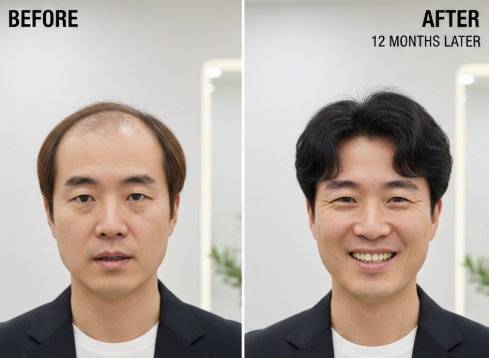
Before-and-after results are a key metric for both clinicians and patients to evaluate the effectiveness of these programs. Korean clinics are renowned for detailed documentation, including photographic evidence, digital hair density analysis, and patient-reported outcomes, which provide transparency and measurable results.
Purpose & Benefits
The main purpose of combination therapy is to achieve visible and measurable improvements in hair density, thickness, and follicle health. Benefits reflected in before-and-after results include:
- Noticeable reduction in hair thinning
- Increased hair density and scalp coverage
- Strengthened hair shafts, reducing breakage
- Improved scalp condition and decreased inflammation
- Stabilization of progressive hair loss
- Enhanced overall hair aesthetics
Documented before-and-after results demonstrate that patients can expect meaningful changes, often within 3–6 months, with maximum improvement around 9–12 months.
Ideal Candidates
Before-and-after success is most evident in patients who:
- Have early to moderate androgenetic alopecia
- Exhibit thinning in frontal or vertex regions
- Have not achieved satisfactory results from single therapies
- Are committed to following clinic protocols for home care and medications
- Seek non-surgical hair restoration methods
- Are willing to undergo multiple sessions of PRP, laser therapy, or mesotherapy
Patients with extensive bald areas may see limited regrowth, but surrounding hair can still benefit significantly.
Possible Risks & Complications
While combination therapy is generally safe, some patients may experience mild side effects that can appear in before-and-after comparisons if not managed properly:
- Initial shedding during the first 4–6 weeks
- Temporary scalp redness, dryness, or itching from topical solutions
- Mild tenderness or bruising after PRP or mesotherapy
- Rare hormonal side effects from oral DHT blockers
- Increased sensitivity after laser therapy
- Minor dryness or flaking after scalp scaling
Korean dermatologists carefully monitor patients and adjust the treatment plan to minimize these side effects.
Techniques & Technology Used
Korea’s combination programs utilize advanced methods to ensure consistent and visible before-and-after improvements:
- Oral DHT Blockers: Reduce hormonal hair loss and protect follicles
- Topical Minoxidil: Stimulates follicle growth and hair density
- PRP (Platelet-Rich Plasma): Delivers growth factors directly to scalp follicles
- Low-Level Laser Therapy (LLLT): Enhances blood flow and follicle activity
- Mesotherapy & Peptide Serums: Nourish follicles and improve hair health
- Scalp Scaling: Cleanses scalp and promotes better absorption of treatments
- Digital Scalp Analysis: Tracks progress with high-precision imaging
- Customized Nutrition: Supports follicle regeneration and strength
These techniques collectively ensure that before-and-after results show visible improvement, not just temporary changes.
Treatment Process in Korea
The treatment process focuses on measurable improvements captured in before-and-after documentation:
- Initial Consultation and Diagnosis
Includes digital scalp photography, hair density measurement, and hormone tests to assess hair loss severity. - Personalized Combination Plan
Determines the mix of oral, topical, PRP, laser, and mesotherapy treatments. - Regular Clinic Sessions
Monthly or bi-monthly PRP, laser therapy, and scalp treatments ensure consistent results. - Home-Care Program
Includes prescribed medications, topical solutions, and optional home laser devices. - Monitoring Progress
Digital imaging is used every 1–2 months to compare before-and-after results and make adjustments. - Long-Term Maintenance
Patients continue key therapies to maintain results, as shown in before-and-after comparisons over months and years.
Recovery & After-Care
Recovery is minimal due to the non-surgical nature of combination therapy. After-care supports optimal before-and-after results:
- Consistently use prescribed topical and oral medications
- Protect scalp from sun and harsh chemicals
- Attend scheduled clinic follow-ups
- Use recommended shampoos and serums
- Avoid excessive heat styling or chemical treatments
- Maintain a healthy diet and lifestyle
- Follow specific PRP or mesotherapy post-care instructions
Following these guidelines helps ensure that before-and-after photos demonstrate clear and lasting improvement.
Results & Longevity
Before-and-after outcomes in Korean combination therapy demonstrate:
- 2–3 months: Reduced shedding and slight increase in thickness
- 4–6 months: Noticeable regrowth and improved coverage in thinning areas
- 6–12 months: Significant hair density, thickness, and scalp health improvement
- 12+ months: Long-term stabilization when maintenance therapy is continued
Clinical records and patient testimonials show 75–90% of compliant patients achieve visible, lasting improvement.
Why Korea Is a Top Destination
Korea is globally recognized for its hair restoration expertise because:
- Clinics specialize in combination hair loss therapies
- Advanced digital imaging and diagnostics ensure measurable results
- Personalized protocols maximize before-and-after outcomes
- High patient safety and follow-up standards
- Affordable and transparent treatment packages
- Medical tourism support including multilingual services
These advantages make Korea ideal for patients seeking documented, reliable results.
Cost Range
Before-and-after improvement depends on the intensity and duration of the program:
- Monthly combination program: USD 150–450
- PRP session: USD 150–300
- Laser therapy session: USD 100–200
- Oral medications & topicals: USD 20–40/month
- 3-month program: USD 600–1,200
- 12-month full program: USD 1,500–2,500
Investing in a structured program is key to achieving measurable results visible in before-and-after documentation.
Popular Clinics in Korea
Clinics known for documented before-and-after success include:
- Banobagi Dermatology – Seoul
- Mojelim Hair Clinic – Seoul
- Cheongdam Yonsei Dermatology
- Oracle Dermatology Network
- NIL Hair Medical Center
- Dr. For Hair Scalp Clinics
These clinics provide transparent before-and-after photos, digital progress tracking, and tailored programs for long-term hair restoration.


