
Treatment Overview
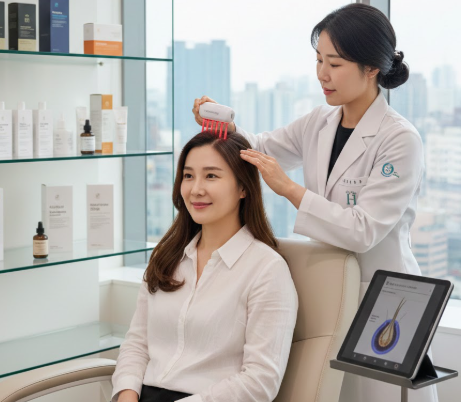
Combination Medical Hair Loss Management for Women in Korea integrates multi-therapy approaches tailored specifically to female patients, including topical minoxidil, low-level laser therapy (LLLT), PRP injections, DHT blockers (if appropriate), mesotherapy, scalp scaling, stem cell therapy, and nutritional support. Female hair loss is often caused by hormonal changes, stress, or medical conditions, requiring a personalized and sensitive approach.
Korean clinics provide customized combination programs designed to restore hair density, improve scalp health, and slow or reverse hair thinning.
Purpose & Benefits
The purpose of combination therapy for women is to:
- Stimulate dormant hair follicles and promote regrowth
- Improve hair density, volume, and shine
- Reduce hair shedding and slow follicle miniaturization
- Restore overall scalp health and follicle vitality
- Address female-specific hair loss triggers, including hormonal imbalances
- Offer a non-surgical solution with minimal downtime
Patients in Korea typically see noticeable improvements within 2–4 months, with significant results around 6–12 months.
Ideal Candidates
Combination therapy for women is suitable for:
- Women with androgenetic alopecia or female pattern hair loss
- Patients experiencing diffuse thinning across the scalp
- Women with hair loss due to hormonal changes, postpartum shedding, or stress
- Individuals who have tried monotherapy without sufficient results
- Post-hair-transplant female patients seeking enhanced graft survival
- Women seeking non-surgical, minimally invasive treatment options
Proper assessment ensures safe and effective treatment tailored to female physiology.
Possible Risks & Complications
While generally safe, combination therapy in women may carry risks:
- Mild scalp irritation, redness, or itching from topical minoxidil
- Temporary shedding during the early stages of therapy
- Minor soreness or bruising from PRP, mesotherapy, or stem cell injections
- Rare hormonal side effects if DHT blockers are used
- Scalp sensitivity during laser therapy sessions
- Allergic reactions to serums or growth factor preparations
Korean clinics carefully monitor female patients to minimize side effects and ensure safety.
Techniques & Technology Used
Advanced Korean clinics use a variety of techniques for female hair loss management:
- Topical Minoxidil: Stimulates hair growth without systemic side effects
- PRP Therapy: Growth factor injections activate dormant follicles
- Low-Level Laser Therapy (LLLT): Enhances scalp circulation and follicle activity
- Stem Cell Therapy: Promotes regenerative hair growth and follicle recovery
- DHT Blockers (if suitable): Reduce androgenic follicle miniaturization
- Mesotherapy & Peptide Serums: Deliver essential nutrients to hair roots
- Scalp Analysis & Digital Monitoring: Track hair density and regrowth progress
- Nutritional Support: Vitamins, minerals, and amino acids support follicle health
This multi-therapy approach addresses multiple causes of female hair loss and improves long-term outcomes.
Treatment Process in Korea
The treatment process for women includes:
- Initial Consultation: Comprehensive scalp assessment, hair density analysis, and medical history review
- Customized Treatment Plan: Combination therapy tailored to female physiology and hair loss type
- Clinic Sessions: PRP, laser therapy, and stem cell injections scheduled based on patient needs
- Home Care Regimen: Daily application of topical minoxidil and adherence to any oral medications
- Follow-Up Monitoring: Regular digital imaging and clinical assessments to track progress
- Maintenance Phase: Periodic combination therapy sessions and lifestyle recommendations for long-term results
This structured approach ensures consistent follicle activation and visible improvement.
Recovery & After-Care
Recovery for women is minimal, but proper aftercare is essential:
- Apply topical minoxidil as prescribed
- Avoid scratching or excessive handling of the scalp
- Maintain scalp hygiene with clinic-recommended shampoos
- Protect scalp from harsh sun, chemicals, and heat styling
- Attend scheduled follow-ups for PRP, laser, or stem cell therapy
- Maintain a healthy diet, hydration, and lifestyle to support hair growth
Following aftercare ensures sustained hair density and healthy follicles.
Results & Longevity
Clinical results for women in Korea show:
- 2–3 months: Early follicle activation and reduced shedding
- 4–6 months: Noticeable improvement in hair density and volume
- 6–12 months: Significant regrowth and stronger hair shafts
- Beyond 12 months: Sustained hair health with periodic combination therapy maintenance
Women adhering to the full treatment plan often experience better outcomes than monotherapy alone.
Why Korea Is a Top Destination
Korea is a leading destination for female hair loss management because:
- Clinics provide personalized, female-focused multi-therapy plans
- Advanced diagnostic tools track hair density and scalp health
- Experienced dermatologists specialize in female hair restoration
- High safety standards and structured aftercare protocols
- Comprehensive approach includes lifestyle, nutrition, and hormonal support
- Multilingual services for international medical tourists
Patients benefit from expert care and structured programs designed specifically for women.
Cost Range
Costs for female combination therapy vary depending on treatments included:
- Monthly combination program (Minoxidil + PRP + Laser + Stem Cell + DHT blockers if suitable): USD 200–500
- PRP sessions: USD 150–300 per session
- Laser therapy sessions: USD 100–200 per session
- Stem Cell therapy sessions: USD 800–1,500 per session
- 3-month intensive program: USD 700–1,500
- 12-month comprehensive program: USD 2,000–4,000
- Home-care products and nutritional support: USD 20–50 per month
Investing in a structured combination program ensures optimal regrowth and long-term scalp health.
Popular Clinics in Korea
Top clinics specializing in female hair loss management include:
- Banobagi Dermatology – Seoul
- Mojelim Hair Clinic – Seoul
- Cheongdam Yonsei Dermatology
- Oracle Dermatology Network
- NIL Hair Medical Center
- Dr. For Hair Scalp Clinics
These clinics provide personalized combination therapy, structured monitoring, and expert aftercare specifically tailored for women.


