
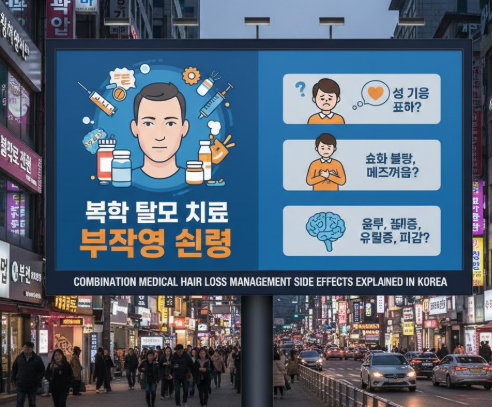
Treatment Overview
Combination Medical Hair Loss Management in Korea involves the use of multiple therapies—such as DHT blockers, topical medications, PRP, mesotherapy, low-level laser therapy (LLLT), and scalp scaling—to achieve comprehensive hair restoration. This multi-layered method is scientifically proven to improve density, slow shedding, and enhance scalp health more effectively than a single therapy alone. However, because multiple treatments are used together, understanding potential side effects is essential for both safety and expectations. Korean clinics prioritize patient education and customize treatments to minimize any risks.
Purpose & Benefits
The goal of combination hair loss therapy is not only to regrow hair but to strengthen follicles, balance the scalp environment, reduce inflammation, and improve long-term results. Benefits include:
- Faster and more visible hair regrowth
- Stronger hair shaft and improved density
- Reduced shedding within 4–8 weeks
- Better absorption of topical and injectable treatments
- Enhanced scalp circulation and follicle nutrition
- Long-term stabilization of hormonal hair loss
- Suitable for both men and women
Despite its strong benefits, some patients may experience mild or temporary side effects, which are typically manageable with Korean clinical protocols.
Ideal Candidates
Patients who benefit most from this therapy include:
- Men with male-pattern baldness (androgenetic alopecia)
- Women experiencing thinning due to hormonal changes or stress
- Individuals with early to moderate hair loss
- People who do not respond fully to single-method treatments like minoxidil alone
- Post-hair-transplant patients needing better regrowth and faster healing
- Patients with scalp conditions such as excess sebum, dandruff, or inflammation
- Individuals avoiding hair transplant surgery but seeking significant improvement
Patients with extremely advanced baldness may not be ideal candidates unless combined with surgical options.
Possible Risks & Complications
While combination therapy is generally safe, each component carries its own potential side effects. Korean clinics keep these risks very low through accurate diagnosis and personalized dosing.
Common Potential Side Effects:
1. Oral DHT Blockers (Finasteride, Dutasteride)
- Reduced libido (rare and often temporary)
- Mild hormonal imbalance
- Breast tenderness (uncommon)
- Mood changes (rare)
2. Topical Minoxidil
- Scalp itching or irritation
- Increased shedding during the first 2–6 weeks
- Dandruff or dryness
- Rare: unwanted facial hair growth if applied incorrectly
3. PRP Injections
- Mild swelling for 24 hours
- Temporary soreness
- Slight bruising at injection points
- Redness or sensitivity
4. Mesotherapy (Growth Factors & Peptides)
- Pinpoint bleeding
- Temporary redness
- Slight discomfort or itching
5. Low-Level Laser Therapy (LLLT)
- Warm sensation
- Scalp sensitivity in rare cases
- Temporary increase in shedding
6. Scalp Scaling
- Mild dryness
- Sensitivity to sunlight
- Rare irritation after intensive peeling
Korean specialists adjust treatment frequency and intensity to keep complications minimal.
Techniques & Technology Used
Combination therapy uses advanced Korean dermatology tools and standardized systems to reduce risk:
- High-precision digital scalp diagnosis
- Medical-grade minoxidil solutions (5–7%)
- FDA-approved laser devices
- High-purity PRP using top centrifuge systems
- Korean peptide-based mesotherapy serums
- Anti-inflammatory scalp cooling devices
- Medical shampoo lines for different scalp types
- Customized prescription DHT blockers
Each treatment’s dosage and schedule are adjusted to reduce side effects while maximizing results.
Treatment Process in Korea
Patients in Korea receive treatment in a structured and safe approach:
- In-Depth Scalp Analysis
Phototrichogram, digital microscopy, and density mapping reveal hair quality and sensitivity. - Customized Multi-Layer Plan
Doctors determine the best combination according to scalp condition, hair cycle, age, and gender. - Monthly Clinic Sessions
These often include PRP, laser therapy, mesotherapy, or scalp scaling. - Home-Care Program
Patients receive oral medication, topical solutions, specialized shampoos, and optional laser devices. - Monitoring & Adjustments
If any side effects appear, Korean dermatologists immediately adjust the treatment plan, ensuring the highest safety and comfort.
Recovery & After-Care
Proper after-care significantly reduces risks:
- Apply topical treatments only as directed
- Avoid heavy sun exposure on treatment days
- Use gentle hair products to avoid irritation
- Avoid scratching or rubbing the scalp after injections
- Maintain hydration and healthy nutrition
- Avoid hot showers immediately after PRP or mesotherapy
- Follow clinic check-up schedules every 4–6 weeks
Korean clinics typically provide a personalized after-care guideline tailored to scalp sensitivity and hair type.
Results & Longevity
Most side effects, if they occur, are short-lived and resolve quickly with clinical guidance. Once treatment stabilizes:
- Hair density begins improving in 2–3 months
- Major regrowth appears by 4–6 months
- Peak results arrive around 9–12 months
- Maintenance therapy extends long-term hair stability
Korea’s combination therapy delivers success rates of 75–90%, with high patient satisfaction due to controlled risk management.
Why Korea Is a Top Destination
Korea is recognized globally for its advanced and safe hair restoration programs:
- Dermatology specialists with extensive training
- High-precision diagnostic systems
- Evidence-based combination therapies
- Minimally invasive and low-risk treatment components
- Internationally recognized clinical technology
- Affordable multi-session packages
- Strong safety protocols and monitoring
- English-speaking staff for medical tourists
This makes Korea one of the safest and most reliable destinations for combination hair loss therapy.
Cost Range
Costs vary based on treatment intensity, technology used, and number of sessions:
- Monthly combination program: USD 150–450
- PRP sessions: USD 150–300
- Mesotherapy: USD 100–200
- Laser therapy session: USD 100–200
- DHT blockers & medications: USD 20–40/month
- Full 3-month program: USD 600–1,200
- Advanced comprehensive package: USD 1,500–2,500
Patients experiencing side effects may require additional consultations, usually included in the package.
Popular Clinics in Korea
Highly rated clinics experienced in combination hair loss management include:
- Mojelim Hair Clinic – Seoul
- Banobagi Dermatology – Seoul
- Cheongdam Yonsei Dermatology
- Oracle Dermatology Network
- NIL Hair Medical Center
- Dr. For Hair Scalp Clinics
These clinics have established reputations for high-standard treatments and safe patient management.


