
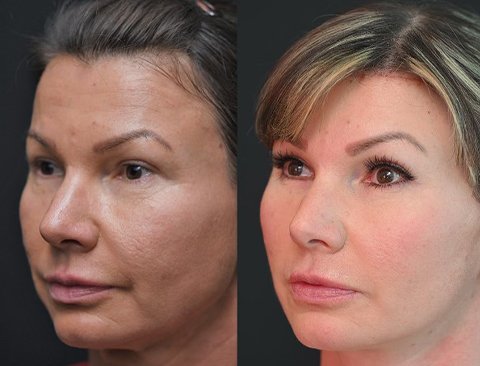
Treatment Overview
Combined Lower Blepharoplasty with Fat Repositioning is an advanced cosmetic eye surgery designed to remove excess skin and muscle while simultaneously repositioning orbital fat. Unlike traditional lower eyelid surgery that only removes fat and skin, this combined approach preserves and redistributes fat to correct tear trough deformities, under-eye hollows, and puffiness.
In Korea, this procedure is performed using highly refined methods, focusing on creating a smooth lid-cheek transition, natural rejuvenation, and long-lasting results. Korean surgeons are renowned for minimizing scarring, preventing hollowing, and ensuring a youthful but natural appearance.
Purpose & Benefits
The purpose of this combined technique is to rejuvenate the lower eyelids by addressing multiple aging factors simultaneously. Key benefits include:
- Elimination of sagging skin, wrinkles, and puffiness under the eyes
- Correction of tear trough deformity and under-eye hollows
- More youthful, rested, and natural-looking eyes
- Long-lasting results without creating an overdone or hollow appearance
- Comprehensive improvement by treating both excess skin/muscle and fat repositioning in one procedure
Ideal Candidates
You may be an ideal candidate if you:
- Have visible under-eye bags, skin laxity, and wrinkles
- Notice tear trough deformities or hollowness under the eyes
- Seek a natural look without excessive fat removal
- Are generally healthy with good skin quality
- Desire a long-term solution rather than temporary fillers
Possible Risks & Complications
As with all surgeries, risks are possible but minimized in skilled Korean clinics. Potential complications include:
- Temporary swelling and bruising
- Mild asymmetry in fat repositioning
- Dry eyes or temporary irritation
- Rare risks: infection, hematoma, or scarring
- Over- or under-correction requiring revision (rare)
Korean surgeons typically achieve very low complication rates due to their precision and specialized training.
Surgical Techniques Used
Korean doctors are known for their expertise in customized surgical planning. Techniques used in combined lower blepharoplasty with fat repositioning include:
- Transconjunctival or Subciliary Incision – depending on whether excess skin removal is required
- Orbital Fat Repositioning – redistributing fat over the orbital rim to fill tear trough hollows
- Skin and Muscle Resection (if needed) – tightening loose skin and orbicularis muscle for a smoother contour
- Adjunct Treatments – may be combined with laser resurfacing, pinch techniques, or canthopexy for support
This combined approach ensures comprehensive rejuvenation for both puffiness and hollowness.
Recovery & Aftercare
Recovery from this procedure typically takes 7–14 days. Patients usually experience swelling and bruising for the first week, with rapid improvement thereafter. Aftercare includes:
- Cold compresses during the first 48 hours
- Sleeping with the head elevated
- Avoiding exercise, alcohol, and smoking for at least 1–2 weeks
- Following clinic-provided aftercare instructions closely
Most patients return to normal activities within 10 days, and results continue improving over 1–3 months.
Results & Longevity
Results are long-lasting, natural, and comprehensive. Since fat is repositioned instead of removed, the lower eyelid maintains a youthful contour without becoming hollow. Improvements generally last 8–12 years, depending on skin condition and lifestyle factors such as aging, sun exposure, and skincare.
Treatment Process in Korea
Korea is recognized worldwide as a top destination for advanced eyelid surgery. The reasons include:
- Surgeons highly trained in natural-looking eye rejuvenation for Asian and international patients
- Widespread use of minimally invasive transconjunctival techniques
- State-of-the-art clinics equipped with 3D imaging and laser technology
- Customized approach combining skin tightening, fat repositioning, and wrinkle reduction
- High patient satisfaction rates among both locals and international medical tourists
Seoul, in particular, is considered the global hub for safe and artistic lower blepharoplasty procedures.
Cost Range
In Korea, Combined Lower Blepharoplasty with Fat Repositioning costs approximately:
- ₩3,000,000 – ₩6,000,000 KRW (about $2,200 – $4,500 USD)
Prices vary depending on clinic reputation, surgeon’s experience, and whether other procedures (such as laser skin resurfacing or canthopexy) are performed at the same time.
Popular Clinics in Korea
- ID Hospital
- Dream Medical Group
- Banobagi Plastic Surgery
- View Plastic Surgery
- Wonjin Plastic Surgery
- TL Plastic Surgery
- BIO Plastic Surgery
- Regen Plastic Surgery
- The PLUS Plastic Surgery
- JK Plastic Surgery Center


